
How to Size a Home Battery Energy Storage System

IIf you've scrolled home energy storage news at all this summer, you know the vibe: record heat waves across the Northern Hemisphere, grid operators in Texas and Southern China sending emergency text alerts begging people to turn up their AC to avoid rolling blackouts, electricity bills spiking 30% in parts of Europe, and everyone and their neighbor is scrambling to book home battery installations before the next outage. Wait times for installs in some California neighborhoods are now out to 3 months, and people are panic-buying batteries off Amazon the same way they hoarded toilet paper in 2020. The problem is, most people shopping for home energy storage systems make the exact same facepalm-level mistake on day one: they have no clue how to size a home battery energy storage system correctly. They either blow their budget on a massive commercial-sized battery they'll never fully use, or buy a tiny cheap unit that dies 2 hours into a blackout, leaving them sweltering without AC and getting eaten alive by mosquitoes. Last month we got a service call from a guy who'd dropped $12,000 on a premium system, only to realize he'd sized it so wrong it couldn't even run his bedroom AC — he spent a 4-hour outage camped out in his garage next to the battery, eating melted ice cream and scrolling angrily through product reviews. For context, we're not new to this battery game: our sister brand A&S Power has spent over a decade making reliable lithium polymer batteries for consumer electronics and drones, so we know a thing or two about not overpromising capacity or selling people more than they actually need. At Enerbe, we've installed hundreds of home storage setups, and we're breaking down the sizing process step by step so you don't waste money on gear that collects dust, or end up eating melted ice cream during the next blackout.
Table of Contents
Step 1: Add up only the stuff you actually need to run during an outage (don't forget startup load!)

Let's be dead honest: when the power goes out, you do not need to run your hot tub, your garage door opener, your holiday light display, and your entire 7.1 home theater system. You need the non-negotiables: your fridge (so you don't lose $200 worth of melted ice cream and spoiled steak), your Wi-Fi router (so you can scroll TikTok while you wait for the power to come back), a few overhead lights, and if you're like 90% of people, one or two bedroom AC units so you don't melt in 100°F heat. Add up the running wattage of those critical items only — and here's the secret almost no salesperson will tell you: multiply that total by 1.5 to account for startup surge. Appliances with motors like fridges and AC units pull 2-3x their rated power for the first 2 seconds when they turn on, and if you don't leave headroom for that, your battery will trip its safety shutoff the second the AC kicks on. We had a customer last week who calculated his total critical load at 800W, bought a 1000W battery to save money, and found out the hard way his 1HP AC pulls 2400W on startup. He spent the whole outage fanning himself with a Chinese takeout menu, waiting for us to come adjust his system. For most 2-3 bedroom suburban homes, that surge-adjusted critical load lands around 1200-1500W. We had a customer last month who bought a 20kWh commercial-sized battery "just in case," then admitted during installation he only planned to run his fridge and router during outages. The battery cost him $8000 more than he needed to spend — enough to cover his entire electric bill for the next 12 years. Don't be that guy.
Step 2: Match capacity to how long outages actually last in your area

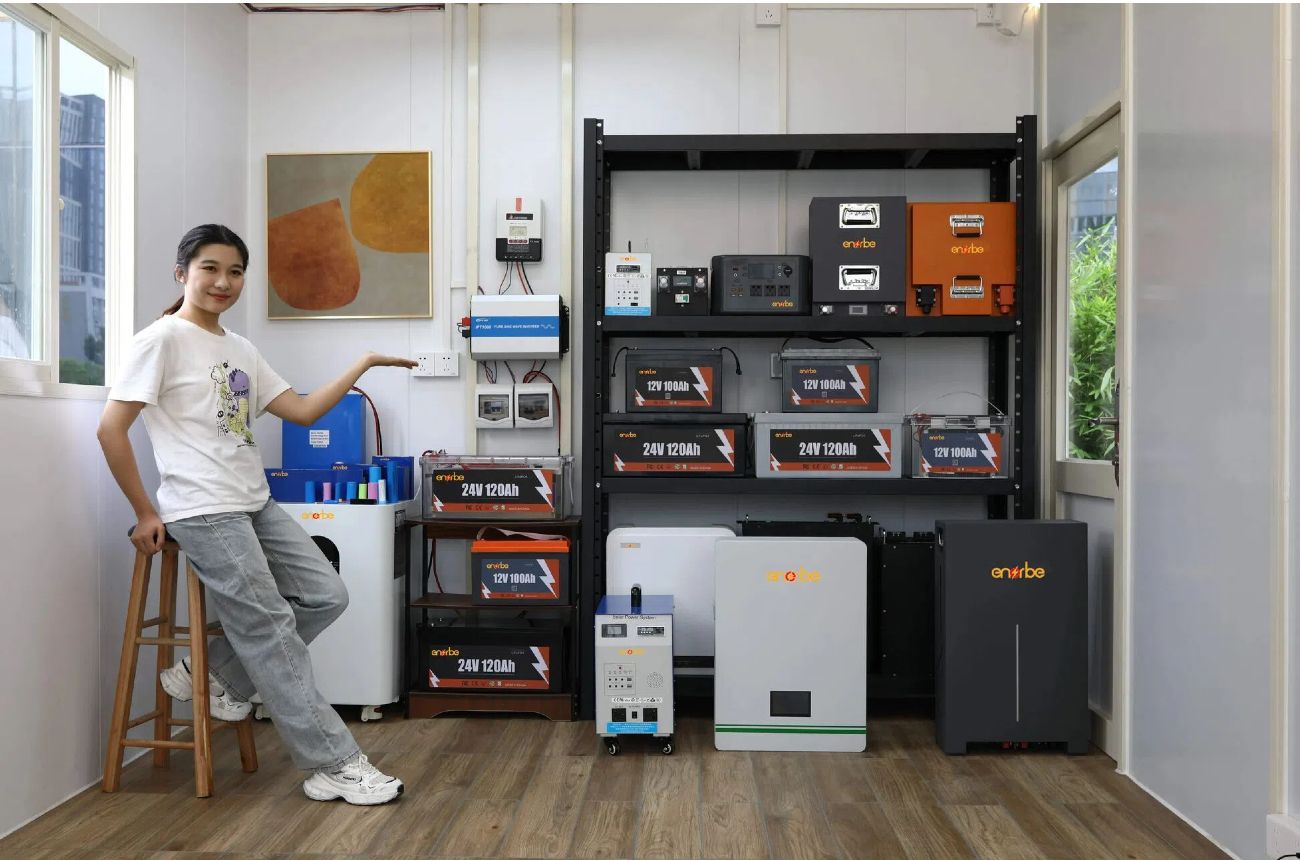
If you live somewhere with 1-2 hour rolling blackouts during summer peak demand, you don't need enough battery to power your house for 3 full days off-grid. If you're in a rural area where storm outages can last 12+ hours after a hurricane or tornado, size up a little. There's no prize for buying the biggest battery on the block; we once had a customer who lived in a 1-bed downtown apartment buy a 30kWh industrial battery that took up half his balcony, and his property manager showed up three separate times thinking he was running an unlicensed crypto mine out of his unit. For 90% of average suburban homes, our go-to recommendation is our home energy storage system 51v 100ah wall-mounted lifepo4 battery system for home energy storage. It clocks in at of usable capacity, mounts flush to your garage wall so it doesn't take up valuable bike and holiday decoration storage space, and will run all your surge-adjusted critical loads for 4-6 hours — enough to outlast 99% of summer rolling blackouts. It uses LiFePO4 chemistry, so it hits 6000+ charge cycles (that's 10+ years of regular use) without the fire risk of older lithium chemistries. If you have kids or elderly family at home and need to run two AC units, you can stack two of these units for 10kWh of capacity, enough to get you through a 12-hour storm outage without breaking the bank.
Step 3: Size for solar if you're pairing panels (don't fall for the "oversize to sell power back" scam)

If you're pairing your battery with rooftop solar, a lifepo4 battery pack for home & solar energy storage sized to match your panel output will give you the best bang for your buck. For most standard home 5kW solar setups, that same 51V 100Ah wall-mounted unit is perfect — it charges fully during the day when the sun is bright, and stores enough power to get you through expensive peak evening rate hours or overnight blackouts, no grid required. Our LiFePO4 packs hit 95% charge/discharge efficiency, meaning almost none of the power your panels generate gets wasted in the system — 30% more efficient than old lead-acid battery banks. A lot of installers will try to upsell you on a giant 1+ battery, claiming you can sell extra power back to the grid for profit. Do the math first: in most areas, net metering rates are so low now that the extra power you sell back won't pay for the bigger battery for 15+ years, long after the battery is past its prime. Skip the giant batteries unless you're fully off-grid in a remote cabin; for most grid-tied homes with solar, they're massive overkill.
Quick heads up: The dumb sizing mistakes we see every week

After 10+ years in the battery business (counting our A&S Power consumer battery days building packs for drones and portable electronics), we've seen it all. A few avoidable mistakes that cost people hundreds or thousands:
- Don't forget inverter efficiency: All home energy storage batteries lose about 10-15% of their capacity converting DC battery power to the AC power your house uses, so size 15% bigger than your calculated need to account for that. A battery won't deliver a full of usable power to your outlets, no matter what the marketing says.
- Don't oversize so much that your battery never charges above 30%: LiFePO4 cells last longest when they're cycled regularly between 20-90% charge. If you buy a battery so big you only use 10% of it every day, it will degrade faster than a right-sized unit that gets regular, gentle use.
- Don't buy no-name cheap batteries online that claim to be 100Ah but actually deliver 50Ah. Last month we helped a customer replace a knockoff battery he bought off a random social media marketplace seller, and when we opened the case, half the "cells" were just cinder blocks weighted to feel like a real battery. We test every single cell in our Enerbe units to the same strict standard we use for A&S Power drone and consumer batteries: real, rated capacity, no tricks, no cinder blocks.
If you've been keeping up with home energy storage news, you also know the US federal IRA tax credit covers 30% of home battery costs this year — but only if your system is sized correctly to meet backup power requirements. Our team helps every customer size their system to qualify for the full credit, no fine print, no hoops to jump through. At the end of the day, sizing a home battery isn't rocket science. Add up your critical loads (plus surge headroom!), match capacity to your typical outage length, and size for your solar panels if you have them. You don't need the biggest, flashiest battery on the market — you just need one that fits your actual life, not some influencer's off-grid cabin fantasy. If you need help sizing a system for your home, our team at Enerbe is here to help, no pushy sales pitches, just straight advice from people who've seen every possible battery mistake.
📞 Speak with Our Engineering Team – Get In Touch
🔗 Browse Our Custom Battery Solutions – View Products
Building 1, No. 2, Keji 9th Road, Songshan Lake, Dongguan, Guangdong, China
📞 +86 137 1383 1631 | ✉ info@aspowerbattery.com



What Gauge Wire to Connect 12V Batteries to Make 24V? Stop Burning Your Wires, We Beg
China Lithium Iron Phosphate (LiFePO4) Industry Market Outlook Report
Related Article


Get In Touch
Have questions about custom lithium batteries, energy storage solutions, or lead-to-lithium conversion? Our team is ready to help. Send us a message and we’ll respond within 24 hours.

Building 1, No. 2, Keji 9th Road, Songshan Lake, Dongguan, Guangdong, China
Office Address

info@aspowerbattery.com
Email Us

+86 137 1383 1631
Call Us

Sun - Fri (08AM - 10PM)
Office Open
