
12V vs 24V LiFePO4 Batteries: Which Voltage Is Right for Your Fleet, Boat, or Off-Grid System?

Table of Contents
Introduction: The First Procurement Decision
For B2B buyers sourcing LiFePO4 batteries, one of the first and most important decisions is voltage selection. The choice between 12V, 24V, and 48V systems impacts everything from component compatibility and cable sizing to system efficiency and total cost.
This guide helps system integrators, fleet managers, and distributors understand the trade-offs and select the optimal voltage for their specific application.
For a complete overview of LiFePO4 battery sourcing across all applications, see our B2B Sourcing Guide.
For solar storage applications, see our energy storage systems guide.
For golf cart, RV, marine, and automotive replacement, see our lead-acid conversion guide.
For a simplified overview of voltage selection, see our voltage selection quick guide.
Voltage Fundamentals: Understanding the Basics
Before diving into application-specific recommendations, understand the core electrical relationship:
-
12V System (12.8V nominal): 4 cells in series
-
24V System (25.6V nominal): 8 cells in series
-
48V System (48V nominal): 16 cells in series
For the same capacity (Ah rating), higher voltage systems deliver more total energy (kWh) and operate at lower current, which reduces cable size requirements and I²R losses.
12V Systems: When to Choose
Best Applications
| Application | Why 12V |
|---|---|
| RVs & Campervans | Standard 12V appliances and lighting; easy integration with existing systems |
| Small Boats & Trolling Motors | Industry standard for marine electronics and trolling motors |
| Automotive Starting | 12V is the global automotive standard |
| Small Solar Systems | Entry-level off-grid systems; compatible with affordable MPPT controllers |
| Motorcycles & ATVs | Compact footprint; compatible with standard charging systems |
Key Advantages
-
Widest component availability — inverters, chargers, and accessories are readily available at competitive prices
-
Easiest integration with existing 12V systems — drop-in replacement with minimal modifications
-
Lower initial cost for small systems — entry-level price point for testing and small projects
-
Simple parallel expansion — add more 12V batteries in parallel for increased capacity
Key Limitations
-
Higher current for the same power output — requires thicker, more expensive cables
-
Limited scalability beyond ~3,000W inverter capacity
-
More I²R losses over long cable runs — reduced efficiency in large installations
-
Higher heat generation at high loads
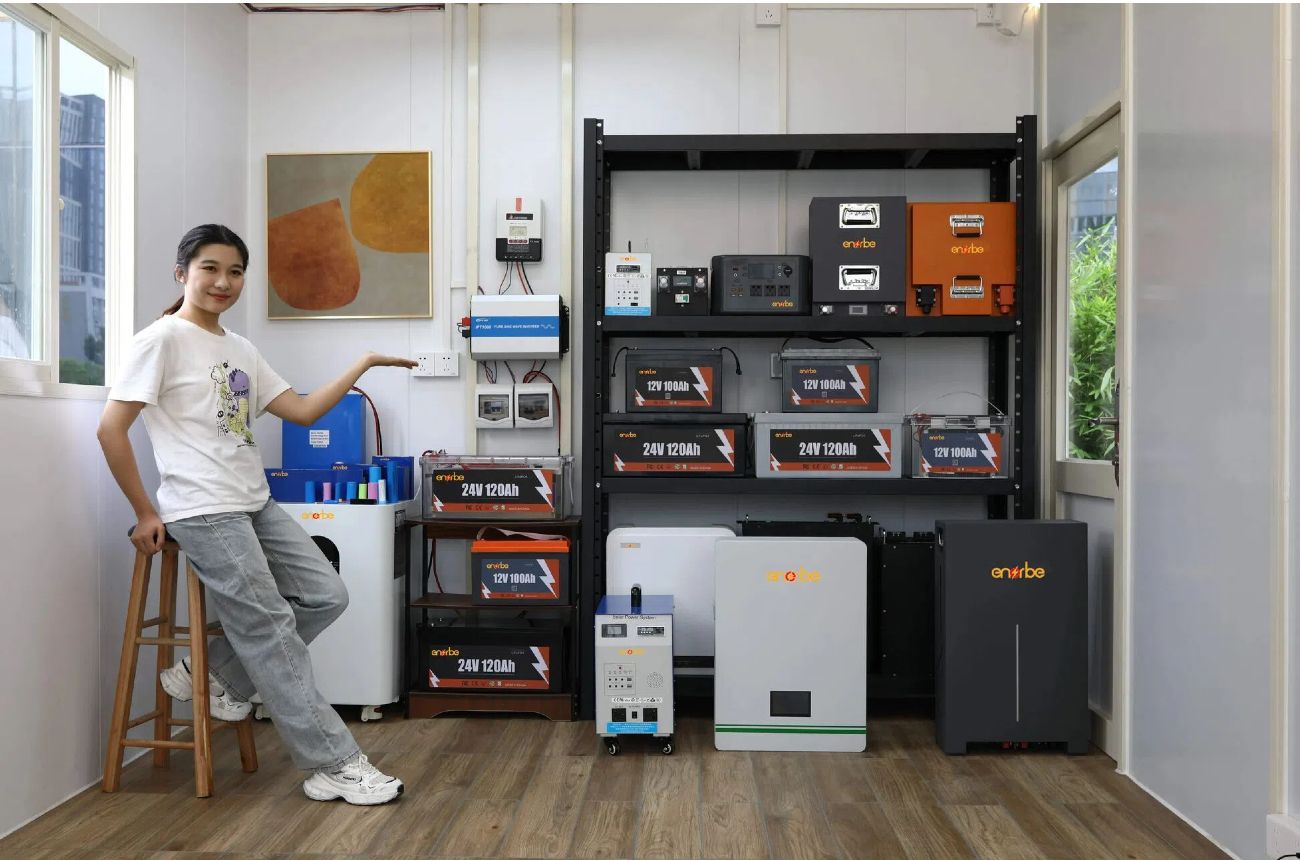
Enerbe Solutions for 12V
-
12V 100Ah LiFePO4 Battery — lightweight, deep-cycle, ideal for RVs and small boats
-
12V 200Ah LiFePO4 Battery — extended capacity for larger RVs and marine applications
-
12V 300Ah LiFePO4 Battery — maximum capacity with self-heating for cold-weather performance
24V Systems: When to Choose
Best Applications
| Application | Why 24V |
|---|---|
| Mid-Size Solar Systems | 24V MPPT controllers and inverters widely available in the 3,000W–5,000W range |
| Golf Carts | Many golf carts use 24V or 48V configurations; 24V is common in smaller fleets |
| Commercial Vehicles | Trucks, buses, and heavy equipment often use 24V electrical systems |
| Marine (Larger Boats) | 24V trolling motors and marine electronics for larger vessels |
| Telecom & Industrial | 24V is common in industrial control systems and some telecom applications |
Key Advantages
-
Lower current than 12V for same power — smaller cables, less heat, higher efficiency
-
Better efficiency over longer distances — reduced voltage drop on long cable runs
-
More scalable than 12V — supports 3,000W–5,000W inverter capacity
-
Good balance of component availability and performance — sweet spot for many applications
Key Limitations
-
Fewer accessory options than 12V — fewer off-the-shelf components available
-
Not compatible with standard 12V automotive components — requires voltage step-down for 12V loads
-
Requires voltage step-down for 12V accessories — adds complexity and cost
Enerbe Solutions for 24V
-
24V/200Ah LiFePO4 Battery — high-capacity for solar and commercial use
-
24V Lithium Battery Pack with 150Ah LiFePO4 Solar — solar-optimized configuration
-
Custom 24V configurations (50Ah–200Ah) for golf carts and RVs
48V Systems: When to Choose
Best Applications
| Application | Why 48V |
|---|---|
| Large Solar/ESS Projects | Standard for grid-tied and hybrid systems in commercial and utility-scale projects |
| Commercial & Industrial | Peak shaving, demand charge reduction, and commercial backup |
| Data Centers & Telecom | 48V is the telecom industry standard; widely used in server rooms and base stations |
| Large Golf Cart Fleets | Higher efficiency and better performance for fleet operations |
| Electric Vehicles | Common voltage platform for light EVs and material handling equipment |
Key Advantages
-
Highest efficiency — lowest current for same power, minimal losses
-
Best scalability — parallel up to 15+ racks for MWh-scale storage
-
Industry standard for commercial ESS and telecom applications
-
Smallest cable sizes — lowest material cost for cable runs
-
Lower heat generation — reduced cooling requirements in enclosed spaces
Key Limitations
-
Higher upfront cost for components — inverters and chargers are more expensive
-
Not compatible with 12V/24V systems — requires dedicated infrastructure
-
Requires professional installation — higher complexity and safety considerations
Enerbe Solutions for 48V
-
Industrial 48V 200Ah Powerwall LiFePO4 Battery (51.2V 200Ah) — high-capacity for commercial projects
-
15kWh Portable Power System (48V/51.2V 300Ah) — mobile power for off-grid and emergency
Direct Comparison Table for B2B Procurement

| Feature | 12V System | 24V System | 48V System |
|---|---|---|---|
| Nominal Voltage | 12.8V | 25.6V | 51.2V |
| Cells in Series | 4 | 8 | 16 |
| Typical Capacity Range | 50–300Ah | 50–200Ah | 100–300Ah |
| Max Recommended Inverter | 3,000W | 5,000W | 10,000W+ |
| Cable Size (for 3,000W) | ~70mm² | ~35mm² | ~16mm² |
| Round-Trip Efficiency | 94–96% | 95–97% | 96–98% |
| Scalability | Limited | Moderate | Excellent |
| Best Application | RV, Marine, Auto | Golf Carts, Mid-Solar | C&I ESS, Telecom |
How to Choose: A Decision Framework

Step 1: Identify Your Application
| Application | Recommended Voltage |
|---|---|
| RV/Campervan / Small Boat / Automotive | Start with 12V |
| Golf Cart / Mid-Size Solar / Commercial Vehicle | Consider 24V |
| Large ESS / Data Center / Telecom / Fleet Golf Carts | Choose 48V |
Step 2: Calculate Your Power Requirements
| Continuous Power | Recommended Voltage |
|---|---|
| Under 3,000W | 12V is viable |
| 3,000W–5,000W | 24V is recommended |
| Over 5,000W | 48V is required |
Step 3: Consider Your Existing Infrastructure
-
If you already have 12V components → stick with 12V (drop-in replacement)
-
If you're building from scratch → consider 24V or 48V for future scalability
-
If you have long cable runs (>5m) → 48V minimizes voltage drop and cable cost
Step 4: Factor in Cable Runs
| Cable Length | Recommendation |
|---|---|
| Short cable runs (<3m) | Any voltage works |
| Long cable runs (>5m) | 48V recommended to minimize voltage drop |

Why Enerbe for All Voltages?
Enerbe offers comprehensive 12V, 24V, and 48V LiFePO4 solutions, making us a one-stop supplier for B2B buyers serving multiple applications.
-
Factory-direct pricing across all voltages — no middleman markups
-
Custom configurations available for OEM/ODM partners — custom voltage, capacity, form factor, and branding
-
Smart BMS with CAN bus/RS485 communication — compatible with leading inverter brands (Victron, SMA, Sungrow, GoodWe, Growatt, Deye)
-
Global shipping to North America, Europe, Australia, and Middle East
-
5,000+ cycle life at 80% DOD across all models — 10+ years of reliable service
-
ISO9001-certified manufacturing with full traceability
-
Self-heating technology available on select models for cold-weather performance
📞 Speak with Our Engineering Team – Get In Touch
🔗 Browse Our Custom Battery Solutions – View Products
Building 1, No. 2, Keji 9th Road, Songshan Lake, Dongguan, Guangdong, China
📞 +86 137 1383 1631 | ✉ info@aspowerbattery.com



Lead-Acid Battery Fading Too Fast? Why Golf Course Fleets Are Switching to LiFePO4
Lead-Acid to LiFePO4 Conversion: A B2B Sourcing Guide for Golf Carts, RVs, Marine & Automotive Applications
Related Article


Get In Touch
Have questions about custom lithium batteries, energy storage solutions, or lead-to-lithium conversion? Our team is ready to help. Send us a message and we’ll respond within 24 hours.

Building 1, No. 2, Keji 9th Road, Songshan Lake, Dongguan, Guangdong, China
Office Address

info@aspowerbattery.com
Email Us

+86 137 1383 1631
Call Us

Sun - Fri (08AM - 10PM)
Office Open
