
How to Charge LiFePO4 Batteries: Voltage, Charger & Complete Guide (2026)
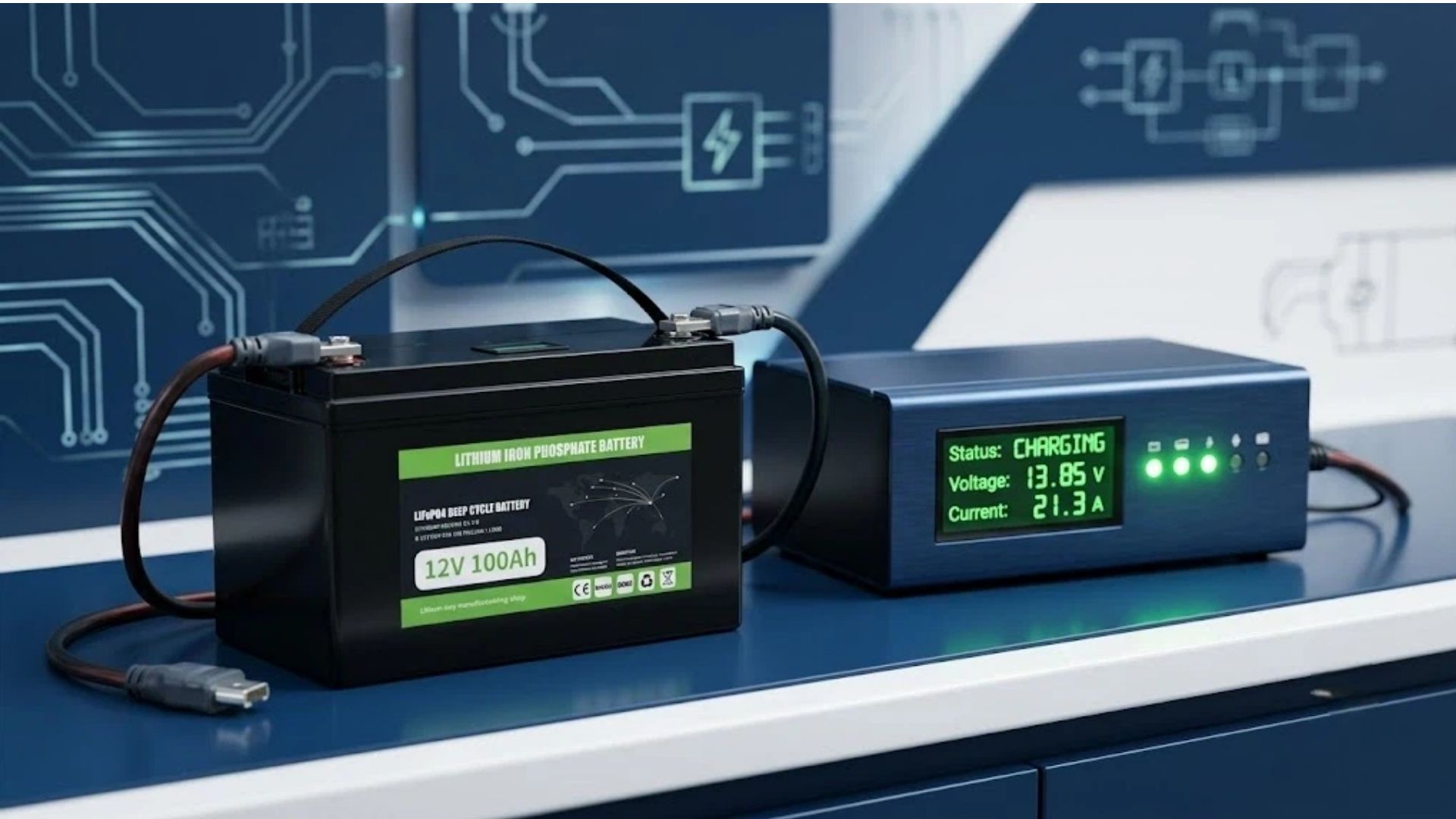
Table of Contents
- Introduction
- LiFePO4 Charging Basics: How It Works
- Correct Charging Parameters (Voltage, Current & Temperature)
- How to Choose the Right LiFePO4 Charger
- How to Charge LiFePO4 Batteries: Step-by-Step
- How to Charge a LiFePO4 Battery with a Power Supply
- How Long Does a LiFePO4 Battery Take to Charge?
- LiFePO4 Battery Charging Tips for Maximum Lifespan
- 3 Critical Charging Mistakes to Avoid
- Related Resources
- Frequently Asked Questions
- Why Enerbe for LiFePO4 Batteries?
How to Charge LiFePO4 Batteries: Voltage, Charger & Complete Guide (2026)
Last updated: September 2026 | Written by the Enerbe Engineering Team
Introduction
Quick Answer: Charge LiFePO4 batteries using a CC/CV (constant current / constant voltage) charger set to 3.65V per cell: 14.6V for 12V (4S), 29.2V for 24V (8S), 54.6V for 48V/51.2V (16S). Use a charge rate of 0.2C–0.5C (20A–50A for a 100Ah battery), never charge below 0°C, and always use a LiFePO4-specific charger (not a lead-acid charger). A 100Ah battery at 0.5C charges in ~2.3 hours. LiFePO4 does NOT need float charging. For commercial systems (data center, telecom, solar ESS), see our commercial charging best practices guide. If your battery won't charge, see our troubleshooting guide.
Knowing how to charge LiFePO4 batteries correctly is essential for maximizing cycle life, maintaining safety, and getting the best performance from your lithium iron phosphate battery system. Unlike lead-acid batteries, LiFePO4 has specific charging voltage, current, and temperature requirements—using the wrong charger or parameters can reduce battery life, trigger BMS protection, or even create safety risks.
This complete LiFePO4 battery charging guide covers the fundamentals: how CC/CV charging works, correct charging parameters for 12V, 24V, and 48V systems, how to choose the right charger, step-by-step charging procedures, power supply charging, charge time calculations, and expert tips for maximum lifespan. For commercial system charging strategies and troubleshooting, see the related guides at the end of this article.
For an overview of LiFePO4 chemistry and why it charges differently from lead-acid, see our What Is a LiFePO4 Battery guide. For charging safety and thermal risk, see our LiFePO4 battery safety guide.
LiFePO4 Charging Basics: How It Works
LiFePO4 (Lithium Iron Phosphate) batteries use a constant current / constant voltage (CC/CV) charging profile, similar to other lithium-ion chemistries but with different voltage thresholds. Understanding this profile is the foundation of correct LiFePO4 charging.

The CC/CV Charging Profile
-
Stage 1 – Constant Current (CC): The charger supplies a steady current (typically 0.2C–0.5C) while the battery voltage gradually rises. This is the bulk charging phase, where ~80–90% of the energy is transferred.
-
Stage 2 – Constant Voltage (CV): When the battery reaches the full charge voltage (3.65V per cell), the charger holds the voltage constant while the current gradually tapers off. This tops up the remaining 10–20% and allows the BMS to balance cells.
-
Stage 3 – Charge Termination: When the charging current drops to a minimum threshold (typically 0.05C–0.1C), the charger turns off. The battery is fully charged.
Key Voltage Reference Points
| Voltage Point | Per Cell | What It Means |
|---|---|---|
| Nominal Voltage | 3.2V | The average operating voltage; used for capacity calculations |
| Full Charge Voltage | 3.65V | The maximum charging voltage; charger should hold this in CV stage |
| Recommended Cutoff (Discharge) | 2.5V–2.8V | The minimum voltage before BMS under-voltage protection activates |
| Storage Voltage (50% SOC) | ~3.3V | Ideal voltage for long-term storage |
Key Difference from Lead-Acid
LiFePO4 does NOT need float charging or equalization charges. A lead-acid charger with float mode will overcharge LiFePO4, causing accelerated degradation. Always use a LiFePO4-specific charger or a charger with a selectable LiFePO4 charging profile.
Correct Charging Parameters (Voltage, Current & Temperature)
The most important LiFePO4 battery charging parameters are voltage, current, and temperature. Using the correct parameters ensures safe charging and maximum cycle life.
Charging Voltage by System Voltage
| System | Cells in Series | Nominal Voltage | Full Charge Voltage |
|---|---|---|---|
| 12V System | 4S | 12.8V | 14.6V |
| 24V System | 8S | 25.6V | 29.2V |
| 36V System | 12S | 38.4V | 43.8V |
| 48V / 51.2V System | 16S | 51.2V | 54.6V |
Critical: Always set your charger to the exact full charge voltage for your system. Charging a 48V LiFePO4 battery with a 48V lead-acid charger (57.6V or 58.4V) will overcharge the battery and may trigger BMS over-voltage protection or cause damage. For 48V rack-mounted systems, see our 48V rack-mounted battery guide for system-level charging setup.
Charging Current Recommendations
| Charge Rate | Current (for 100Ah battery) | Use Case | Impact on Lifespan |
|---|---|---|---|
| 0.2C (Slow) | 20A | Storage maintenance, gentle charging | Best for maximum cycle life |
| 0.5C (Standard) | 50A | Daily charging, solar systems, UPS | Good balance of speed and life |
| 1.0C (Fast) | 100A | Quick turnaround, EV applications | Acceptable occasionally; reduces cycle life if used daily |
Formula: Charge Current (A) = Battery Capacity (Ah) × Charge Rate (C). Example: 100Ah battery at 0.5C = 50A charge current.
For daily use, we recommend 0.2C–0.5C as the standard charging rate to maximize battery lifespan. Faster charging (1C) should only be used when necessary and with proper thermal management. For 24V systems, see our 24V LiFePO4 complete guide for voltage and charging details.
Charging Temperature Limits
-
Standard charging temperature: 0°C – 45°C (32°F – 113°F)
-
Optimal charging temperature: 15°C – 25°C (59°F – 77°F)
-
Below 0°C (32°F): DO NOT CHARGE. Charging LiFePO4 at freezing temperatures causes lithium plating on the anode, which can lead to capacity loss, internal short circuits, and safety risks. Most quality BMS units have low-temperature charging protection that automatically disables charging below 0°C.
-
Above 45°C (113°F): Reduced charging current recommended. High temperatures accelerate degradation and may trigger BMS over-temperature protection.
How to Choose the Right LiFePO4 Charger
Choosing the correct charger is the single most important factor in safe, long-lasting LiFePO4 charging. Here is what to look for:
Essential Charger Features
| Feature | Requirement | Why It Matters |
|---|---|---|
| CC/CV Profile | Must support constant current / constant voltage | LiFePO4 requires CC/CV; chargers without CV stage will not fully charge or balance cells |
| Correct Voltage | 14.6V (12V), 29.2V (24V), 54.6V (48V) | Wrong voltage = overcharge or undercharge; lead-acid voltages (14.4V, 58.4V) are incorrect for LiFePO4 |
| No Float Mode | Charger must turn off after charge, not maintain float voltage | Float mode overcharges LiFePO4, causing accelerated degradation |
| Current Rating | 0.2C–0.5C of battery capacity | Too slow = inconvenient; too fast = reduced cycle life and heat |
| Wake-Up / Force Charge | Charger outputs voltage even when battery reads 0V | Needed to wake up a deeply discharged / sleeping battery; standard chargers may not output if they detect 0V |
| Reverse Polarity Protection | Charger shuts off if polarity is reversed | Prevents BMS damage from accidental reverse connection |
Charger Types by Application
-
AC-to-DC LiFePO4 charger: For plug-in charging from wall outlets. Best for 12V/24V systems, RV, marine, and small solar setups. Look for brands with selectable LiFePO4 profile.
-
Solar charge controller (MPPT): For charging from solar panels. Must support LiFePO4 voltage settings (14.6V/29.2V/54.6V) and have a "LiFePO4" or "User" battery type setting. MPPT is more efficient than PWM for LiFePO4.
-
Hybrid inverter / inverter-charger: For solar + storage systems. Combines inverter, charger, and MPPT in one unit. Must support LiFePO4 BMS communication (CAN/RS485) for proper charge control. Common brands: Victron, Deye, Growatt, Sol-Ark, GoodWe.
-
DC-to-DC charger: For charging from a vehicle alternator while driving. Must be LiFePO4-compatible with correct voltage output. Used in RV, van, and marine setups.
-
Rack / PCS charger: For commercial 48V rack-mounted systems. Integrated into the battery cabinet or PCS (Power Conversion System), controlled via CAN bus. See our 48V rack battery guide for commercial charging setup.
How to Charge LiFePO4 Batteries: Step-by-Step
Follow these steps to safely and correctly charge your LiFePO4 battery:
Step 1: Verify Charger Compatibility
-
Confirm the charger output voltage matches your system (14.6V for 12V, 29.2V for 24V, 54.6V for 48V/51.2V)
-
Confirm the charger supports LiFePO4 chemistry (CC/CV profile, no float mode)
-
Check that the charger current rating is appropriate for your battery capacity (0.2C–0.5C recommended)
Step 2: Prepare the Battery
-
Disconnect all loads (inverters, appliances, DC devices) from the battery
-
Check battery terminals for corrosion, looseness, or damage. Clean and tighten if necessary
-
Measure the battery voltage with a multimeter to confirm it is within the normal operating range (not below BMS cutoff)
-
Ensure the battery is at a safe temperature (above 0°C / 32°F)
Step 3: Connect the Charger
-
Connect the charger positive (+) cable to the battery positive terminal
-
Connect the charger negative (–) cable to the battery negative terminal
-
Double-check polarity before plugging in the charger. Reverse polarity can blow fuses or damage the BMS
-
Plug in the charger to AC power
Step 4: Monitor the Charging Process
-
Verify the charger indicator shows charging in progress (current flowing)
-
Monitor battery voltage—should rise gradually during CC stage
-
Check battery temperature periodically—should remain below 40°C (104°F)
-
For multi-module systems, verify all modules are charging evenly via the BMS monitoring system
Step 5: Complete the Charge
-
When the battery reaches full charge voltage, the charger enters CV mode and current tapers
-
Allow the charger to complete the CV stage—this is when cell balancing occurs
-
When charging current drops to the termination threshold (typically 0.05C–0.1C), the charger turns off automatically
-
Unplug the charger from AC power, then disconnect charger cables from the battery (disconnect negative first, then positive)
How to Charge a LiFePO4 Battery with a Power Supply
A laboratory DC power supply can be used to charge LiFePO4 batteries when a dedicated charger is not available—for example, during testing, commissioning, or waking up a deeply discharged battery. Here's how to charge a LiFePO4 battery with a power supply safely:
Equipment Required
-
Adjustable DC power supply with voltage and current control (0–60V, 0–20A minimum for 48V systems)
-
Digital multimeter
-
Appropriately rated cables and connectors
-
Safety glasses and insulated gloves
Step-by-Step Power Supply Charging
-
Set the voltage: Adjust the power supply output voltage to the full charge voltage for your system (e.g., 54.6V for 48V/51.2V, 29.2V for 24V, 14.6V for 12V). Verify with a multimeter before connecting.
-
Set the current limit: Set the current limit to 0.2C–0.5C of your battery capacity. For a 100Ah battery, set 20A–50A. Start with a lower current (0.1C–0.2C) if the battery is deeply discharged or you're unsure of its condition.
-
Turn off the power supply output before connecting cables.
-
Connect cables: Positive to positive, negative to negative. Double-check polarity.
-
Turn on the power supply output. The power supply should now operate in constant current (CC) mode, supplying the set current while the battery voltage rises.
-
Monitor closely: Watch the voltage and current displays. When the battery reaches the set voltage, the power supply will switch to constant voltage (CV) mode and current will begin to taper.
-
Terminate charging: When the current drops to 0.05C–0.1C (5A–10A for a 100Ah battery), the battery is fully charged. Turn off the power supply output, then disconnect cables (negative first).
Power Supply Charging Safety
Never leave a power supply charging unattended. Unlike dedicated LiFePO4 chargers, most laboratory power supplies do not have automatic shutoff—if the voltage or current settings are incorrect, you can overcharge the battery. Always verify settings with a multimeter before connecting, and monitor the entire charging process.
How Long Does a LiFePO4 Battery Take to Charge?
The charging time of a LiFePO4 battery depends primarily on the charging current (C-rate) and the battery capacity. Here's how to calculate it:
Charge Time Formula

Charge Time (hours) ≈ Battery Capacity (Ah) ÷ Charge Current (A) × 1.15
The 1.15 factor accounts for the CV stage (current tapering) and charging efficiency (~95–98%).
Charge Time Examples (100Ah Battery)
| Charge Rate | Current | Estimated Charge Time (0–100%) |
|---|---|---|
| 0.2C (Slow) | 20A | ~5.75 hours |
| 0.5C (Standard) | 50A | ~2.3 hours |
| 1.0C (Fast) | 100A | ~1.15 hours |
Factors That Affect Charge Time
-
Battery capacity: Larger capacity batteries take longer at the same charge current
-
Charge current: Higher current = faster charging (within safe limits)
-
Starting state of charge: Charging from 20% to 100% is faster than 0% to 100%
-
Temperature: Charging below 10°C or above 40°C may reduce charge current and extend charge time
-
BMS cell balancing: If cells are imbalanced, the CV stage may take longer as the BMS balances cells
-
Charger efficiency: Lower quality chargers may have higher voltage drops and slower CV stage
For solar + storage systems: A typical 100Ah 48V LiFePO4 battery charged by a 3kW solar inverter at ~50A (0.5C) will take approximately 2–3 hours from 20% to 100% on a sunny day.
LiFePO4 Battery Charging Tips for Maximum Lifespan
Follow these expert LiFePO4 battery charging tips to maximize cycle life and maintain long-term performance:
1. Use the Right Charger
Always use a charger specifically designed for LiFePO4 chemistry with the correct voltage setting. Never use a lead-acid charger—its float mode and equalization charges will overcharge LiFePO4 and accelerate degradation.
2. Charge at Moderate Rates
For maximum cycle life, charge at 0.2C–0.5C. While LiFePO4 can handle 1C fast charging, frequent fast charging generates more heat and may reduce cycle life by 10–20%. Reserve fast charging for when you need it.
3. Avoid Full Discharge Before Charging
LiFePO4 batteries last longest when kept between 20% and 80% state of charge for daily use. Avoid regularly discharging below 20%—deep cycling increases stress on cells. Recharge when the battery reaches 20–30% SOC.
4. Don't Leave at 100% for Extended Periods
If the battery will be idle for more than a few days, don't leave it at 100% charge. Store at 50–60% SOC (~3.3V per cell) for long-term storage. If you must leave it fully charged (e.g., for UPS standby), that's acceptable—just avoid storing at 100% for months.
5. Charge Within Temperature Limits
Never charge below 0°C (32°F). If your battery is cold, bring it to a warmer environment and wait 2–3 hours for it to reach room temperature before charging. For outdoor installations in cold climates, consider battery heating systems or insulated enclosures.
6. Allow Complete CV Stage for Cell Balancing
Don't interrupt charging during the CV stage. This is when the BMS balances individual cells, which is critical for long-term capacity and performance. A full charge cycle (CC + CV) ensures all cells are balanced and at equal voltage.
7. Perform Periodic Full Charges
Even if you normally use partial cycles (20–80%), perform a full charge (to 100%) every 2–4 weeks. This allows the BMS to balance cells and recalibrate its state of charge estimation, ensuring accurate SOC readings.
8. Keep Terminals Clean and Tight
Loose or corroded terminals cause voltage drops, reduced charging current, and overheating. Inspect terminals monthly, clean with a wire brush if corroded, and torque to manufacturer specifications.
3 Critical Charging Mistakes to Avoid
These are the three most common—and most damaging—charging mistakes. For a complete troubleshooting guide covering all charging problems (battery won't charge, 0V output, charger not detecting battery, etc.), see our dedicated LiFePO4 charging troubleshooting guide.
Mistake 1: Using a Lead-Acid Charger
Lead-acid chargers use higher voltage (e.g., 58.4V for 48V systems) and have float/equalization modes that overcharge LiFePO4. This causes accelerated degradation, electrolyte decomposition, and can trigger BMS over-voltage protection. Always use a LiFePO4-specific charger.
Mistake 2: Charging Below 0°C
Charging LiFePO4 at freezing temperatures causes lithium plating—irreversible damage that reduces capacity and can create internal short circuits. Quality BMS units prevent this, but if your BMS doesn't have low-temp protection, you must manually prevent charging below 0°C.
Mistake 3: Reverse Polarity
Connecting positive to negative and vice versa can blow fuses, damage the BMS, and in severe cases cause battery damage or fire. Always double-check polarity before plugging in the charger. Many quality chargers have reverse polarity protection, but don't rely on it.
Related Resources
-
LiFePO4 Battery Charging for Commercial & Industrial Systems — best practices for data center, telecom, solar ESS, multi-module parallel charging, and inverter/PCS integration
-
LiFePO4 Battery Not Charging? Troubleshooting & Fixes — 7 common causes, diagnostic flowchart, sleeping battery wake-up, and when to replace your charger
-
What Is a LiFePO4 Battery? — chemistry, specs, advantages vs NMC and lead-acid
-
LiFePO4 Battery Safety Guide — thermal runaway, fire risk, certifications, charging safety
-
How to Reset BMS on LiFePO4 Battery — BMS protection mode, reset procedures, and charging-related fault codes
-
48V Rack-Mounted LiFePO4 Battery Guide — commercial rack system charging setup, inverter integration, and sizing
-
LiFePO4 Battery Products — 12V, 24V, and 48V batteries with charging-optimized BMS
Frequently Asked Questions
What voltage should I charge my LiFePO4 battery to?
Charge LiFePO4 batteries to 3.65V per cell. For common system voltages: 12V system (4S) = 14.6V, 24V system (8S) = 29.2V, 48V/51.2V system (16S) = 54.6V. Always use a charger with the exact voltage setting for your system. Do not use lead-acid charger voltages (14.4V, 28.8V, 57.6V, 58.4V) as these are incorrect for LiFePO4.
Can I charge LiFePO4 with a regular lithium-ion charger?
It depends. A regular lithium-ion charger designed for NMC/NCA chemistry typically charges to 4.2V per cell, which is too high for LiFePO4 (3.65V per cell). This will overcharge the battery and may trigger BMS protection or cause damage. However, many modern chargers have a selectable LiFePO4 profile that sets the correct voltage. Always verify the charger's output voltage is 3.65V per cell before using it on LiFePO4 batteries.
How long does a LiFePO4 battery take to charge?
A LiFePO4 battery typically takes 1–6 hours to charge from 0–100%, depending on the charge rate. At 0.5C (standard), a 100Ah battery takes about 2.3 hours. At 0.2C (slow), it takes about 5.75 hours. At 1C (fast), it takes about 1.15 hours. The formula is: Charge Time ≈ Capacity (Ah) ÷ Charge Current (A) × 1.15. Most solar + storage systems charge at 0.2C–0.5C, taking 2–6 hours depending on solar availability.
Why is my LiFePO4 battery not charging?
The most common reasons a LiFePO4 battery won't charge are: (1) incorrect charger voltage setting, (2) reverse polarity connection, (3) blown inline fuse, (4) BMS in protection mode (over-discharge sleep, over-temperature, or low-temperature), (5) loose or broken cables/connectors, (6) faulty charger. Start by checking the basics (power, connections, polarity, voltage setting), then measure battery voltage with a multimeter. If voltage is 0V or very low, the BMS is in sleep mode and needs to be woken up. For a complete diagnostic guide, see our LiFePO4 charging troubleshooting guide.
Can I charge LiFePO4 batteries in cold weather?
LiFePO4 batteries should NOT be charged below 0°C (32°F). Charging at freezing temperatures causes lithium plating on the anode, which is irreversible and reduces capacity, and in severe cases can cause internal short circuits. Most quality BMS units have low-temperature charging protection that automatically disables charging below 0°C. If you need to charge in cold weather, first warm the battery to above 0°C (ideally 10°C+), then charge. For outdoor installations in cold climates, use battery heating systems or insulated enclosures.
Do LiFePO4 batteries need float charging?
No, LiFePO4 batteries do NOT need float charging. Unlike lead-acid batteries, which require a float voltage to maintain full charge, LiFePO4 has very low self-discharge (2–3% per month) and does not need a continuous trickle charge. A lead-acid charger's float mode will overcharge LiFePO4, causing accelerated degradation. For standby/UPS applications, simply charge the battery to 100% and then let the charger turn off. The BMS will maintain the battery. If the battery will be in standby for months, a top-up charge every 3–6 months is sufficient.
Can I charge a LiFePO4 battery with a power supply?
Yes, you can charge a LiFePO4 battery with an adjustable DC laboratory power supply, but it requires careful setup and monitoring. Set the voltage to the full charge voltage (e.g., 54.6V for 48V), set the current limit to 0.2C–0.5C, connect the cables (correct polarity), then turn on the output. The power supply will operate in CC mode until the battery reaches set voltage, then switch to CV mode. Terminate when current drops to 0.05C–0.1C. Never leave power supply charging unattended—most lab power supplies don't have automatic shutoff, and incorrect settings can overcharge the battery.
What is the best charge rate for LiFePO4?
The best charge rate for LiFePO4 batteries is 0.2C–0.5C for daily use. At 0.5C, a 100Ah battery charges at 50A and takes about 2.3 hours—this is a good balance of speed and battery life. For maximum cycle life, 0.2C (20A for 100Ah) is ideal. LiFePO4 can handle up to 1C fast charging (100A for 100Ah, ~1 hour), but frequent fast charging may reduce cycle life by 10–20% due to increased heat and stress. For commercial and industrial applications, we recommend 0.2C–0.5C as the standard.
Why Enerbe for LiFePO4 Batteries?
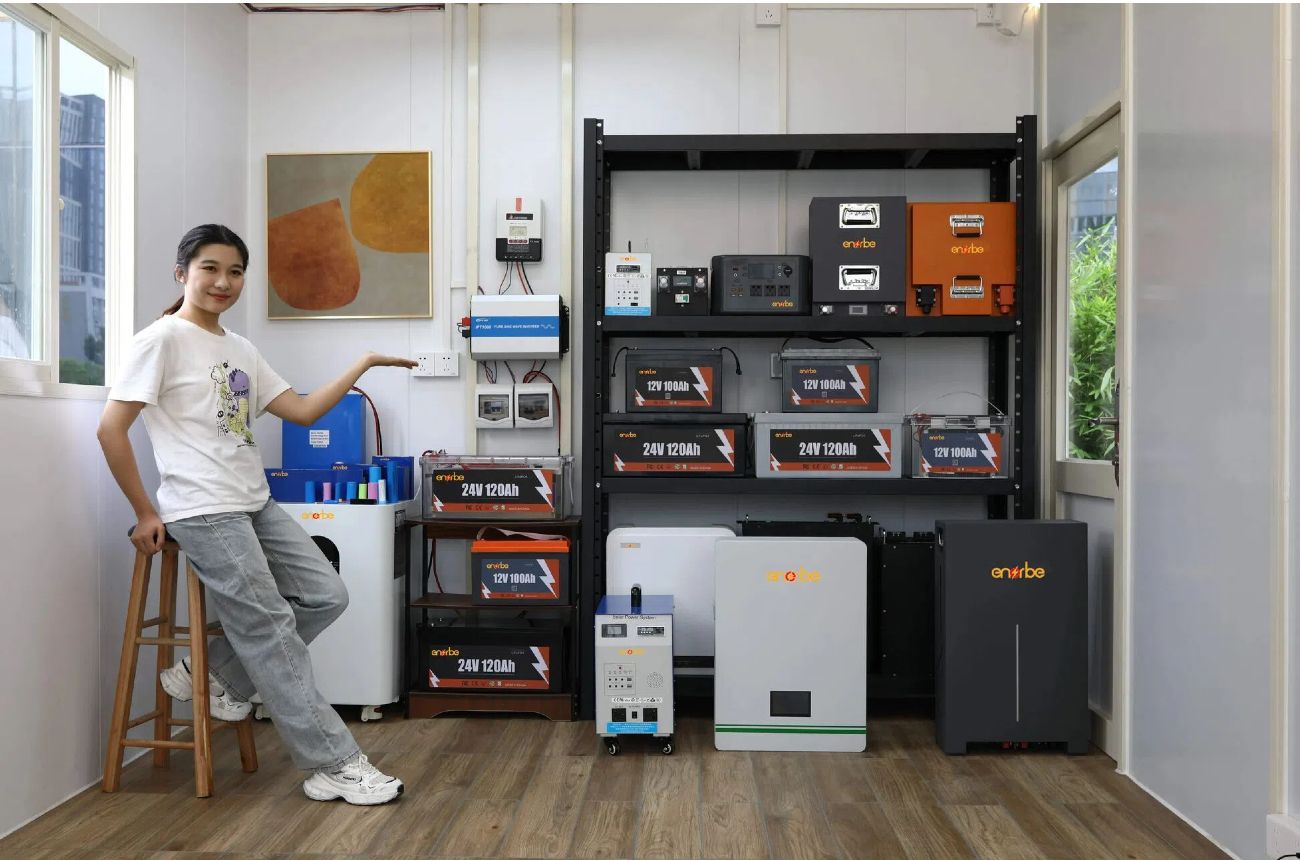
Enerbe designs and manufactures LiFePO4 batteries with charging-optimized BMS technology, making them easy and safe to charge with standard LiFePO4 chargers and solar inverters. Our batteries are built for B2B applications where reliable charging and long cycle life are critical.
Enerbe Charging Advantages:
-
Standard CC/CV charging profile: Compatible with all major LiFePO4 chargers and solar inverters (Victron, Deye, Growatt, GoodWe, and more)
-
Accurate voltage thresholds: BMS precisely controls charge/discharge cutoff voltages for maximum safety and cycle life
-
Low-temperature charging protection: BMS automatically disables charging below 0°C to prevent lithium plating
-
Active cell balancing: BMS balances cells during CV stage for consistent capacity and long-term performance
-
CAN bus / RS485 communication: Real-time charging data (voltage, current, SOC, temperature) available via inverter or monitoring app
-
Wide charge current range: Supports 0.2C–1C charging for flexible applications
-
Technical support: Our engineering team provides charger compatibility guidance and charging setup support for B2B customers
Explore our full range of LiFePO4 battery products, including 12V, 24V, and 48V rack-mounted solutions for solar energy storage, UPS, telecom, and commercial applications.
Get In Touch
Need LiFePO4 batteries with reliable charging performance for your project? Contact Enerbe today.
📄 Request Charging Specifications & Datasheet
Contact Us →📞 Speak with Our Engineering Team
Get In Touch →🔗 Browse Our LiFePO4 Battery Solutions
View Products →Dongguan A&S Power Technology Co., Limited.
Building 1, No. 2, Keji 9th Road,
Songshan Lake, Dongguan, Guangdong, China
📞 +86 137 1383 1631
✉ info@aspowerbattery.com
Charge Smart. Charge Safe.



LiFePO4 Battery Charging for Commercial & Industrial Systems: Best Practices (2026)
LiFePO4 Battery Not Charging? Troubleshooting & Fixes (7 Common Causes 2026)
Related Article



Get In Touch
Have questions about custom lithium batteries, energy storage solutions, or lead-to-lithium conversion? Our team is ready to help. Send us a message and we’ll respond within 24 hours.

Building 1, No. 2, Keji 9th Road, Songshan Lake, Dongguan, Guangdong, China
Office Address

info@aspowerbattery.com
Email Us

+86 137 1383 1631
Call Us

Sun - Fri (08AM - 10PM)
Office Open
