
LiFePO4 Battery Safety: Handling, Storage, Installation & Fire Guide (2026)

Table of Contents
- Introduction: Is LiFePO4 the Safest Battery Chemistry?
- LiFePO4 Safety at a Glance: Chemistry, BMS & Use
- LiFePO4 vs NMC: Safety Comparison (Data)
- Understanding Thermal Runaway in LiFePO4 Batteries
- LiFePO4 Fire Behavior & Real-World Risk Data
- LiFePO4 Battery Storage Safety: Handling, Storage & Installation
- The Role of BMS in LiFePO4 Battery Safety
- Safety Certifications & Standards Checklist (UL9540, UL1973)
- LiFePO4 Battery Safety Precautions: B2B Buyer & Installer Checklist
- Extreme Environment Risks (Low Pressure, Moisture, Salt Spray)
- What to Do If a LiFePO4 Battery Catches Fire
- Related Resources
- Frequently Asked Questions
- Summary
LiFePO4 Battery Safety: Handling, Storage, Installation & Fire Guide (2026)
Last updated: September 2026 | Written by the Enerbe Engineering Team
Introduction: Is LiFePO4 the Safest Battery Chemistry?
Quick Answer: LiFePO4 battery safety is the product of three layers working together: an inherently stable phosphate cathode (thermal-runaway onset around 270°C, roughly 70–120°C higher than NMC), a full-protection BMS, and correct charging, installation and maintenance. The chemistry removes most of the fuel; the BMS interrupts most electrical faults; certified equipment, proper ventilation and disciplined handling do the rest. This page is the practical, technical reference for buyers and installers—temperature limits, safe charging and storage, BMS thresholds, certifications, a lifecycle checklist, extreme-environment precautions and fire response. If you simply want the buyer answer to “are LiFePO4 batteries safe for my home, RV or boat?” see our Are LiFePO4 Batteries Safe? Q&A; for thermal-runaway electrochemistry, UL 9540A and BESS fire engineering, see the Thermal Runaway & Fire-Protection Engineering Guide.
LiFePO4 battery safety is one of the primary reasons this chemistry has become the dominant choice for stationary energy storage, solar systems, RVs, marine applications, golf carts, and commercial BESS projects. As the energy storage industry scales from GWh to TWh, understanding the real safety profile of LiFePO4—its strengths, limitations, and proper handling—is critical for system integrators, project developers, and procurement managers.
This guide is the operational reference for LiFePO4 battery safety: how thermal runaway actually occurs and its temperature stages, real LiFePO4 fire behavior and incident data, safe charging, storage, installation and transport, the BMS protection thresholds that matter, UL 1973 / UL 9540 / UL 9540A and other certifications, a lifecycle safety checklist, extreme-environment precautions, and exactly what to do in a fire emergency. The direct buyer questions—are LiFePO4 batteries safe, do they catch fire or explode, are they safe indoors or in an RV/boat, and how does LFP compare with NMC and lead-acid—are answered in plain language in our dedicated Are LiFePO4 Batteries Safe? buyer Q&A.
For a complete overview of LiFePO4 battery technology, see our What Is a LiFePO4 Battery Guide. For sourcing across all applications, see our B2B Sourcing Guide.
LiFePO4 Safety at a Glance: Chemistry, BMS and Use
The LFP battery safety margin is built into the cathode. The strong phosphorus–oxygen (P–O) covalent bond in lithium iron phosphate holds the oxygen atoms in place, so the cathode releases very little oxygen even under thermal stress—the key difference from NMC/NCA, whose cathode decomposes and feeds oxygen to a fire. The engineering properties that follow are summarized below.
Why the chemistry is inherently stable:
-
High thermal-runaway onset: LiFePO4 begins thermal decomposition at ~270°C, compared with ~150–200°C for NMC/NCA—a 70–120°C margin that buys response time
-
Minimal oxygen release: the phosphate structure does not self-supply the oxygen a fire needs, so LFP cells typically vent and smoke rather than sustain a flame
-
Lower, slower heat release: a lower peak heat-release rate and slower cell-to-cell propagation make incidents easier to cool and contain
-
Less toxic gas volume: LFP runaway produces fewer fluorinated compounds than NMC, though all lithium battery fires still generate hazardous gases (CO, HF, POF3)
-
No cobalt, lead or cadmium: a lower-toxicity chemistry—the electrolyte itself remains flammable, so the pack is not “non-flammable”
Where to find each safety topic in this article cluster:
Buyer decision — “is it safe at home, in an RV or on a boat, can it catch fire or explode, LFP vs NMC vs lead-acid”: see Are LiFePO4 Batteries Safe? (buyer Q&A)
Engineering detail — thermal-runaway stages, thermal propagation, UL 9540A test levels, off-gas chemistry and NFPA 855 fire design: see the Thermal Runaway & Fire-Protection Engineering Guide
This page — safe operating limits, charging, storage, installation, transport, BMS thresholds, certifications and fire-response procedures
Engineering caveat: a higher onset temperature reduces the likelihood and severity of a fire; it does not make the battery risk-free. Mechanical damage, short circuits, charging beyond BMS limits or an external fire can still drive an LFP cell into runaway. In practice it is the combination of chemistry, a quality BMS and correct system design that delivers the safety record—not the chemistry alone. For the full chemistry and voltage background, see our LFP battery guide.
LiFePO4 vs NMC: Safety Comparison (Data)
For engineering and procurement decisions, comparing LFP against the most common high-energy chemistry—NMC (nickel manganese cobalt)—shows exactly where the LFP safety margin comes from. The table below gives the engineering data; a plain-language three-way comparison that also includes lead-acid is in the Are LiFePO4 Batteries Safe? buyer Q&A.
| Safety Parameter | LiFePO4 (LFP) | NMC / NCA | Safety Advantage |
|---|---|---|---|
| Thermal runaway onset | ~270°C | ~150-200°C | ✅ LiFePO4 (70-120°C higher) |
| Oxygen release on decomposition | No (P-O bond stabilizes oxygen) | Yes (releases O2 that feeds fire) | ✅ LiFePO4 (no self-oxidation) |
| Peak heat release rate | Lower (~3-5 kW per cell) | Higher (~8-15 kW per cell) | ✅ LiFePO4 (less violent) |
| Fire probability (relative) | 1x (baseline) | ~2.3x higher | ✅ LiFePO4 |
| Thermal propagation between cells | Slower, easier to contain | Rapid, difficult to contain | ✅ LiFePO4 |
| Toxic gas (HF) release | Lower volume | Higher volume | ✅ LiFePO4 (still hazardous) |
| Energy density | 90-160 Wh/kg | 150-280 Wh/kg | ⚠️ NMC (higher density = more energy per fire) |
| Cycle life | 3,000-6,000 cycles | 1,000-2,000 cycles | ✅ LiFePO4 (less degradation = safer long-term) |
Engineering takeaway: in stationary storage, solar, marine and RV applications where space is not the primary constraint, LFP's lower energy density is itself a safety advantage—less energy stored per kilogram means less energy released in a fault. The lower heat-release rate and slower propagation shown above are exactly the quantities UL 9540A propagation testing measures; for that analysis see the Thermal Runaway & Fire-Protection Engineering Guide, and for cycle-life and longevity data the LiFePO4 battery lifespan guide.
Understanding Thermal Runaway in LiFePO4 Batteries
Thermal runaway is the fundamental safety risk in all lithium-ion batteries, including LiFePO4. It is an uncontrolled, self-heating chain reaction: once a cell's internal temperature exceeds the decomposition threshold, exothermic reactions release more heat, which accelerates more reactions, leading to rapid temperature rise, gas venting, and potentially fire or explosion.

Research has identified three primary triggers for lithium-ion battery thermal runaway: mechanical abuse, electrical abuse, and thermal abuse. Before examining each, it helps to understand the temperature stages a cell passes through on the path to runaway:
| Cell Temperature | What Happens | Safety Implication |
|---|---|---|
| < 80°C | Normal operation; controlled electrochemical reactions | Safe operating region |
| 80-120°C | SEI (solid electrolyte interphase) layer begins to decompose | First exothermic stage; early warning |
| 120-200°C | Separator melts; internal short circuit becomes possible | NMC can enter runaway here; LFP still stable |
| 200-270°C | Cathode decomposition begins; electrolyte vaporizes and vents | NMC runaway zone; LFP approaching threshold |
| > 270°C (LFP) | LiFePO4 cathode decomposes; violent venting, possible ignition | LiFePO4 thermal runaway; ~70-120°C later than NMC |
Key Point: The ~70-120°C safety margin between NMC and LiFePO4 is the single most important number in LFP battery safety. In a real fault, that margin translates into minutes of additional response time, slower propagation between cells, and a far higher chance that cooling or fire suppression succeeds before runaway becomes self-sustaining.
1. Mechanical Abuse
Mechanical abuse occurs when external forces cause structural deformation or internal damage to the battery. This can trigger safety risks by damaging the separator and causing short circuits between electrodes.
| Scenario | Risk Mechanism | LiFePO4 Context |
|---|---|---|
| Vehicle collision / impact | Impact deforms battery structure | Relevant for EV and mobile applications |
| Penetration / puncture | Direct damage to separator and electrodes | Nail penetration test is standard safety test |
| Crushing / compression | Internal short circuit from compression | Relevant for rack-mount systems under load |
| Vibration / fatigue | Long-term vibration loosens connections, causes internal damage | Relevant for marine, RV, and mobile applications |
2. Electrical Abuse
Electrical abuse occurs when the battery operates outside normal electrical parameters, causing abnormal internal electrochemical reactions. This is the most common trigger in stationary energy storage applications.
| Scenario | Risk Mechanism | Prevention |
|---|---|---|
| Overcharging | Lithium dendrite growth penetrates separator; electrolyte decomposition | BMS over-voltage protection (3.65V/cell); correct charger voltage |
| Over-discharging | Copper dissolution and deposition causes internal shorts | BMS under-voltage protection (2.5V/cell); low-voltage cutoff |
| External short circuit | Rapid discharge generates excessive heat; can melt conductors | BMS short-circuit protection; fuses; proper wiring |
| Over-current discharge | I²R heating exceeds thermal dissipation; cell heating | BMS over-current protection; properly sized loads |
Correct charging is the most effective defense against electrical abuse. For exact charge voltages, current limits, and the CV phase, see our How to Charge LiFePO4 Batteries Guide. If a battery refuses to charge after being over-discharged, use our LiFePO4 not charging troubleshooting guide—never force-charge a damaged pack.
3. Thermal Abuse
Thermal abuse occurs when the battery is exposed to high temperatures for extended periods, causing thermal instability in component materials. For LiFePO4, this requires significantly higher temperatures than NMC (~270°C vs ~150°C), but external fire or inadequate cooling can still trigger it.
| Scenario | Risk Mechanism | Prevention |
|---|---|---|
| High ambient temperature | Material degradation accelerates; SEI breakdown | Operate within -20°C to 60°C discharge range; ventilation |
| External fire exposure | Direct heating triggers chain reaction; cell venting | Fire-rated enclosures; thermal barriers between cells |
| Inadequate cooling | Heat accumulation exceeds dissipation during high-rate cycling | Active cooling for high-rate systems; proper spacing |
| Charging above 45°C | Accelerated SEI growth; lithium plating risk | BMS charge temperature protection (0-45°C); cooling |
LiFePO4 Fire Behavior & Real-World Risk Data
LiFePO4 fires are rare but real, so the useful questions for an installer or integrator are how often they occur, what they look like, and why they are difficult to fight. The direct buyer answer to “do LiFePO4 batteries catch fire or explode?” is in the Are LiFePO4 Batteries Safe? Q&A; here we focus on the incident patterns and fire behavior that drive engineering and insurance decisions. In field data, the probability and severity of a LiFePO4 battery fire are markedly lower than for NMC, and almost every incident involves one or more preventable factors.
Real-world LiFePO4 fire statistics and patterns:
-
Residential solar storage: Industry data shows approximately 1-2 fire incidents per 10,000 installed LiFePO4 systems per year, with most involving installation errors (wrong charger, undersized wiring, no BMS communication)
-
Marine/RV applications: Slightly higher incident rate due to vibration, moisture exposure, and DIY installations without proper fusing or ventilation
-
Commercial BESS: Very low incident rate when properly designed and installed; most incidents involve manufacturing defects or thermal propagation between modules without proper fire barriers
-
Almost all fires involve one of these: (1) no BMS or BMS bypassed, (2) wrong charger voltage, (3) physical damage from crash/puncture, (4) external fire exposure, (5) manufacturing defect (internal short from contamination), (6) modified or DIY battery packs without proper protection
LiFePO4 fire characteristics (different from NMC):
-
Slower onset: LiFePO4 thermal runaway typically develops over minutes rather than seconds, giving more time for evacuation and response
-
Less explosive: LiFePO4 does not release oxygen, so the fire is more like a “chemical fire” than an “explosion”—though cell venting can still be violent
-
Harder to extinguish: Like all lithium battery fires, a LiFePO4 battery fire can self-sustain even without external oxygen because the electrolyte provides fuel. Water can cool the battery but may not stop the chemical reaction
-
Re-ignition risk: LiFePO4 battery fires can re-ignite hours or days after being “extinguished” as remaining cells reach thermal runaway. This is why battery fire incidents require extended monitoring
⚠️ Critical Safety Note
A properly manufactured LiFePO4 battery with a functioning BMS, correct charger, and proper installation has an extremely low fire risk—comparable to or lower than many common household appliances. The danger comes from bypassing safety systems, using incompatible equipment, or physical damage. Never bypass the BMS, never use a lead-acid charger on a LiFePO4 battery, and never use a damaged or swollen battery.
LiFePO4 Battery Storage Safety: Handling, Storage & Installation
Proper handling, storage, and installation are the most effective ways to prevent LiFePO4 battery dangers. Follow these LiFePO4 battery storage safety and handling guidelines for safe operation throughout the battery's lifecycle. For a longer treatment of shelf storage and maintenance, see our LiFePO4 battery storage & maintenance guide.
Safe Charging Practices
-
Use a LiFePO4-specific charger: Charge voltage must be 14.6V (12V), 29.2V (24V), or 58.4V (48V/51.2V). Never use a lead-acid charger (13.8V float / 14.4V absorption) or a NMC charger (16.8V for 4S)
-
Charge within temperature range: Only charge when battery temperature is between 0°C and 45°C. Charging below 0°C causes lithium plating and permanent damage; charging above 45°C accelerates degradation
-
Limit charge current: Use 0.2C-0.5C charge current for normal use (e.g., 20-50A for a 100Ah battery). Fast charging above 1C generates more heat and reduces cycle life
-
Never leave charging unattended for extended periods: Especially for new installations or batteries under warranty claim. A functioning BMS should prevent overcharge, but equipment failures can happen
Safe Storage (LiFePO4 Battery Storage Safety)
-
Store at 50-70% state of charge: Storing at 100% or 0% for long periods accelerates degradation and can trigger BMS under-voltage protection. Check and recharge to 50% every 3-6 months during storage
-
Storage temperature: Ideal storage temperature is 15°C-25°C (59°F-77°F). Never store below -10°C or above 50°C for extended periods
-
Dry, ventilated location: Store in a cool, dry, well-ventilated area away from direct sunlight, heat sources, and flammable materials. Avoid humid environments that can cause corrosion
-
Disconnect all loads during storage: Even small parasitic draws (LED indicators, monitoring devices) can slowly discharge the battery over weeks, triggering under-voltage protection
-
Do not store in sealed containers: In the rare event of cell venting, gases need to dissipate. Store in a battery box or cabinet with ventilation, not an airtight container
Safe Installation
-
Proper fusing: Install a fuse or circuit breaker on the positive terminal as close to the battery as possible. Fuse rating should match the maximum continuous discharge current of the BMS
-
Correct wire gauge: Use appropriately sized cables for the maximum current. Undersized wires overheat, voltage-drop, and can melt insulation—creating a fire risk independent of the battery. See our wire gauge guide for battery connections
-
Secure mounting: Mount batteries securely to prevent movement, vibration, and impact. For marine and RV applications, use battery trays or straps rated for the battery weight
-
Adequate spacing: Leave at least 5-10cm (2-4 inches) between batteries for airflow and heat dissipation. Do not stack batteries directly on top of each other without a thermal barrier
-
BMS communication: Connect the BMS communication port (CAN bus / RS485 / Bluetooth) to the inverter or monitoring system. This allows the inverter to shut down before the BMS reaches hard protection limits, reducing stress on the battery
-
Never parallel batteries of different ages, capacities, or chemistries: Mixing batteries causes unequal current sharing, overcharging of weaker batteries, and accelerated degradation. Use matched batteries from the same manufacturer and batch
For the full step-by-step installation procedure, including series/parallel wiring and commissioning, see our How to Install a LiFePO4 Battery Guide.
Safe Transportation
-
UN38.3 certified: Ensure the battery has UN38.3 transport safety certification. This is mandatory for air and sea shipping of lithium batteries
-
Ship at 30-50% SOC: Most carriers require lithium batteries to be shipped at 30-50% state of charge to minimize fire risk during transport
-
Protect terminals: Cover terminals with insulating caps or tape to prevent short circuits during handling. Never transport batteries with loose metal objects in the same container
-
Original packaging: Use the manufacturer's original packaging with appropriate cushioning. For commercial shipments, use UN-certified packaging with proper hazard labels
For shipping documentation, labels, and carrier rules, see our LiFePO4 battery shipping & certifications guide.
The Role of BMS in LiFePO4 Battery Safety
The Battery Management System (BMS) is the single most important safety component in a LiFePO4 battery. A well-designed BMS prevents the vast majority of electrical abuse scenarios that could lead to thermal runaway. Without a functioning BMS, even a LiFePO4 battery can be dangerous.
Key BMS safety protection features:
| Protection | What It Does | Typical LiFePO4 Threshold |
|---|---|---|
| Over-voltage protection (OVP) | Disconnects charging when any cell exceeds safe voltage | 3.65V per cell (14.6V / 29.2V / 58.4V) |
| Under-voltage protection (UVP) | Disconnects discharge when any cell drops below safe voltage | 2.5V per cell (10V / 20V / 40V) |
| Over-current protection (OCP) | Disconnects discharge when current exceeds rating | 1C-2C continuous (e.g., 100A-200A for 100Ah) |
| Short-circuit protection (SCP) | Instantly disconnects output on short circuit | < 1ms response time |
| Over-temperature protection (OTP) | Disconnects charge/discharge when temperature exceeds limit | 60°C discharge / 45°C charge |
| Under-temperature protection (UTP) | Disconnects charging below freezing (prevents lithium plating) | 0°C charge cutoff |
| Cell balancing | Equalizes cell voltages during charge to prevent one cell from going over-voltage | Passive balancing (50-100mA per cell) |
| Cell monitoring | Continuously monitors individual cell voltage and temperature | ±5mV accuracy; per-cell NTC thermistors |
B2B procurement tip: When evaluating LiFePO4 battery suppliers, ask for the BMS manufacturer, firmware version, and whether the BMS has been tested to UL 1973 or IEC 62619. A battery is only as safe as its BMS—cheap BMS units from unknown manufacturers may not provide accurate cell monitoring or reliable protection, creating a hidden safety risk. Learn how cell balancing protects the weakest cell in our LiFePO4 cell balancing guide, and how to recover a BMS that has entered protection in our BMS reset guide.
Safety Certifications & Standards Checklist (UL9540, UL1973)
For B2B buyers, verifying safety certifications is the most reliable way to ensure a LiFePO4 battery meets independent safety standards. UL9540 and UL9540A are the certifications fire marshals and insurers most often require for commercial energy storage, while UL1973 covers the battery itself. Here is the complete checklist:
| Certification / Standard | What It Covers | Required For |
|---|---|---|
| UL 1973 | Battery safety for stationary storage and motive applications | US projects, insurance, AHJ approval |
| UL 9540 | Complete energy storage system safety (battery + inverter + enclosure) | Grid-tied ESS, fire marshal approval |
| UL 9540A | Thermal runaway fire propagation testing (cell, module, unit, installation levels) | Large-scale BESS, fire code compliance |
| IEC 62619 | International safety standard for industrial lithium batteries | EU and global projects, CE marking |
| UN38.3 | Lithium battery transport safety (8 tests including altitude, thermal, vibration, shock, external short, impact, overcharge, forced discharge) | All air/sea shipping |
| CE / RoHS | EU conformity (health, safety, environmental protection) | EU market access |
| GB 38031-2025 | China's mandatory national safety standard for EV traction batteries (effective July 1, 2026). Requires no fire, no explosion for 2 hours after thermal runaway, 5-minute warning, bottom impact testing, and 300 fast-charge cycle safety testing. Called the “strictest battery safety standard in history.” | China EV market; increasingly referenced as global benchmark |
| GB 18384-2025 | China's safety requirements for electric vehicles (companion to GB 38031-2025) | China EV market |
| IEEE 1547 | Grid interconnection standard for distributed energy resources | Grid-tied BESS, utility interconnection |
| ISO 9001 | Quality management system certification (indicates consistent manufacturing quality) | All B2B procurement (quality indicator) |
Verification tip: Always verify certifications directly with the issuing body (UL, IEC, TÜV, etc.) rather than relying on the supplier's marketing materials. Certificates can be expired, revoked, or not model-specific. A certificate for a different battery model does not apply to the one you are purchasing. For the full certification list and how to verify each document, see our BESS Certification & Compliance Guide, and for the Chinese standard in detail, our GB 38031-2025 safety standard guide.
LiFePO4 Battery Safety Precautions: B2B Buyer & Installer Checklist
The most important LiFePO4 battery safety precautions span the entire lifecycle—procurement, installation, operation, and maintenance. Use this checklist to reduce fire and failure risk on commercial projects.
| Stage | Safety Precaution | Acceptance Check |
|---|---|---|
| Procurement | Specify Grade A cells, a named BMS, and UL1973/IEC62619/UN38.3 certification | Verify certificates with the issuing body; match model numbers |
| Procurement | Require per-cell voltage monitoring and CAN/RS485/Bluetooth reporting | Read live cell data before accepting the shipment |
| Installation | Fit a correctly rated fuse/breaker at the battery positive terminal | Fuse rating ≤ BMS continuous discharge current |
| Installation | Use correctly sized cables; torque terminals to spec | No heat rise or voltage drop under rated load |
| Installation | Provide ventilation and 5-10cm spacing; keep away from heat/ignition | Ambient within rated range; no sealed enclosure |
| Operation | Use a LiFePO4-specific charger profile; never a lead-acid charger | 14.6V / 29.2V / 58.4V charge voltage confirmed |
| Operation | Never charge below 0°C; avoid deep discharge below 20% SOC | BMS low-temp charge cutoff active |
| Maintenance | Quarterly: inspect terminals, cell voltage spread, and enclosure seals | Cell spread <50mV; no corrosion or swelling |
| Maintenance | Remove from service any swollen, dented, wet, or overheated pack | Quarantine outdoors; contact supplier; recycle properly |
| Storage | Store at 50-70% SOC, 15-25°C, dry and ventilated; recharge every 3-6 months | Log storage SOC and recharge dates |
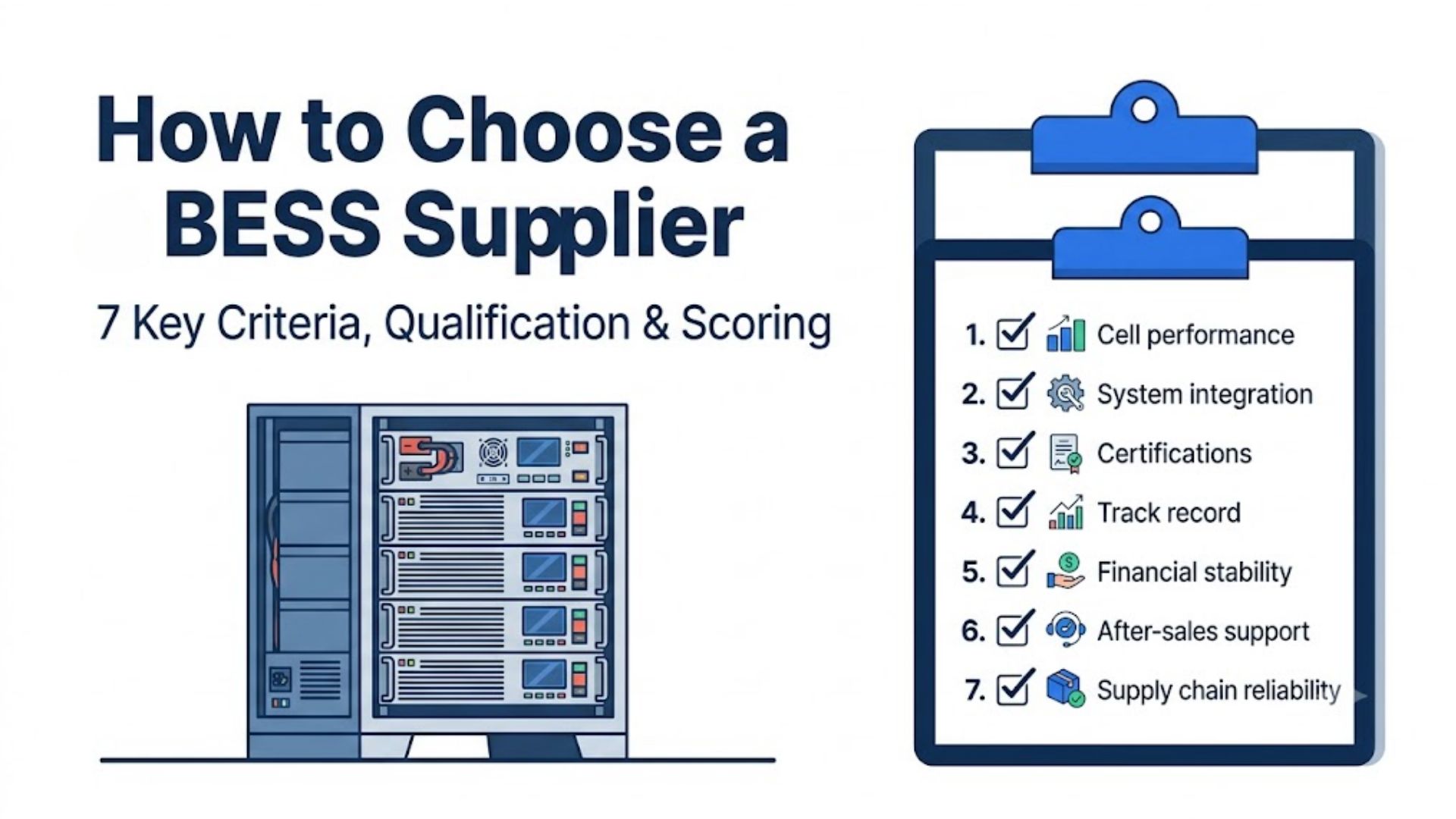
For supplier-side due diligence to back these checks, see our reliable BESS supplier vs risky supplier guide and the 7 BESS supplier selection criteria.
Extreme Environment Risks (Low Pressure, Moisture, Salt Spray)
Beyond the three primary thermal runaway triggers, three extreme environments can significantly impact LiFePO4 battery safety and reliability. These are particularly relevant for marine, high-altitude, and coastal applications.
| Environment | Risk | Prevention / Mitigation |
|---|---|---|
| Low-Pressure (High Altitude / Aviation) | Cell swelling, casing deformation, seal failure due to pressure differential between inside and outside the cell | Low-pressure testing certification (UN38.3 altitude test); pressure-relief vents on cells; avoid unpressurized cargo hold for extended periods |
| Wet / Moisture (Marine / Outdoor) | Insulation failure, short circuits, corrosion of terminals and internal components; water ingress can cause electrolysis and gas generation | IP65/IP67 rated enclosures; marine-grade terminals (tinned copper); dielectric grease on connections; regular inspection for corrosion; proper ventilation to prevent condensation |
| High Salt-Spray (Coastal / Marine) | Contact oxidation, resistance increase, arcing at connections; salt crystals can bridge terminals and cause leakage currents; accelerated corrosion of steel enclosures | 1,000+ hours salt-spray testing certification; stainless steel (316) hardware; powder-coated or aluminum enclosures; regular terminal cleaning and anti-corrosion treatment; sealed battery compartments with corrosion-resistant vents |
For marine and coastal applications, LiFePO4 battery safety precautions should include regular (quarterly) inspection of terminals, enclosure seals, and BMS communication connections. Salt air is one of the most corrosive environments for electrical equipment, and prevention is far more effective than repair. For application-specific guidance, see our Marine LiFePO4 Battery Complete Guide and the 24V lithium marine battery guide.
What to Do If a LiFePO4 Battery Catches Fire
In the unlikely event of a LiFePO4 battery fire, knowing the correct response can save lives and property. LiFePO4 battery fires have unique characteristics that require specific response procedures.
Immediate Response (First 30 Seconds)
-
Evacuate immediately: Get all people and pets away from the area. Lithium battery fires can escalate rapidly and produce toxic gases (CO, HF, POF3, electrolyte vapor). Do not attempt to retrieve belongings
-
Call emergency services: Call your local fire department and explicitly state “lithium battery fire” so they can respond with appropriate equipment and training
-
Disconnect power if safe to do so: If you can safely reach the charger/inverter disconnect without approaching the battery, turn off the power. Do not approach a smoking, venting, or burning battery
-
Do not move the battery: Moving a burning or venting battery can spread burning electrolyte, accelerate thermal propagation, and expose you to toxic gases. Let it burn in place if it is not threatening other structures
Firefighting Considerations
-
Water is the most effective extinguishing agent: Large volumes of water can cool the battery and prevent thermal propagation to adjacent cells/modules. However, water may not stop the chemical reaction inside a cell in thermal runaway—it only cools the surrounding area
-
ABC dry chemical extinguishers are NOT effective: Standard ABC extinguishers may smother the visible flame but do not cool the battery, and the fire will likely re-ignite. They are useful only for initial small flames and protecting escape routes
-
Class D extinguishers (for metal fires): Not typically effective for lithium-ion battery fires because the fuel is organic electrolyte, not lithium metal. Class D is for lithium metal batteries (non-rechargeable), not Li-ion
-
CO2 extinguishers: Can suppress visible flames but do not cool the battery; re-ignition is likely. Useful for protecting electrical equipment and escape routes
-
Specialized lithium battery fire suppression: Some systems (F-500 encapsulating agent, lithium battery fire blankets, water mist systems) are more effective for lithium battery fires. For commercial BESS installations, consider dedicated fire suppression systems designed for lithium battery applications and validated under UL9540A
Post-Fire Safety
-
Re-ignition risk: LiFePO4 battery fires can re-ignite hours or days after being “extinguished” as remaining cells reach thermal runaway. Monitor the battery for at least 24-48 hours after the fire is out
-
Toxic residue: The area will have toxic residue (HF, fluorinated compounds, electrolyte decomposition products). Do not enter without proper PPE (respirator, chemical-resistant gloves, eye protection). Professional hazmat cleanup is recommended
-
Do not reuse the battery: A battery that has experienced thermal runaway or fire is permanently damaged and must be disposed of properly. Even if it appears to “recover,” internal damage makes it unsafe
-
Proper disposal: Contact a certified lithium battery recycling facility or hazardous waste disposal service. Do not put damaged lithium batteries in regular trash or recycling bins
🚨 Emergency Priority
Life safety always comes first. A LiFePO4 battery can be replaced—you cannot. If a battery is smoking, venting, swelling, or on fire, evacuate immediately and call emergency services. Do not attempt to move, touch, or extinguish a venting or burning battery unless you have specific training and appropriate PPE.
Related Resources
-
Are LiFePO4 Batteries Safe? Buyer Q&A — direct answers on fire and explosion risk, home, RV and boat use, and LFP vs NMC vs lead-acid
-
Thermal Runaway & BESS Fire-Protection Engineering Guide — electrochemical stages, thermal propagation, UL 9540A, off-gas and NFPA 855 design
-
What Is a LiFePO4 Battery? Complete Guide — chemistry, voltage, capacity, and BMS basics behind the safety profile
-
BESS Certification & Compliance Guide — UL9540, UL9540A, UL1973, IEC 62619 verification for projects
-
GB 38031-2025 Battery Safety Standard Guide — China's strictest thermal-runaway and no-fire requirements
-
Reliable BESS Supplier vs Risky Supplier — evaluating BMS quality, certifications, and manufacturing standards
-
BESS Supplier Selection: 7 Key Criteria — safety and quality due diligence checklist
-
How to Balance LiFePO4 Batteries — cell balancing, per-cell monitoring, and healthy voltage spread
-
How to Reset BMS on LiFePO4 Battery — BMS protection mode and reset procedures
-
How to Wake Up a LiFePO4 Battery — recovering a pack after under-voltage protection
-
How to Charge LiFePO4 Batteries — correct charge voltage, current, and temperature limits
-
How to Install a LiFePO4 Battery — fusing, wiring, spacing, and commissioning
-
LiFePO4 Battery Storage & Maintenance Guide — long-term storage SOC, temperature, and inspection routine
-
LiFePO4 Battery Shipping & Certifications — UN38.3, SOC limits, labels, and packaging
-
LiFePO4 Battery Lifespan Guide — how safe operation affects cycle life and longevity
-
Marine LiFePO4 Battery Complete Guide — moisture, salt-spray, and vibration safety on the water
-
LiFePO4 Battery FAQ — answers to ventilation, charging, and handling questions
Frequently Asked Questions
The questions below cover safe operation, installation and emergency response. For buyer-decision questions—whether LiFePO4 is safe for homes, RVs or boats, whether it can catch fire or explode, and chemistry comparisons—see Are LiFePO4 Batteries Safe?; for thermal-runaway electrochemistry and UL 9540A engineering, see the Fire-Protection Engineering Guide.
Is thermal runaway possible in LiFePO4 batteries?
Yes, but it requires far more severe abuse than NMC. An LFP cell does not enter runaway until roughly 270°C (versus 150–200°C for NMC/NCA), and because the phosphate cathode releases very little oxygen the reaction is less violent and propagates more slowly. In practice it almost always follows an identifiable trigger—crush or puncture, overcharge with a failed or bypassed BMS, an external fire, or a manufacturing defect. For the electrochemical stages, heat-release data and how to read UL 9540A propagation results, see the Thermal Runaway & Fire-Protection Engineering Guide.
What are the safe charge, discharge and storage temperatures for LiFePO4?
Typical ratings are: discharge −20°C to 60°C; charging 0°C to 45°C, with the BMS locking out charging below 0°C to prevent lithium plating; long-term storage 15–25°C at 50–70% SOC—never below −10°C or above 50°C for extended periods. Do not charge above 45°C, and provide airflow (or active cooling and derating) for high-rate charging, heavy continuous loads or high-ambient installations where cells run hot.
What are the most important LiFePO4 battery safety precautions?
The most important precautions are: (1) buy certified batteries (UL 1973, IEC 62619, UN38.3) with a quality, named BMS and per-cell monitoring; (2) use a LiFePO4-specific charger at the correct voltage (14.6V/29.2V/58.4V) and never a lead-acid charger; (3) install a correctly rated fuse at the battery, use properly sized cables, and torque terminals to spec; (4) provide ventilation and spacing, and keep batteries away from heat and ignition sources; (5) never charge below 0°C and avoid deep discharge; (6) store at 50-70% SOC in a cool, dry, ventilated place and recharge every 3-6 months; (7) immediately quarantine any swollen, dented, wet, or overheated battery and do not return it to service.
What clearance and ventilation does a commercial LiFePO4 installation require?
A correctly functioning LFP battery emits no gas during normal operation, so small vented batteries need no lead-acid-style hydrogen ventilation. The fault case is different: if a cell vents it releases flammable and toxic gas, so never install any pack in a fully airtight enclosure, observe the manufacturer's clearance (commonly at least 5-10 cm between units for airflow), and keep battery compartments vented. Large indoor or walk-in BESS rooms must be engineered to NFPA 855/IFC with combustible-gas detection, exhaust ventilation, suppression and pressure relief signed off by the AHJ. See the Fire-Protection Engineering Guide for room design, and the buyer Q&A for home/RV/boat suitability.
How should I store LiFePO4 batteries safely?
Store LiFePO4 batteries at 50-70% state of charge in a cool, dry, well-ventilated area at 15-25°C (59-77°F). Never store below -10°C or above 50°C. Disconnect all loads (even small parasitic draws like LED indicators) to prevent slow discharge that triggers under-voltage protection. Check and recharge to 50% every 3-6 months during long-term storage. Do not store in sealed airtight containers (venting gases need to dissipate). Keep away from direct sunlight, heat sources, and flammable materials. For large battery banks, store in a dedicated battery cabinet or room with proper ventilation and fire-rated construction.
What safety certifications should a LiFePO4 battery or system have?
For stationary storage the key certifications are: UL 1973 (battery safety for stationary storage), UL 9540 (complete ESS system safety), UL 9540A (thermal-runaway fire-propagation testing), IEC 62619 (international industrial battery safety), UN38.3 (transport safety), CE/RoHS (EU conformity), and ISO 9001 (quality management). For grid-tied systems also verify IEEE 1547; for the Chinese market, GB 38031-2025 (effective July 2026). Always verify certificates directly with the issuing body—never rely solely on supplier marketing. For what each standard covers and how to verify documents, see the BESS Certification & Compliance Guide.
What fire extinguisher or suppression works on a LiFePO4 battery fire?
Use large volumes of water to cool the pack and stop propagation to adjacent cells—water cools even though it may not halt the reaction inside a cell already in runaway. ABC dry chemical and CO2 can knock down visible flames and protect an escape route but do not cool the battery, so re-ignition is likely; Class D extinguishers are for lithium-metal (non-rechargeable) batteries, not lithium-ion. Commercial BESS should use UL 9540A-validated suppression such as water-mist or encapsulating-agent systems. After the visible fire is out, keep monitoring for re-ignition for 24-48 hours.
What should I do if a LiFePO4 battery is swelling?
A swelling (bulging) LiFePO4 battery is a serious safety warning that indicates internal gas generation from electrolyte decomposition, overcharge, or an internal short. If you notice swelling: (1) immediately stop using the battery and disconnect all loads and chargers; (2) move it to a safe, well-ventilated, fire-resistant location (outdoors or on concrete away from flammables) using PPE (gloves, eye protection); (3) do not charge, discharge, “reset”, puncture or drain it; (4) monitor for increasing swelling, venting or temperature rise; (5) contact the manufacturer for warranty assessment and disposal instructions; (6) dispose of it through a certified lithium-battery recycling facility—never put a swollen battery in regular trash. A swollen battery must never be returned to service.
Is a BMS mandatory, and which protections must it include?
Yes for any multi-cell pack—the BMS is the primary safety device. Specify over-voltage protection (about 3.65V/cell), under-voltage protection (about 2.5V/cell), over-current and short-circuit disconnect, over-temperature protection (charge cut-off about 45°C, discharge about 60°C), under-temperature charge lockout (0°C), and cell balancing, with per-cell voltage and temperature monitoring (roughly ±5mV class) reported over CAN/RS485/Bluetooth. Confirm the BMS (and pack) is tested to UL 1973 or IEC 62619, and obtain the BMS manufacturer and firmware version. A pack operated without a BMS, or with a bypassed or no-name BMS, is not safe regardless of the cell brand.
Summary
LiFePO4 battery safety is fundamentally about understanding the chemistry's strengths and limitations, and implementing proper systems to manage the risks. Here are the key takeaways:
-
LiFePO4 is significantly safer than NMC: Higher thermal runaway threshold (~270°C), no oxygen release, lower fire probability (~2.3x lower), and slower thermal propagation
-
But LiFePO4 is not fireproof: Physical damage, overcharging, short circuits, and external fire can still trigger a LiFePO4 battery fire. The BMS and proper installation are what make LiFePO4 safe in practice
-
The BMS is the most important safety component: Verify BMS quality, protection thresholds, and certification. A battery is only as safe as its BMS
-
Use the correct charger: LiFePO4-specific charger with correct voltage (14.6V / 29.2V / 58.4V). Never use lead-acid or NMC chargers
-
Follow the safety precautions: Certified cells, proper fusing and wiring, ventilation, temperature limits, and quarterly inspection of cell voltage spread and terminals
-
Store properly: 50-70% SOC, 15-25°C, dry and ventilated, disconnected from all loads, check every 3-6 months
-
Verify certifications: UL 1973, UL 9540, UL 9540A, IEC 62619, UN38.3, CE/RoHS. Verify directly with the issuing body
-
In a fire emergency: Evacuate immediately, call emergency services (state “lithium battery fire”), do not move the battery, use large volumes of water for cooling, monitor for re-ignition for 24-48 hours
For B2B buyers, the safest LiFePO4 battery is not the one with the lowest price—it is the one from a manufacturer with proven BMS technology, full safety certifications, transparent quality control, and long-term warranty support. Enerbe provides LiFePO4 battery solutions with advanced BMS protection, robust thermal management, and full safety certifications (UL 1973, UN38.3, CE, RoHS, MSDS). For wholesale pricing, custom configurations, or safety documentation, contact our team.
Get In Touch
Need safety documentation or a quote for certified LiFePO4 batteries? Contact Enerbe today.
📄 Request Safety Certifications & Datasheet
Contact Us →📞 Speak with Our Engineering Team
Get In Touch →🔗 Browse Certified LiFePO4 Battery Products
View Products →Dongguan A&S Power Technology Co., Limited.
Building 1, No. 2, Keji 9th Road,
Songshan Lake, Dongguan, Guangdong, China
📞 +86 137 1383 1631
✉ info@aspowerbattery.com
Stay Charged. Stay Safe.



LiFePO4 Thermal Runaway & BESS Fire Protection: Engineering Guide (2026)
BESS Certification & Conformity Assessment Guide 2026: UL 1973, UL 9540, UL 9540A, IEC 62619 & GB 38031-2025
Related Article


Get In Touch
Have questions about custom lithium batteries, energy storage solutions, or lead-to-lithium conversion? Our team is ready to help. Send us a message and we’ll respond within 24 hours.

Building 1, No. 2, Keji 9th Road, Songshan Lake, Dongguan, Guangdong, China
Office Address

info@aspowerbattery.com
Email Us

+86 137 1383 1631
Call Us

Sun - Fri (08AM - 10PM)
Office Open
