
Marine LiFePO4 Battery: Complete Guide for Boat Builders, Dealers & B2B Buyers (2026)

Table of Contents
- Introduction: What Is a Marine LiFePO4 Battery?
- Why LiFePO4 Is the Best Chemistry for Marine Applications
- 12V vs 24V vs 48V: Choosing the Right Voltage for Your Boat
- Key Marine Applications for LiFePO4 Batteries
- LiFePO4 vs AGM vs Lead-Acid vs Gel: Marine Battery Comparison
- Marine-Grade Construction: 8 Features to Verify Before Sourcing
- Installation & Wiring Best Practices for Boats
- Charging Systems for Marine LiFePO4 Batteries
- Safety, Ventilation & Certifications for Marine Use
- Sizing Guide: How Many Amp-Hours Does Your Boat Need?
- B2B Sourcing: How to Choose a Reliable Marine LiFePO4 Supplier
- Frequently Asked Questions
- Related Resources
- Summary
Marine LiFePO4 Battery: Complete Guide for Boat Builders, Dealers & B2B Buyers
Last updated: September 2026 | Written by the Enerbe Engineering Team
Introduction: What Is a Marine LiFePO4 Battery?
Quick Answer: A marine LiFePO4 battery is a lithium iron phosphate battery purpose-built for the harsh marine environment—featuring vibration-resistant construction, corrosion-resistant terminals, IP-rated ingress protection, a built-in BMS with marine-specific protection parameters, and often Bluetooth monitoring. Unlike generic RV or solar LiFePO4 batteries, a true marine-grade battery is engineered to withstand constant vibration, humidity, salt spray, and wide temperature swings. For boat builders and dealers, switching from AGM to marine LiFePO4 reduces vessel weight by 60–70%, delivers 5–10x longer cycle life, and eliminates maintenance and off-gassing.
A marine LiFePO4 battery is the single most impactful upgrade you can make to a boat's electrical system. Whether you're a boat builder specifying house banks for a new production run, a marine dealer stocking drop-in replacements for retail customers, or a yacht outfitter designing a custom lithium system, lithium iron phosphate (LiFePO4) delivers advantages that lead-acid, AGM, and gel batteries simply cannot match: 60–70% less weight, 5–10x longer cycle life, zero maintenance, zero off-gassing, and consistent voltage output from 100% down to 10% state of charge.
This complete marine LiFePO4 battery guide covers everything B2B buyers need to know: what a marine-grade LiFePO4 battery is, why it outperforms traditional marine chemistries, how to choose between 12V, 24V, and 48V systems, key applications from house banks to trolling motors, a detailed comparison with AGM and lead-acid, the 8 marine-specific construction features to verify, installation and wiring best practices, charging system compatibility, safety and ventilation requirements, capacity sizing guidance, and a 7-criteria supplier evaluation framework.
For a complete overview of LiFePO4 battery technology, see our What Is a LiFePO4 Battery Complete Guide. For voltage-specific deep dives, see our 24V Lithium Marine Battery Guide and 12V 54Ah LiFePO4 Battery Guide for Marine & Trolling. For trolling motor-specific applications, see our 24V Lithium Trolling Motor Battery Guide.
Why LiFePO4 Is the Best Chemistry for Marine Applications
Marine environments demand more from batteries than almost any other application. Boats subject batteries to constant vibration, wide temperature fluctuations, high humidity, corrosive salt air, and limited space for ventilation and maintenance. LiFePO4 chemistry addresses every one of these challenges better than any other commercially available battery chemistry. Here are the six reasons LiFePO4 has become the dominant choice for new boat builds and retrofits:
1. Dramatic Weight Reduction
Weight is critical on boats. Every kilogram saved improves fuel efficiency, stability, acceleration, and payload capacity. A 12V 100Ah LiFePO4 battery weighs approximately 10–13 kg, while an equivalent Group 31 AGM battery weighs 30–36 kg—a 60–65% reduction. For a typical 40-foot sailboat with a 400Ah house bank (four 100Ah batteries), switching from AGM to LiFePO4 saves 80–100 kg. That's the equivalent of removing an adult passenger from the boat.
2. 5–10x Longer Cycle Life
Marine batteries are cycled frequently—especially on liveaboard boats, charter vessels, and fishing boats that spend extended periods at anchor. A quality marine AGM battery delivers 500–800 cycles at 50% depth of discharge (DoD). A marine LiFePO4 battery delivers 4,000–6,000+ cycles at 80% DoD. In real-world marine terms, an AGM house bank might last 2–4 years on a liveaboard, while a LiFePO4 bank will last 10–15 years. For a detailed breakdown of cycle life and longevity, see our LiFePO4 Battery Lifespan Guide.
3. Zero Maintenance and Zero Off-Gassing
Lead-acid and AGM batteries require regular maintenance: checking electrolyte levels (flooded), equalization charges, cleaning corrosion from terminals, and ensuring adequate ventilation to dissipate hydrogen gas produced during charging. LiFePO4 batteries require zero maintenance. They produce no hydrogen gas, no acid mist, and no terminal corrosion under normal operating conditions. This is a massive safety and convenience advantage on boats, where battery compartments are often small, poorly ventilated, and located in living spaces. For more on safety, see our LiFePO4 Battery Safety Guide.
4. Consistent Voltage Output
Lead-acid batteries experience significant voltage sag as they discharge. A fully charged 12V lead-acid battery sits at 12.7V, but by 50% state of charge it has dropped to 12.1V, and sensitive electronics may start malfunctioning. LiFePO4 batteries maintain a nearly flat discharge curve: a 12V LiFePO4 battery holds at ~13.2V from 100% down to ~20% state of charge, then drops off sharply. This means your boat's electronics—navigation systems, autopilots, inverters, refrigeration—run at optimal voltage for the entire usable capacity of the battery, not just the first 50%.
5. Higher Usable Capacity
Lead-acid batteries are typically discharged to only 50% state of charge to avoid damaging the plates and shortening cycle life. This means a 100Ah lead-acid battery only delivers ~50Ah of usable capacity. LiFePO4 batteries can be safely discharged to 80–90% state of charge with minimal impact on cycle life. A 100Ah LiFePO4 battery delivers 80–90Ah of usable capacity—effectively 60–80% more runtime from the same rated capacity. For boat builders, this means you can specify a smaller, lighter battery bank to achieve the same runtime, or keep the same capacity and dramatically extend range.
6. Fast Charging Capability
Time at the dock is expensive, and generators consume fuel and create noise. LiFePO4 batteries accept charge at much higher rates than lead-acid—typically 0.5C to 1C continuous, compared to 0.1C to 0.2C for lead-acid in the bulk phase (and much slower in the absorption phase). A 100Ah LiFePO4 battery can be recharged from 20% to 100% in approximately 1–2 hours with a suitable charger, while an equivalent AGM battery might take 4–6 hours. For charter boats and commercial vessels, faster charging means more time on the water and less downtime. For correct charging parameters, see our How to Charge LiFePO4 Batteries Guide.
B2B Buying Tip: When calculating ROI for your marine customers, use the total cost of ownership formula: (Purchase Price + Installation Cost) / (Usable Capacity × Cycle Life × Charge Efficiency). A LiFePO4 battery at 2–3x the upfront cost of AGM typically delivers 3–5x lower cost per usable kWh over its lifetime, plus the operational savings from reduced weight, zero maintenance, and faster charging. For sourcing across all applications, see our Complete B2B Sourcing Guide for LiFePO4 Batteries.
12V vs 24V vs 48V: Choosing the Right Voltage for Your Boat
One of the most common questions from boat builders and buyers is which voltage system to use. The answer depends on the size of the boat, the electrical loads, and the existing equipment. Here's a breakdown of when each voltage makes sense:
12V Marine Systems
12V is the traditional standard for small boats—runabouts, center consoles, day sailers, and small cruisers under approximately 30 feet. Most marine electronics, navigation lights, bilge pumps, and small inverters are designed for 12V. If the boat's existing electrical system is 12V and the total daily energy consumption is under ~200Ah (2.4kWh), a 12V LiFePO4 system is the simplest and most cost-effective choice. 12V LiFePO4 batteries are available in a wide range of capacities from 50Ah to 300Ah+, and they are direct drop-in replacements for Group 24, 27, 31, and 8D lead-acid batteries. For popular 12V options, see our 12V 100Ah LiFePO4 Battery Deep Cycle Buying Guide.
24V Marine Systems
24V is the standard for mid-to-large boats—sailboats 30ft+, cruisers, fishing boats, trawlers, and small yachts. 24V systems offer several advantages for marine use: lower current for the same power (meaning thinner cables and less voltage drop), compatibility with 24V trolling motors, windlasses, bow thrusters, and inverters, and better efficiency for larger house banks. If the boat has a 24V trolling motor or windlass, or if the daily energy consumption is 200–500Ah (at 24V = 4.8–12kWh), a 24V system is the logical choice. For a detailed 24V marine battery guide, see our dedicated 24V Lithium Marine Battery Guide. For capacity-specific options, see our 24V 100Ah LiFePO4 Battery Buying Guide and 24V 200Ah LiFePO4 Battery Guide.
48V Marine Systems
48V is emerging as the standard for large yachts, superyachts, electric propulsion systems, and vessels with high electrical loads (air conditioning, watermakers, large inverter systems). 48V systems offer the highest efficiency for large power draws—current is 1/4 that of a 12V system for the same power, dramatically reducing cable size and voltage drop. 48V is also the standard for many electric propulsion systems and hybrid marine drives. If the boat has electric propulsion, a large air conditioning system, or daily energy consumption exceeding 10kWh, a 48V system should be seriously considered. 48V LiFePO4 batteries are commonly available in rack-mounted form factors (100Ah, 200Ah, 280Ah) that are ideal for engine room installations. See our 48V Rack-Mounted Lithium Battery Guide and 48V Lithium Battery Guide.
| Voltage | Best For | Typical Boat Size | Daily Energy Range | Key Advantages |
|---|---|---|---|---|
| 12V | Small boats, direct replacement | Under 30ft | Up to 2.4 kWh | Widest equipment compatibility, drop-in replacement |
| 24V | Mid-size boats, trolling motors | 30–50ft | 2.4–12 kWh | Lower current, trolling motor/windlass compatibility |
| 48V | Large yachts, electric propulsion | 50ft+ / electric | 10+ kWh | Highest efficiency, electric drive standard |
Key Point: For new boat builds in the 30–50ft range, 24V is increasingly the standard due to its balance of equipment compatibility and efficiency. For retrofits of existing 12V boats, 12V LiFePO4 drop-in replacements are the simplest path—no rewiring or equipment changes needed. For a detailed voltage comparison, see our 12V vs 24V vs 48V LiFePO4 Batteries Guide.
Key Marine Applications for LiFePO4 Batteries
LiFePO4 batteries serve multiple roles on modern boats. Understanding each application helps you specify the right battery type, capacity, and features for your customers.

House Bank (Deep Cycle)
The house bank powers all non-engine electrical loads on the boat: lighting, navigation electronics, refrigeration, water pumps, entertainment systems, inverters, and appliances. This is the most common application for marine LiFePO4 batteries and where the technology delivers the greatest value. House banks are deep-cycled regularly, making LiFePO4's superior cycle life and usable capacity extremely valuable. For house bank applications, look for batteries with high continuous discharge ratings (at least 1C), built-in BMS with low-temperature charge protection, and Bluetooth monitoring.
Trolling Motor Power
Trolling motors are among the most demanding marine battery applications. They draw high current (50–100+ amps at full throttle), operate in wet conditions, and require batteries that can handle vibration and frequent deep cycling. 24V and 36V trolling motor systems are standard on bass boats, fishing boats, and pontoons. LiFePO4 batteries for trolling motor use should have high peak discharge capability (3C+), robust vibration resistance, and waterproof construction (IP67 rated). For a dedicated guide, see our 24V Lithium Trolling Motor Battery Guide.
Starting Battery (Engine Cranking)
While LiFePO4 is primarily known for deep cycle use, high-quality LiFePO4 starting batteries are available for marine engine cranking applications. These batteries feature high peak current output (500–1000+ CCA) and are designed to deliver the short, high-current bursts needed to start gasoline and diesel engines. LiFePO4 starting batteries are significantly lighter than lead-acid starting batteries (often 70–80% lighter) and last much longer. However, not all LiFePO4 batteries are suitable for starting—only batteries specifically designed and rated for cranking duty should be used for engine starting. For motorcycle-specific starting applications, see our LiFePO4 Motorcycle Battery 12V 6Ah Upgrade Guide.
Inverter Power
Boats with inverters (for AC power outlets, microwave ovens, coffee makers, air conditioning) require batteries that can deliver high continuous current. A 2000W inverter at 12V draws ~170A at full load, and at 24V draws ~85A. LiFePO4 batteries handle these high continuous draws much better than lead-acid, which experiences significant voltage sag under high load. For inverter applications, specify batteries with continuous discharge ratings of at least 1C (preferably 1.5C+), and ensure the BMS can handle the maximum inverter current without nuisance tripping.
Bow Thrusters & Windlasses
Bow thrusters and anchor windlasses are high-current, intermittent-load devices that draw 50–150+ amps for short periods. These loads can cause significant voltage sag on lead-acid systems, leading to slower thruster response or windlass operation. LiFePO4's flat discharge curve and high current capability ensure consistent performance for these critical safety-related devices. For thruster and windlass circuits, ensure the battery bank can deliver the peak current required, and that cable sizing is appropriate for the voltage and current.
LiFePO4 vs AGM vs Lead-Acid vs Gel: Marine Battery Comparison
Choosing the right battery chemistry for marine applications requires comparing more than just upfront price. Here's a comprehensive comparison of the four most common marine battery chemistries:

| Parameter | LiFePO4 (Lithium Iron Phosphate) | AGM (Absorbed Glass Mat) | Flooded Lead-Acid | Gel (Gelled Electrolyte) |
|---|---|---|---|---|
| Cycle Life (80% DoD) | 4,000–6,000+ cycles | 500–800 cycles | 300–500 cycles | 700–1,000 cycles |
| Usable Capacity | 80–90% of rated | 50% of rated | 50% of rated | 50% of rated |
| Weight (12V 100Ah) | 10–13 kg | 30–36 kg | 28–32 kg | 32–38 kg |
| Charge Efficiency | 95–98% | 85–90% | 80–85% | 85–90% |
| Max Charge Rate | 0.5C–1C+ | 0.2C (bulk) | 0.1–0.2C | 0.1–0.2C |
| Maintenance Required | None | Minimal (sealed) | Regular (watering, equalization) | Minimal (sealed) |
| Off-Gassing | None | Minimal (sealed) | Yes (hydrogen during charge) | Minimal (sealed) |
| Voltage Sag Under Load | Very low (flat curve) | Moderate | High | Moderate |
| Upfront Cost (12V 100Ah) | $300–$600 | $200–$350 | $150–$250 | $250–$400 |
| Cost per Usable kWh (lifetime) | $0.05–$0.10 | $0.20–$0.35 | $0.25–$0.40 | $0.20–$0.35 |
Key Takeaway: While LiFePO4 has the highest upfront cost, it delivers the lowest total cost of ownership by a wide margin. For marine B2B buyers specifying batteries for new boat builds or fleet retrofits, LiFePO4 typically pays for itself within 2–3 years through reduced replacement costs, zero maintenance, lower fuel consumption (from weight savings), and reduced generator runtime (from faster charging and higher efficiency). For a detailed comparison, see our LiFePO4 vs Deep Cycle Battery Comparison Guide and Deep Cycle Battery vs Lithium Ion Guide.
Marine-Grade Construction: 8 Features to Verify Before Sourcing
The marine environment is unforgiving. Salt spray, constant vibration, humidity, wide temperature swings, and limited space separate a true marine-grade battery from a generic battery with a "marine" sticker on the box. Before sourcing LiFePO4 batteries for marine applications, verify these 8 construction features:
1. Vibration Resistance
Boats vibrate constantly—from engine vibration, wave impact, and propeller harmonics. A battery that isn't vibration-resistant will suffer internal damage: loose cell connections, broken welds, damaged BMS components, and premature failure. Verify that the battery has been tested to marine vibration standards such as IEC 60068-2-6 (sinusoidal vibration) or ISO 12094 (small craft electrical systems), and that the manufacturer can provide test reports. Internal construction should feature secured cell packs, potting or foam padding around cells, and robust mechanical mounting points.
2. Corrosion Resistance
Salt air and humidity accelerate corrosion of metal components. Marine batteries must have corrosion-resistant terminals and hardware. Look for tin-plated copper terminals (the gold standard for marine use), stainless steel hardware (bolts, washers, nuts), and corrosion-resistant coatings on any exposed metal. Avoid batteries with bare copper terminals or zinc-plated steel hardware, which will corrode rapidly in the marine environment.
3. Ingress Protection (IP Rating)
Battery compartments on boats are prone to splash, spray, and occasional bilge water. A marine battery should have an IP rating of at least IP54 (dust-protected, splash-proof from all directions). For batteries installed in open cockpits, center consoles, or other exposed locations, look for IP65 or IP67 ratings (dust-tight, protected against water jets or temporary immersion). Verify the IP rating with independent test reports, not just marketing claims.
4. Built-In Battery Management System (BMS)
Every LiFePO4 battery must have a BMS to protect the cells from overcharge, over-discharge, over-current, short circuit, and temperature extremes. For marine use, the BMS should have: over-current protection rated for the maximum expected load (including inverter surges and motor starting currents); low-temperature charge cut-off (typically 0°C / 32°F for standard models; look for low-temperature charge models for cold-climate boats); high-temperature protection (cut-off at 60–70°C); cell balancing (passive or active) to maintain cell voltage uniformity; and status indicators (LED or Bluetooth) for state of charge and fault conditions. For BMS troubleshooting, see our How to Reset BMS on LiFePO4 Battery Guide and How to Wake Up a LiFePO4 Battery Guide.
5. Temperature Tolerance
Boats operate in a wide range of temperatures—from freezing winter conditions in northern latitudes to extreme engine room heat in tropical climates. Standard LiFePO4 batteries charge at 0–45°C and discharge at -20–60°C. For boats operating in cold climates (winter sailing, ice fishing, northern latitudes), look for batteries with low-temperature charge capability (some models support charging down to -20°C with integrated heating pads). For batteries installed in engine rooms, verify the maximum operating temperature and ensure adequate ventilation to prevent overheating.
6. Robust Housing & Mounting
The battery housing must withstand physical impact, UV exposure (if installed in exposed locations), and the structural stresses of marine use. Look for: ABS or polycarbonate plastic housings (UV-stabilized for outdoor use); metal-reinforced mounting feet or brackets; secure lid fastening (screws, not just snap-fit); internal foam or potting to secure cells and BMS components; and compatibility with standard marine battery trays and hold-down systems.
7. Bluetooth Monitoring & Telematics
Modern marine LiFePO4 batteries include Bluetooth connectivity that allows users to monitor state of charge, voltage, current, temperature, and cell health via a smartphone app. This is particularly valuable on boats, where batteries are often installed in inaccessible compartments. For B2B buyers (boat builders, fleet operators), look for batteries that support multi-battery monitoring (viewing the entire bank from one app) and optional GPS/telematics for fleet tracking and remote diagnostics. For cell-level monitoring and balancing, see our How to Balance LiFePO4 Batteries Guide.
8. Compliance with Marine Standards
Depending on the market and vessel type, marine batteries may need to comply with specific standards and regulations: ABYC (American Boat and Yacht Council) E-10 (Storage Batteries), E-11 (AC and DC Electrical Systems); ISO 12094 (Small craft — Electrical systems); CE Marking (required for boats sold in the European Union); UN38.3 (required for shipping lithium batteries by air or sea); UL 1973 (Standard for stationary batteries, often referenced for marine house banks); and IEC 62619 (International standard for industrial batteries). For certification details, see our BESS Certification Guide and GB 38031-2025 Battery Safety Standard Guide.
B2B Buying Tip: Always request test reports and certificates from suppliers before placing a bulk order. A reputable marine battery manufacturer will provide vibration test reports, IP rating certificates, UN38.3 test summaries, and BMS functional test data. If a supplier cannot provide these documents, the battery is likely not truly marine-grade. For shipping and transport compliance, see our Lithium Battery Shipping Certifications Guide and LiFePO4 Battery Shipping Certifications Guide.
Installation & Wiring Best Practices for Boats
Proper installation is critical for safety, performance, and battery life. Follow these best practices when installing marine LiFePO4 batteries:
Location and Mounting
Install batteries in a dry, well-ventilated location that is protected from direct splash and spray. While LiFePO4 batteries do not off-gas, adequate ventilation helps dissipate heat and prevents buildup of any gases in the event of a BMS fault. Ensure the battery is securely mounted using appropriate battery trays, hold-down straps, or mounting brackets—the mounting system should withstand the vessel's maximum expected acceleration and impact forces. Avoid mounting batteries directly against fuel tanks, engines, or exhaust components (heat sources). For step-by-step installation guidance, see our How to Install a LiFePO4 Battery Guide.
Cable Sizing
Proper cable sizing is critical for safety and performance. Undersized cables cause excessive voltage drop, heat buildup, and can be a fire hazard. Use marine-grade tinned copper cable (not plain copper, which corrodes in marine environments). Limit voltage drop to 3% or less for critical circuits. For cable sizing guidance, see our What Gauge Wire to Connect 12V Batteries to Make 24V Guide.
| Current | 3m (10ft) Run | 6m (20ft) Run | 10m (33ft) Run |
|---|---|---|---|
| 50A | 6 AWG (16mm²) | 4 AWG (25mm²) | 2 AWG (35mm²) |
| 100A | 4 AWG (25mm²) | 2 AWG (35mm²) | 1/0 AWG (50mm²) |
| 150A | 2 AWG (35mm²) | 1/0 AWG (50mm²) | 2/0 AWG (70mm²) |
| 200A | 1/0 AWG (50mm²) | 2/0 AWG (70mm²) | 3/0 AWG (95mm²) |
Series and Parallel Connections
When building a battery bank from multiple batteries: Series connections increase voltage (e.g., two 12V batteries in series = 24V). Use batteries of the same capacity, age, and manufacturer for series connections. Parallel connections increase capacity (e.g., two 100Ah batteries in parallel = 200Ah). Parallel connections are generally safe with LiFePO4, but use batteries of the same capacity and ideally the same age/manufacturer. Always use a bus bar or properly sized distribution block for parallel connections—do not "daisy chain" batteries. Install a fuse or circuit breaker as close to the battery positive terminal as possible (within 15cm / 6 inches) for each battery or parallel group. For conversion guidance, see our Lead-Acid to LiFePO4 Conversion Guide.
Safety Disconnects
Install a battery switch (make-before-break or break-before-make as appropriate) in the positive circuit to allow disconnecting the battery for service and emergency isolation. For boats with multiple battery banks, use a marine-grade battery selector switch that allows choosing between banks, combining banks, or disconnecting all. Ensure the switch is rated for the maximum continuous current of the circuit
Charging Systems for Marine LiFePO4 Batteries
One of the most common mistakes in marine LiFePO4 installations is using a charging system designed for lead-acid batteries. LiFePO4 has different charging voltage requirements, and using the wrong charger can cause undercharging, overcharging, BMS shutdown, or premature battery failure.
Charging Voltage Parameters
A 12V LiFePO4 battery (4 cells in series, 3.2V nominal) requires the following charging parameters: Absorption / Bulk Voltage: 14.2V – 14.6V (14.4V is the most common target); Float Voltage: 13.5V – 13.8V (some manufacturers recommend no float at all, or a very low float); Current Limit: 0.2C – 1C (battery manufacturer's specification). For 24V systems, double these values (28.4V – 29.2V absorption). For 48V systems, multiply by 4 (56.8V – 58.4V absorption). For detailed charging guidance, see our How to Charge LiFePO4 Batteries Guide. If you encounter charging issues, see our LiFePO4 Battery Not Charging Troubleshooting Guide.
Charger Compatibility
Not all marine chargers are compatible with LiFePO4. When selecting a charger: Verify the charger has a selectable LiFePO4 / lithium charge profile that sets the correct absorption and float voltages. Many modern marine chargers (from brands like Victron, Mastervolt, Charles, ProMariner) have lithium modes. Avoid desulfation / equalization modes—lead-acid chargers often include desulfation or equalization cycles that apply high voltage (15.5V+) for extended periods. These modes will damage LiFePO4 batteries and trigger BMS overvoltage protection. Check current output—the charger should be sized to provide 0.2C – 0.5C current for the battery bank. Ensure temperature compensation is disabled or the charger's lithium mode bypasses it.
Alternator Charging
Many boats charge the house bank from the engine alternator while underway. Standard automotive/marine alternators are designed for lead-acid batteries and may not be compatible with LiFePO4 without modification: Most marine alternators produce 13.8–14.4V, which is generally compatible with 12V LiFePO4. However, some alternators may produce higher voltage (14.8V+) that can trigger BMS overvoltage protection. LiFePO4 batteries accept charge at much higher rates than lead-acid. This can cause the alternator to operate at full output for extended periods, leading to overheating and premature alternator failure. For banks larger than 100–200Ah, install a DC-DC charger (also called a battery-to-battery charger) between the alternator and the LiFePO4 bank to limit charge current and protect the alternator. Modern engines with smart alternators (Euro 5/6+) may have variable voltage output that is incompatible with direct LiFePO4 charging. A DC-DC charger is required in these installations.
Solar Charging
Solar is an excellent complement to marine LiFePO4 systems, as it provides silent, fuel-free charging while at anchor. For solar charging: Use an MPPT (Maximum Power Point Tracking) solar charge controller with a selectable LiFePO4 charge profile. Size the solar array to provide 0.1C – 0.3C of charge current (e.g., 20–60A for a 200Ah bank). Ensure the charge controller's LiFePO4 mode sets the correct absorption voltage (14.4V for 12V) and an appropriate float voltage (13.5–13.8V). For boats operating in cold climates, ensure the charge controller or BMS has low-temperature charge protection to prevent charging below 0°C. For solar-specific guidance, see our 48V Solar Battery Storage Guide and Solar Energy Battery Storage Guide.
Safety, Ventilation & Certifications for Marine Use
Ventilation Requirements
One of the most common questions about marine LiFePO4 installations is whether ventilation is required. The short answer: LiFePO4 batteries do not produce hydrogen gas during normal charging and discharging, so they do not require the same level of forced ventilation as flooded lead-acid batteries. However, some ventilation is still recommended for heat dissipation and fault condition safety. ABYC E-10 recommends that battery compartments have ventilation capable of at least 1 cubic foot per minute (CFM) per 100Ah of battery capacity, even for sealed batteries. For most installations, natural convection ventilation (vents at the top and bottom of the compartment) is sufficient. Forced ventilation is only required for very large banks or installations in enclosed engine rooms with high ambient temperatures.
Fire Safety
LiFePO4 chemistry is significantly safer than other lithium chemistries (NMC, NCA, LCO) due to its higher thermal runaway temperature (~270°C / 518°F for LiFePO4 vs ~150°C / 302°F for NMC) and lower energy release during thermal runaway. However, no battery is completely fire-proof. Follow these fire safety best practices: Install a fuse or circuit breaker within 15cm (6 inches) of each battery positive terminal. Use properly sized cables and terminals to prevent overheating and arcing. Install a battery switch for emergency isolation. Keep the battery compartment clean and free of combustible materials. For large banks (5kWh+), consider installing a battery thermal runaway detection system or dedicated fire suppression. Ensure the installation complies with ABYC E-10 and applicable local regulations. For comprehensive safety guidance, see our LiFePO4 Battery Safety Complete Guide.
Required Certifications
When sourcing marine LiFePO4 batteries for B2B purposes, verify the following certifications: UN38.3 (required for shipping lithium batteries by air, sea, or land); CE Marking (required for products sold in the European Union); UL 1973 (standard for stationary batteries, often referenced for marine house banks); IEC 62619 (international standard for industrial batteries); RoHS / REACH (environmental compliance certifications); and ABYC / ISO compliance (designed and tested to comply with ABYC E-10 and ISO 12094 where applicable).
Sizing Guide: How Many Amp-Hours Does Your Boat Need?
Sizing a marine battery bank correctly is essential for customer satisfaction. An undersized bank leads to frequent low-voltage alarms, shortened battery life, and unhappy customers. An oversized bank adds unnecessary cost and weight. Follow this process to size a marine LiFePO4 bank:
Step 1: Calculate Daily Energy Consumption
List all DC loads on the boat and estimate their daily runtime:
| Load | Power (W) | Current (A) @12V | Daily Hours | Daily Ah |
|---|---|---|---|---|
| LED Navigation Lights | 20W | 1.7A | 4h | 6.8 Ah |
| Interior LED Lighting | 40W | 3.3A | 6h | 20 Ah |
| Refrigerator / Cooler | 60W | 5.0A | 8h (cycle) | 40 Ah |
| Navigation Electronics | 30W | 2.5A | 8h | 20 Ah |
| Autopilot | 40W | 3.3A | 6h | 20 Ah |
| Inverter (small loads) | 100W | 8.3A | 2h | 16.7 Ah |
| Total Daily Consumption | ~133 Ah |
Step 2: Apply Depth of Discharge Limit
For maximum cycle life, limit daily depth of discharge to 60–80%. Using 70% as a conservative target: Required bank capacity = Daily Consumption / 0.70 = 133 Ah / 0.70 = 190 Ah.
Step 3: Add Reserve Capacity
Add 20–30% reserve for cloudy days, higher-than-expected consumption, or unexpected delays: Bank capacity with reserve = 190 Ah × 1.25 = 237 Ah.
Step 4: Round Up to Standard Size
Round up to the nearest standard battery size or parallel combination: For 12V: Two 100Ah batteries in parallel = 200Ah (slightly under, but acceptable with conservative use) OR two 125Ah = 250Ah. For 24V: Two 100Ah 12V batteries in series = 24V 100Ah (2.4kWh, equivalent to 200Ah at 12V).
Key Takeaway: For a typical 35–40 foot cruising sailboat with moderate electrical loads (refrigeration, autopilot, electronics, lighting), a 200–250Ah 12V LiFePO4 bank (or 100–125Ah 24V bank) provides 2–3 days of autonomy without charging. For boats with air conditioning, watermakers, or large inverter systems, scale up accordingly. Always oversize rather than undersize—the additional cost is modest, and the extra capacity provides peace of mind and extends battery life. For capacity testing and verification, see our How to Test LiFePO4 Battery Capacity Guide.
B2B Sourcing: How to Choose a Reliable Marine LiFePO4 Supplier
Choosing the right supplier is critical for B2B buyers. A poor supplier can lead to product failures, warranty claims, damaged customer relationships, and lost revenue. Use this 7-criteria framework to evaluate marine LiFePO4 battery suppliers:
1. Technical Capability and Product Range
A reliable supplier should offer a complete range of marine batteries across voltages (12V, 24V, 48V) and capacities (50Ah–300Ah+), with both drop-in replacement form factors (Group 24/27/31/8D) and custom form factors for OEM boat builders. The supplier should have in-house R&D capability, dedicated BMS design, and the ability to customize batteries for specific marine applications.
2. Quality Certifications and Test Reports
Verify that the supplier can provide valid UN38.3 test summaries, CE certificates, UL 1973 certification (where applicable), vibration test reports (IEC 60068 or equivalent), IP rating test reports, and BMS functional test data. A supplier that cannot provide these documents should be disqualified.
3. Manufacturing Capacity and Consistency
For B2B buyers placing bulk orders, manufacturing capacity and consistency are critical. Verify: factory size and production capacity; cell sourcing strategy (Grade A cells from reputable manufacturers); incoming quality control (cell grading, capacity testing, internal resistance matching); production process control (automated welding, aging/testing before shipment); and outgoing quality control (100% testing). For China-specific sourcing guidance, see our China LiFePO4 Battery Manufacturer Sourcing Guide.
4. Warranty and After-Sales Support
A reputable marine battery supplier should offer a minimum 3-year warranty (5+ years for premium products), with clear warranty terms and a streamlined claim process. For B2B buyers, the supplier should provide dedicated account management, technical support for installation and troubleshooting, warranty claim processing within 48–72 hours, and replacement battery availability.
5. Pricing and Total Cost of Ownership
While upfront price is important, B2B buyers should evaluate total cost of ownership, not just purchase price. Request detailed quotes that include: unit price at various volume tiers; shipping costs and Incoterms; warranty terms and conditions; customization costs (branding, labeling, packaging); and payment terms. For wholesale pricing guidance, see our Battery Wholesale Sourcing Guide and Reliable Bulk Battery Suppliers Guide.
6. Customization and OEM/ODM Capability
For boat builders and marine distributors, the ability to customize batteries is a significant advantage. Look for suppliers that offer: private label / OEM branding (custom logo, labeling, packaging); custom form factors (battery dimensions to fit specific boat battery compartments); custom BMS parameters (charge/discharge limits, low-temperature thresholds, communication protocols); custom connectivity (Bluetooth app branding, CAN bus / NMEA 2000 integration); and custom packaging for retail or OEM distribution.
7. Financial Stability and Long-Term Viability
Finally, evaluate the supplier's financial stability and long-term viability. A supplier that goes out of business cannot honor warranties or provide ongoing support. Look for: years in business (5+ years preferred); established customer base and references; financial stability (profitable, growing); long-term cell supply agreements; and commitment to the marine market. For general supplier evaluation, see our How to Choose a LiFePO4 Battery Supplier Guide and Where to Buy Lithium Batteries Guide.
B2B Buying Tip: Always request samples before placing a bulk order. Test the samples thoroughly: capacity testing (verify rated capacity), cycle testing (run 50–100 cycles and measure capacity retention), vibration testing (if you have access to test equipment), BMS function testing (verify overcharge, over-discharge, over-current, short circuit, and temperature protection), and real-world installation testing on a boat. Only after samples pass all tests should you place a production order.
Frequently Asked Questions
Are LiFePO4 batteries safe on boats?
Yes, LiFePO4 batteries are significantly safer than lead-acid batteries on boats. LiFePO4 chemistry has a thermal runaway temperature of approximately 270°C (518°F), compared to ~150°C (302°F) for NMC lithium batteries. LiFePO4 batteries do not produce hydrogen gas during charging (eliminating the risk of hydrogen explosion in enclosed battery compartments), do not leak corrosive electrolyte, and have built-in BMS protection against overcharge, over-discharge, over-current, short circuit, and temperature extremes. With proper installation (fusing, correct charging, secure mounting), LiFePO4 batteries are the safest battery option for marine use.
Can LiFePO4 batteries get wet?
Marine-grade LiFePO4 batteries are designed to withstand the marine environment, including splash and spray. Most marine LiFePO4 batteries have an IP rating of IP54 or higher (splash-proof from all directions), and some trolling motor batteries are rated IP67 (dust-tight, protected against temporary immersion in up to 1 meter of water for 30 minutes). However, no battery should be fully submerged for extended periods, and batteries should be installed in a location that protects them from direct bilge water immersion and prolonged spray. Always check the specific IP rating of the battery model you are sourcing.
Do LiFePO4 batteries need to be vented on a boat?
LiFePO4 batteries do not produce hydrogen gas during normal operation, so they do not require forced ventilation like flooded lead-acid batteries. However, some natural ventilation is recommended to dissipate heat and provide airflow in the event of a rare fault condition. ABYC E-10 recommends ventilation of at least 1 CFM per 100Ah of battery capacity. For most installations, natural convection vents at the top and bottom of the battery compartment are sufficient. Forced ventilation is only needed for very large banks or installations in hot engine rooms.
Can I replace my lead-acid marine battery with LiFePO4 directly?
In most cases, yes—LiFePO4 batteries are available in standard Group 24, 27, 31, and 8D form factors that are direct physical drop-in replacements for lead-acid batteries. However, there are three important considerations: (1) The charging system must be compatible with LiFePO4—the charger must have a lithium charge profile or be adjustable to 14.4V absorption, and desulfation/equalization modes must be disabled. (2) The alternator charging system may need a DC-DC charger to protect the alternator from high current acceptance. (3) The battery capacity may need to be adjusted—since LiFePO4 provides 80–90% usable capacity vs 50% for lead-acid, you can often use a smaller rated capacity and achieve the same or better runtime.
How long do marine LiFePO4 batteries last?
A quality marine LiFePO4 battery will last 4,000–6,000+ cycles at 80% depth of discharge, which translates to 10–15+ years of typical marine use. For liveaboard boats with daily cycling, expect 10–12 years. For weekend/seasonal use with lighter cycling, 15+ years is achievable. This is 3–5 times longer than a typical AGM marine battery (2–4 years for liveaboard use). The actual lifespan depends on depth of discharge, charge rates, operating temperatures, and battery quality.
Can I use a regular LiFePO4 battery (RV/solar) on a boat?
Technically yes, but it is not recommended. A generic RV or solar LiFePO4 battery may not have the vibration resistance, corrosion protection, IP rating, or BMS configuration required for marine use. Boats subject batteries to constant vibration, salt spray, humidity, and wide temperature swings that generic batteries are not designed for. Using a non-marine battery on a boat risks premature failure, and most manufacturers' warranties are voided if the battery is used in marine applications without explicit marine certification. Always source batteries specifically designed and certified for marine use.
What is the best voltage for a marine lithium battery bank?
The best voltage depends on the boat size and electrical loads: 12V for small boats under 30ft with existing 12V systems and daily consumption under 2.4kWh; 24V for mid-size boats 30–50ft, especially those with 24V trolling motors, windlasses, or thrusters, with daily consumption of 2.4–12kWh; 48V for large yachts, electric propulsion, and high-load systems (air conditioning, watermakers) with daily consumption over 10kWh. For new boat builds in the 30–50ft range, 24V is increasingly the standard due to its balance of equipment compatibility and efficiency.
How do I dispose of or recycle marine LiFePO4 batteries?
LiFePO4 batteries are recyclable. At end of life, take the battery to a certified lithium battery recycling facility or a marine electronics retailer that offers battery recycling programs. Many regions have specific regulations for lithium battery disposal—check with local environmental authorities. Never throw lithium batteries in the trash or dump them in the water. For B2B buyers with large quantities of end-of-life batteries, some suppliers and recyclers offer bulk take-back programs. LiFePO4 batteries are considered less hazardous than lead-acid batteries (no lead, no acid), but they still contain valuable metals that should be recovered through recycling.
Related Resources
-
24V Lithium Marine Battery Guide — voltage-specific deep dive for mid-size boats and yachts
-
24V Lithium Trolling Motor Battery Guide — high-current trolling motor applications for fishing boats
-
12V 54Ah LiFePO4 Battery Guide for Marine & Trolling — compact 12V option for small boats and kayaks
-
What Is a LiFePO4 Battery? Complete Guide — chemistry, voltage, capacity, and BMS basics
-
LiFePO4 Battery Lifespan Guide — cycle life, calendar life, and factors affecting longevity
-
How to Charge LiFePO4 Batteries Guide — correct charge voltage, current, and charger compatibility
-
How to Install a LiFePO4 Battery — step-by-step installation, series/parallel wiring
-
LiFePO4 Battery Safety Complete Guide — thermal runaway risk, fire safety, and safe handling
-
How to Balance LiFePO4 Batteries — BMS cell balancing, passive vs active, and monitoring
-
How to Reset BMS on LiFePO4 Battery — BMS reset procedures for common brands
-
Lead-Acid to LiFePO4 Conversion Guide — drop-in replacement for golf carts, RVs, marine & automotive
-
LiFePO4 vs Deep Cycle Battery Comparison Guide — cycle life, DoD, charging, weight, TCO comparison
-
Complete B2B Sourcing Guide for LiFePO4 Batteries — supplier evaluation, certifications, and procurement framework
-
Battery Wholesale Sourcing Guide — bulk purchasing, pricing, and supplier selection
Summary
Marine LiFePO4 batteries are the most impactful upgrade for modern boat electrical systems, delivering dramatic weight savings, longer life, zero maintenance, and consistent performance.
-
Why LiFePO4 for marine: 60–70% lighter, 5–10x longer cycle life, zero maintenance/off-gassing, consistent voltage, 80–90% usable capacity, fast charging
-
Voltage selection: 12V for small boats (<30ft), 24V for mid-size (30–50ft, trolling motors), 48V for large yachts and electric propulsion
-
Marine-grade construction: Verify vibration resistance (IEC 60068), corrosion-resistant terminals (tin-plated copper), IP54+ rating, robust BMS, temperature tolerance, and Bluetooth monitoring
-
Charging compatibility: Use LiFePO4-compatible chargers (14.4V absorption for 12V), disable equalization/desulfation, consider DC-DC charger for alternator, use MPPT solar controller with lithium profile
-
Safety & ventilation: No hydrogen gas = no forced ventilation needed; natural convection recommended; install fuses within 15cm of positive terminal; comply with ABYC E-10
-
Sizing: Calculate daily Ah consumption ÷ 0.70 (DoD limit) × 1.25 (reserve) = required bank capacity; typical 35–40ft sailboat = 200–250Ah 12V
-
B2B sourcing: 7-criteria evaluation: technical capability, certifications, manufacturing consistency, warranty/support, TCO pricing, OEM/ODM customization, financial stability; always test samples before bulk orders
The most common B2B procurement mistake is buying generic RV/solar LiFePO4 batteries for marine use. A battery that is not vibration-resistant, corrosion-protected, and IP-rated will fail prematurely in the marine environment, leading to warranty claims and damaged customer relationships. Always insist on marine-grade construction with verified test reports.
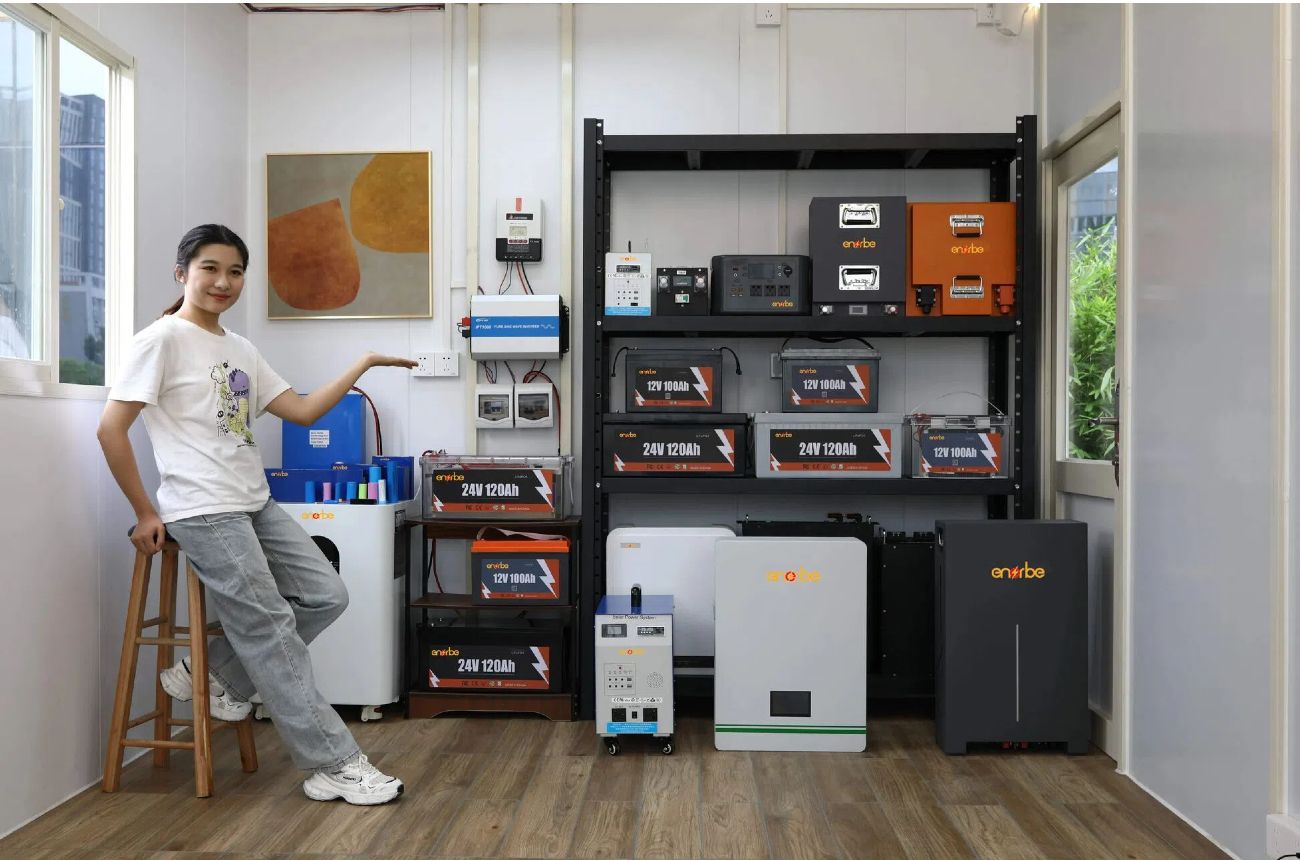
Enerbe provides marine-grade LiFePO4 batteries with vibration-resistant construction, corrosion-resistant terminals, IP54+ ingress protection, advanced BMS with per-cell monitoring, and Bluetooth/CAN/RS485 communication, ensuring reliable performance in the harshest marine environments. For wholesale pricing, custom OEM configurations, or technical consultation, contact our team.
Get In Touch
Need a quote or custom marine LiFePO4 battery configuration? Contact Enerbe today.
📄 Request Marine Battery Datasheet & Certifications
Contact Us →📞 Speak with Our Marine Engineering Team
Get In Touch →🔗 Browse Marine LiFePO4 Battery Products
View Products →Dongguan A&S Power Technology Co., Limited.
Building 1, No. 2, Keji 9th Road,
Songshan Lake, Dongguan, Guangdong, China
📞 +86 137 1383 1631
✉ info@aspowerbattery.com
Stay Charged. Stay Safe.



Do LiFePO4 Batteries Need Ventilation? 25+ Common LiFePO4 Questions Answered
48V Golf Cart Battery LiFePO4 Guide
Related Article


Get In Touch
Have questions about custom lithium batteries, energy storage solutions, or lead-to-lithium conversion? Our team is ready to help. Send us a message and we’ll respond within 24 hours.

Building 1, No. 2, Keji 9th Road, Songshan Lake, Dongguan, Guangdong, China
Office Address

info@aspowerbattery.com
Email Us

+86 137 1383 1631
Call Us

Sun - Fri (08AM - 10PM)
Office Open
