
48V Solar Battery Storage Guide: LiFePO4 Systems for B2B Buyers

Table of Contents
- Introduction: What Is a 48V Solar Battery Storage System?
- Why 48V Is the Standard for Solar Storage
- 48V vs 12V vs 24V: Which Voltage to Choose?
- Key Specifications: 48V 100Ah LiFePO4 Battery
- How to Size a 48V Solar Battery System
- Common System Configuration Examples
- Key Applications for 48V Solar Batteries
- LiFePO4 vs Lead-Acid for 48V Solar Storage
- Installation Considerations & Inverter Compatibility
- Common Mistakes to Avoid
- B2B Procurement Checklist
- Frequently Asked Questions
- Related Resources
48V Solar Battery Storage Guide: LiFePO4 Systems for B2B Buyers
Last updated: September 2026 | Written by the Enerbe Engineering Team
Introduction: What Is a 48V Solar Battery Storage System?
Quick Answer: A 48V solar battery storage system uses 48V nominal voltage lithium batteries (typically LiFePO4) to store solar energy for later use. 48V is the industry standard for residential and small commercial solar storage because it offers the best balance of safety, efficiency, and cost—lower current than 12V/24V means smaller cables and less energy loss (I²R), while remaining below the 60V DC SELV safety threshold. A standard 48V 100Ah LiFePO4 battery stores 4.8kWh of usable energy, delivers 4,000+ cycles at 100% DoD (5,500+ at 80% DoD), supports 100A continuous / 200A peak discharge, and communicates with hybrid inverters via CAN bus or RS485. For B2B buyers, 48V LiFePO4 systems are compatible with all major inverter brands (Victron, SMA, Sungrow, GoodWe, Growatt, Deye) and can be paralleled for scalable capacity from 4.8kWh to 100kWh+.
A 48V solar battery storage system is a rechargeable energy storage solution that uses 48V nominal voltage battery packs to store electricity generated by solar panels (or from the grid during off-peak hours) and release it when needed—at night, during peak electricity pricing, or during grid outages.
The 48V platform has become the de facto industry standard for residential and small-to-medium commercial solar energy storage. As more homeowners and businesses seek energy independence, peak demand reduction, and backup power, the demand for reliable, high-capacity 48V LiFePO4 solar batteries continues to grow rapidly.
For system integrators, EPC contractors, installers, and distributors, this guide covers everything you need to know about 48V solar battery storage systems—from why 48V is the standard, to key specifications, sizing methodology, system configurations, applications, installation considerations, and procurement criteria.
For a complete overview of LiFePO4 battery sourcing across all applications, see our B2B Sourcing Guide for LiFePO4 Batteries. For rack-mounted 48V systems specifically, see our 48V Rack-Mounted Lithium Battery Guide for Project Buyers.
Why 48V Is the Standard for Solar Storage
The 48V platform is the industry standard for solar energy storage systems for several compelling technical and economic reasons:
| Feature | Benefit | Technical Detail |
|---|---|---|
| Higher Efficiency | Lower current = less energy loss | I²R losses are 16x lower than 12V and 4x lower than 24V at the same power output |
| Smaller Cables | Reduced material costs and easier installation | 5kW at 48V = 104A (16mm² cable); at 12V = 417A (70mm²+ cable) |
| Better Scalability | Multiple batteries in parallel for increased capacity | Parallel 48V 100Ah units from 4.8kWh to 100kWh+ without voltage conversion |
| Industry Standard | Compatible with most hybrid inverters | Victron, SMA, Sungrow, GoodWe, Growatt, Deye, Solis, and all major brands support 48V battery input |
| Safety (SELV Threshold) | Below 60V DC SELV safety limit | 48V nominal (54.75V max charge) stays below the 60V DC SELV threshold, reducing electrical safety requirements vs high-voltage systems |
| Cost-Effective | Optimal balance of cost and performance | Lower BMS complexity than high-voltage (150V+) systems, lower cable costs than 12V/24V |
Bottom line: 48V LiFePO4 solar batteries offer the best combination of performance, safety, scalability, and cost-effectiveness for residential and small commercial solar storage. This is why virtually every major hybrid inverter manufacturer designs their products around the 48V battery platform.
For more detailed information on LiFePO4 battery technology, see our What Is a LiFePO4 Battery? Complete Guide.
48V vs 12V vs 24V: Which Voltage to Choose?
When designing a solar energy storage system, choosing the right battery voltage is one of the most important decisions. Here is how the three common low-voltage platforms compare:
| Parameter | 12V System | 24V System | 48V System |
|---|---|---|---|
| Cells in Series (LiFePO4) | 4S (12.8V) | 8S (25.6V) | 15S (48V) or 16S (51.2V) |
| Current at 5kW Load | ~417A | ~208A | ~104A |
| Recommended Cable Size (5kW) | 70mm²+ (very thick, heavy, expensive) | 35mm² | 16mm² (standard, affordable) |
| I²R Loss (relative) | 16x (highest) | 4x | 1x (lowest) |
| Typical System Size Range | Up to 1-2kWh (small cabins, RVs) | 2-5kWh (small homes, boats) | 4.8kWh-100kWh+ (homes, C&I, off-grid) |
| Hybrid Inverter Support | Limited (mostly small inverters) | Moderate | Universal (all major brands) |
| Best For | RVs, golf carts, small off-grid cabins | Small boats, tiny homes, medium off-grid | Residential solar, C&I, backup power, grid-tied |
Recommendation: For any solar storage system above 3kWh, 48V is the optimal choice. 12V and 24V make sense only for very small systems (RVs, boats, tiny cabins) where space and weight constraints override efficiency concerns. For residential and commercial solar, 48V is the standard that all inverter manufacturers support.
Note on 48V vs 51.2V: You may see both "48V" and "51.2V" used in the market. 48V systems use 15 LiFePO4 cells in series (15S × 3.2V = 48V nominal), while 51.2V systems use 16 cells (16S × 3.2V = 51.2V). 51.2V is the newer standard and offers slightly higher efficiency and better compatibility with modern inverters. Both are commonly referred to as "48V" in the industry and are functionally interchangeable for most applications.
Key Specifications: 48V 100Ah LiFePO4 Battery

The following specifications are for a standard high-quality 48V 100Ah LiFePO4 solar battery, the most common configuration for residential and small commercial solar storage:
| Specification | Value | Why It Matters |
|---|---|---|
| Nominal Voltage | 48V (15S) or 51.2V (16S) | Industry standard for hybrid inverters |
| Rated Capacity | 100Ah | Base unit for scalable systems |
| Total Energy | 4,800 Wh (4.8 kWh) | Usable energy per unit (48V × 100Ah) |
| Cell Type | Grade A 3.2V LiFePO4 (prismatic) | Grade A cells ensure consistent quality and long life; avoid Grade B/C cells |
| Cycle Life (100% DoD) | 4,000+ cycles (to 70% capacity) | ~11 years of daily full cycling |
| Cycle Life (80% DoD) | 5,500+ cycles | ~15 years at 80% daily discharge |
| Continuous Discharge Current | 100A (1C) | Supports up to 4.8kW continuous load per unit |
| Peak Discharge Current | 200A (10 seconds) | Handles motor starting surges (pumps, AC compressors) |
| Recommended Charge Voltage | 54.75 ± 0.2V (15S) / 58.4V (16S) | Must match inverter charge voltage setting |
| Charge Temperature | 0°C to 45°C | Do not charge below 0°C without low-temp protection (causes lithium plating) |
| Discharge Temperature | -20°C to 60°C | Wide discharge range for outdoor installations |
| Dimensions (L × W × H) | 522 × 240 × 220 mm (wall-mounted) | Standard wall-mount form factor; rack-mounted versions also available |
| Weight | 35.5 kg | Two-person lift recommended for wall installation |
| BMS Protection | Over-voltage, under-voltage, over-current, short circuit, over-temperature, cell balancing | Comprehensive protection is essential for safety and longevity |
| Communication | CAN bus / RS485 | Required for inverter communication and smart monitoring |
| Certifications | CE, UN38.3, RoHS, MSDS, IEC 62619 | UN38.3 mandatory for shipping; IEC 62619 for EU safety compliance |
| Parallel Expansion | Up to 16 units in parallel (76.8kWh+) | Scalable capacity without replacing existing units |
The integrated BMS provides comprehensive protection, ensuring safe and reliable operation for your solar storage system. Always verify that the BMS supports per-cell voltage monitoring (not just pack-level) and active or passive cell balancing.
For more information on BMS and battery safety, see our BESS Certification & Conformity Assessment Guide and LiFePO4 Battery Safety Guide.
How to Size a 48V Solar Battery System

Sizing a 48V solar battery system correctly is critical for customer satisfaction. An undersized system won't meet backup or self-consumption goals; an oversized system wastes money. Follow this three-step methodology:
Step 1: Calculate Daily Energy Consumption
List all appliances and devices the customer wants to power during an outage or at night (when solar is unavailable):
| Appliance | Power (W) | Hours/Day | Daily Energy (Wh) |
|---|---|---|---|
| Refrigerator | 150W | 24h (cycling ~25% duty) | 900Wh |
| Lights (LED, 10 bulbs) | 100W total | 5h | 500Wh |
| TV / Entertainment | 100W | 4h | 400Wh |
| Wi-Fi Router / Modem | 20W | 24h | 480Wh |
| Laptop / Computer | 60W | 4h | 240Wh |
| Microwave (occasional) | 1,000W | 0.25h | 250Wh |
| Total Daily Consumption | 2,770Wh (~2.8kWh) |
Note: Always account for inverter efficiency (~90-95%) when sizing. Divide the AC load by inverter efficiency to get the DC battery capacity needed: 2.8kWh ÷ 0.92 = 3.0kWh DC required.
Step 2: Determine Backup Duration
Based on daily consumption, calculate the battery capacity needed for different backup durations:
| Backup Duration | Battery Capacity Needed (DC) | Number of 4.8kWh Units | Usable at 80% DoD |
|---|---|---|---|
| 4 hours (evening only) | ~1.5 kWh DC | 1 unit (4.8kWh) | 3.8kWh (excess for aging margin) |
| 8 hours (overnight) | ~3.0 kWh DC | 1 unit (4.8kWh) | 3.8kWh (adequate) |
| 12 hours (extended outage) | ~4.5 kWh DC | 2 units (9.6kWh) | 7.7kWh (comfortable margin) |
| 24 hours (full day off-grid) | ~9.0 kWh DC | 3 units (14.4kWh) | 11.5kWh (with solar recharge next day) |
| 48+ hours (multi-day off-grid) | ~18+ kWh DC | 4-6 units (19.2-28.8kWh) | 15.4-23kWh (requires adequate solar array) |
Step 3: Account for Depth of Discharge and Aging
For maximum battery life, plan for 80% depth of discharge (DoD) as the practical limit. This means only 80% of the nominal capacity is usable on a regular basis:
-
1 unit (4.8kWh nominal) → 3.8kWh usable at 80% DoD
-
2 units (9.6kWh nominal) → 7.7kWh usable at 80% DoD
-
3 units (14.4kWh nominal) → 11.5kWh usable at 80% DoD
-
4 units (19.2kWh nominal) → 15.4kWh usable at 80% DoD
B2B Buying Tip: Always oversize by 20-30% to account for battery aging (capacity fades ~20% over 10 years), cold weather performance reduction, and unexpected peak loads. A system sized correctly today will perform reliably for 10-15 years. It is always cheaper to add one more battery unit at installation than to retrofit later.
Common System Configuration Examples
Here are typical 48V solar battery system configurations for common project types:
| Configuration | Battery Setup | Inverter Size | Solar Array | Best For |
|---|---|---|---|---|
| Small Residential | 1 × 48V 100Ah (4.8kWh) | 3-5kW hybrid | 3-5kWp | Apartments, small homes, evening self-consumption |
| Standard Residential | 2 × 48V 100Ah (9.6kWh) | 5-8kW hybrid | 5-8kWp | Family homes, overnight backup, TOU arbitrage |
| Large Residential / Small C&I | 3-4 × 48V 100Ah (14.4-19.2kWh) | 8-12kW hybrid | 8-15kWp | Large homes, small offices, 24h backup, EV charging |
| Commercial / C&I | 6-10 × 48V 100Ah (28.8-48kWh) or 48V 200Ah units | 15-30kW hybrid or PCS | 20-50kWp | Small factories, retail, hotels, peak shaving, demand charge reduction |
| Off-Grid / Remote | 4-8 × 48V 100Ah (19.2-38.4kWh) + generator backup | 8-20kW off-grid inverter | 10-30kWp (oversized) | Remote cabins, farms, telecom sites, no grid access |
Key Applications for 48V Solar Batteries
1. Residential Solar Self-Consumption
Store excess solar energy generated during the day and use it at night when solar panels are not producing. This maximizes solar ROI (typically increasing self-consumption from 30-50% to 70-90%) and reduces grid dependency and electricity bills.
Typical setup: 1-2 units (4.8-9.6kWh) paired with a 3-8kW hybrid inverter and 3-8kWp solar array.
2. Home Backup Power
Protect against grid outages with automatic backup power for critical loads. When the grid goes down, the hybrid inverter automatically switches to backup mode within milliseconds (<20ms), powering essential loads like refrigerators, lights, Wi-Fi, and medical equipment.
Typical setup: 2-4 units (9.6-19.2kWh) with a backup-capable hybrid inverter and critical loads sub-panel.
3. Time-of-Use (TOU) Arbitrage
Charge the battery from the grid during low-rate periods (typically late night / early morning) and discharge during high-rate periods (evening peak). This reduces electricity costs without requiring solar panels. In markets with significant peak/off-peak price differentials, TOU arbitrage alone can provide 3-7 year payback.
Typical setup: 2-3 units (9.6-14.4kWh) with a smart EMS configured for automated TOU optimization based on local utility rate schedules.
4. Commercial & Industrial (C&I) Peak Shaving
For businesses with demand-based electricity pricing, discharging the battery during peak demand periods reduces the maximum demand (kW), which directly lowers demand charges—often the largest component of commercial electricity bills. Savings of 15-40% on total electricity costs are typical.
Typical setup: 6-10+ units (28.8-48kWh+) or 48V 200Ah high-capacity units, paired with a 15-30kW PCS and smart EMS with demand threshold monitoring.
5. Off-Grid Systems
Complete energy independence for remote locations without grid access—cabins, farms, telecom sites, remote monitoring stations, and disaster relief. Off-grid systems require oversizing both the solar array and battery capacity to account for consecutive cloudy days.
Typical setup: 4-8+ units (19.2-38.4kWh+) with an off-grid inverter, oversized solar array (1.5-2x load), and optional backup generator for extended cloudy periods.
6. EV Charging Support
Support EV charging infrastructure without costly grid upgrades. The battery buffers the high power demand of EV chargers, reducing peak load on the grid and enabling faster charging in locations with limited grid capacity. Pair with solar for "solar-powered EV charging."
Typical setup: 3-6 units (14.4-28.8kWh) paired with a 7-22kW EV charger and smart load management.
LiFePO4 vs Lead-Acid for 48V Solar Storage
When comparing battery chemistries for 48V solar storage, LiFePO4 is the clear winner for virtually all applications. Here is the detailed comparison:
| Metric | 48V 100Ah LiFePO4 | 48V 100Ah Lead-Acid (Flooded/AGM) | LiFePO4 Advantage |
|---|---|---|---|
| Usable Energy | 4.8 kWh (80-90% DoD) | ~2.4 kWh (50% DoD max) | 2x usable energy at same nominal capacity |
| Cycle Life | 4,000+ cycles (100% DoD) | 300-500 cycles (50% DoD) | 8-13x longer lifespan |
| Weight | 35.5 kg | ~60-70 kg | ~50% lighter |
| Charging Time | 2-4 hours (0.5C-1C) | 8-10 hours (0.1-0.2C max) | 3-4x faster charging |
| Maintenance | Zero (sealed, no watering) | Monthly watering, equalization charges, cleaning | Zero maintenance (flooded lead-acid) |
| Round-Trip Efficiency | 95%+ | 70-80% | 15-25% more energy delivered |
| Safety | Thermal runaway >500°C, non-toxic, cobalt-free | Acid spills, hydrogen gas (explosion risk), toxic fumes | Much safer (no acid, no gas) |
| Total Cost (10 years) | 1 battery unit (no replacement) | 3-4 battery sets (replacement every 2-3 years) | Lower total cost despite higher upfront price |
The bottom line: One 48V LiFePO4 solar battery replaces 3-4 lead-acid batteries over a 10-year period, with zero maintenance, higher efficiency, better safety, and significantly lower total cost of ownership. The higher upfront cost of LiFePO4 is typically recovered within 2-3 years through avoided replacement costs and higher energy efficiency.
For a detailed comparison and conversion guide, see our Lead-Acid to LiFePO4 Conversion Guide.
Installation Considerations & Inverter Compatibility
Wall-Mounted Installation
-
Dimensions: 522 × 240 × 220mm (wall-mounted form factor)
-
Weight: 35.5kg — two-person lift recommended for wall mounting
-
Wall type: Must be mounted on a load-bearing wall (concrete, brick, or reinforced stud wall). Drywall alone is not sufficient.
-
Clearance: Maintain 100-150mm clearance on all sides for ventilation and access. Do not install in sealed enclosures without ventilation.
-
Access: Ensure BMS display, terminals, and communication ports are accessible for monitoring and maintenance.
-
Temperature: Install in a location where ambient temperature stays within 0-45°C for charging. Avoid direct sunlight, attics in hot climates, and unheated garages in cold climates (for charging).
Rack-Mounted Installation
For higher-capacity systems (3+ units), rack-mounted 48V batteries are preferred over wall-mounted. Rack-mounted systems stack vertically in a standard 19" server rack or dedicated battery cabinet, saving floor space and simplifying cable management.
-
Standard sizes: 48V 50Ah (3U), 48V 100Ah (5U), 48V 200Ah (8U) rack-mounted units
-
Capacity range: 2.4kWh to 100kWh+ in a single rack
-
Cooling: Rack-mounted systems typically have front-to-back airflow; ensure rack has proper ventilation
For detailed rack-mounted system guidance, see our 48V Rack-Mounted Lithium Battery Guide for Project Buyers.
Inverter Compatibility
The 48V LiFePO4 solar battery is compatible with virtually all major hybrid inverters through CAN bus or RS485 communication. Always verify compatibility before specifying a system:
| Inverter Brand | Communication Protocol | Typical Power Range | Key Markets |
|---|---|---|---|
| Victron Energy | VE.Bus / CAN bus | 0.5-15kW | Europe, Africa, Oceania, off-grid |
| SMA | CAN bus / RS485 | 3-25kW | Europe, North America, premium residential |
| Sungrow | CAN bus / RS485 | 3-50kW | Global, C&I, residential |
| GoodWe | CAN bus / RS485 | 3-10kW | Europe, Australia, Asia, value residential |
| Growatt | CAN bus / RS485 | 3-12kW | Europe, Asia, Africa, budget residential |
| Deye | CAN bus / RS485 | 3-12kW | Europe, Africa, Middle East, high-voltage & low-voltage |
| Solis / Ginlong | CAN bus / RS485 | 3-10kW | Europe, UK, Australia, residential |
B2B Buying Tip: Always request the inverter manufacturer's official battery compatibility list before specifying a battery. Some inverters require specific BMS firmware versions or protocol adapters. When in doubt, request a test unit for compatibility verification before placing a bulk order.
System Integration Checklist
-
PV System: Ensure solar array voltage and current match the hybrid inverter's MPPT range. Oversize the array by 10-20% for better charging in non-ideal conditions.
-
CT Sensors: Install current transformers (CTs) correctly on the grid input for accurate monitoring and zero-export control (if required by local regulations).
-
EMS Configuration: Configure energy management settings (self-consumption priority, TOU schedule, backup reserve percentage) based on customer goals and local utility rates.
-
Charge Voltage Setting: Set the inverter's battery charge voltage to match the battery specification (54.75V for 15S, 58.4V for 16S). Incorrect charge voltage is the #1 cause of premature battery failure.
-
Low-Temp Protection: If installing in a location where temperatures drop below 0°C, ensure the BMS has low-temperature charge protection or install a battery heater / heated enclosure.
Common Mistakes to Avoid
| Mistake | Consequence | Solution |
|---|---|---|
| Undersizing the battery | Frequent deep cycling (>90% DoD), shortened life, customer dissatisfaction | Size for 80% max DoD and add 20-30% aging margin |
| Wrong charge voltage setting | Undercharging (capacity loss) or overcharging (BMS shutdown, cell damage) | Set inverter charge voltage per battery datasheet (54.75V for 15S, 58.4V for 16S) |
| Charging below 0°C | Lithium plating, irreversible capacity loss, safety risk | Use BMS with low-temp charge cut-off or heated enclosure |
| Using undersized cables | Voltage drop, energy loss, overheating, fire risk | Size cables for max current with <2% voltage drop; use 16mm²+ for 100A |
| Mixing battery brands / ages in parallel | Uneven current sharing, overloading of weaker units, premature failure | Use identical brand, model, age, and firmware for all parallel units |
| Ignoring inverter compatibility | No communication, BMS errors, inverter shutdowns, warranty void | Verify on inverter's official battery compatibility list; test before bulk order |
| Installing in unventilated enclosure | Overheating, BMS thermal shutdown, shortened life | Maintain 100-150mm clearance; ensure passive or active ventilation |
| Buying Grade B/C cells | Lower capacity, shorter life, higher failure rate, inconsistent performance | Always specify Grade A cells; request cell manufacturer and lot traceability |
B2B Procurement Checklist
When sourcing 48V solar batteries for residential or commercial projects, verify the following before placing an order:
-
Voltage & capacity — 48V (15S) or 51.2V (16S) nominal; 100Ah / 200Ah options; 4.8kWh / 9.6kWh usable energy per unit
-
Cell grade — Grade A prismatic LiFePO4 cells (not Grade B/C); request cell manufacturer name and lot traceability
-
Cycle life — 4,000+ cycles at 100% DoD, 5,500+ at 80% DoD (verified by independent test report, not just marketing claim)
-
BMS features — Per-cell voltage monitoring, passive or active cell balancing, over/under-voltage, over-current, short-circuit, over-temperature protection, low-temp charge cut-off
-
Communication protocol — CAN bus and/or RS485 compatible with target inverter brand (Victron, SMA, Sungrow, GoodWe, Growatt, Deye, etc.)
-
Certifications — CE, UN38.3 (mandatory for shipping), RoHS, MSDS, IEC 62619 (EU safety). Verify certificates are current and model-specific.
-
Dimensions & form factor — Wall-mounted (522×240×220mm) or rack-mounted (19" standard); weight (35.5kg for 100Ah wall-mount)
-
Parallel expansion — Minimum 8-16 units parallel capability for scalable systems; verify master/slave or parallel BMS architecture
-
Warranty — 5-10 years industry standard; verify warranty terms, capacity guarantee threshold (typically 70-80%), and claim process
-
Shipping compliance — UN38.3 test summary, MSDS, proper packaging (DG packaging for air freight); supplier should handle all dangerous goods documentation
-
OEM/ODM capability — Custom branding, packaging, BMS programming, capacity configurations for distributor/integrator partners
-
Technical support — Dedicated engineering support for inverter compatibility, installation troubleshooting, and firmware updates
Frequently Asked Questions
What size 48V solar battery do I need for my home?
For a typical home, a single 48V 100Ah (4.8kWh) battery provides 4-8 hours of backup for essential loads (refrigerator, lights, Wi-Fi, TV). For whole-home backup or overnight self-consumption, 2-4 units (9.6-19.2kWh) are typically recommended. Calculate your daily energy consumption (kWh), divide by 0.92 (inverter efficiency), then divide by 0.8 (DoD limit) to get the required nominal battery capacity. Always add 20-30% margin for aging and unexpected loads.
Can I add more batteries later?
Yes. Most 48V LiFePO4 solar batteries can be connected in parallel for increased capacity, typically up to 8-16 units. However, for best performance and longest life, all parallel units should be the same brand, model, age, and firmware version. Mixing old and new batteries can cause uneven current sharing and premature failure of the weaker units. If planning future expansion, leave physical space and cable capacity for additional units at initial installation.
How long does a 48V solar battery last?
A quality 48V 100Ah LiFePO4 solar battery provides 4,000+ cycles at 100% DoD and 5,500+ cycles at 80% DoD. With daily cycling at 80% DoD, this translates to approximately 15 years of service (5,500 cycles ÷ 365 days/year ≈ 15 years). Even with daily full cycling (100% DoD), expect 11+ years. The actual lifespan depends on depth of discharge, operating temperature, charge/discharge rates, and BMS quality. Always keep DoD below 80% for maximum life.
What is the difference between 48V and 51.2V solar batteries?
48V systems use 15 LiFePO4 cells in series (15S × 3.2V = 48V nominal), while 51.2V systems use 16 cells (16S × 3.2V = 51.2V). The main differences are: (1) Charge voltage—15S charges to 54.75V, 16S charges to 58.4V; (2) 16S offers slightly higher efficiency and better compatibility with modern inverters designed for 51.2V; (3) Both are commonly referred to as "48V" in the industry and are functionally interchangeable for most applications. The critical thing is to set the inverter's charge voltage correctly to match the battery's cell count. Using the wrong charge voltage causes undercharging or overcharging and premature failure.
Can I install a 48V solar battery outdoors?
Yes, but with important caveats. 48V LiFePO4 batteries support discharge from -20°C to 60°C, but charging is only safe from 0°C to 45°C. For outdoor installations: (1) Ensure the battery has an adequate IP rating (IP65 recommended for outdoor); (2) Install in a shaded, ventilated location away from direct sunlight; (3) In cold climates (below 0°C), ensure the BMS has low-temperature charge protection or use a heated enclosure; (4) In hot climates (above 45°C), ensure adequate ventilation or active cooling; (5) Protect from direct rain and snow. Wall-mounted batteries are typically IP20-IP30 (indoor only); rack-mounted or outdoor-rated enclosures are needed for exterior installation.
What is a 48V lithium battery energy storage system?
A 48V lithium battery energy storage system is a complete energy storage solution built around 48V nominal voltage lithium batteries (typically LiFePO4). It includes: (1) 48V battery pack(s) storing energy as DC power; (2) Integrated BMS (Battery Management System) monitoring cell voltage, temperature, and current, providing protection and cell balancing; (3) Hybrid inverter or PCS converting DC to AC for use by home/business loads or the grid; (4) EMS (Energy Management System) software controlling when to charge and discharge based on solar generation, electricity prices, and grid conditions. The 48V platform is the industry standard for residential and small commercial solar storage because it offers the best balance of safety (below 60V SELV threshold), efficiency (lower current = less I²R loss), and cost (smaller cables, universal inverter support).
How many solar panels do I need to charge a 48V battery?
The number of solar panels depends on the battery capacity and desired charge time. For a 48V 100Ah (4.8kWh) battery: (1) To charge from 20% to 100% in 4 peak sun hours, you need ~1kWp of solar panels (4.8kWh × 0.8 DoD ÷ 4h ÷ 0.92 efficiency ≈ 1.04kWp); (2) For faster charging (2-3 hours), use 1.5-2kWp; (3) For a 2-unit system (9.6kWh), use 2-3kWp. As a rule of thumb, size the solar array at 1.5-2x the battery capacity in kWh for reliable daily charging in most climates. For off-grid systems, oversize to 2-3x to account for consecutive cloudy days. Ensure the hybrid inverter's MPPT voltage range matches the solar array configuration.
Is 48V better than 24V for solar storage?
For systems above 3kWh, yes—48V is significantly better than 24V for solar storage. The key advantages: (1) Lower current—at the same power, 48V draws half the current of 24V, reducing I²R energy losses by 4x; (2) Smaller cables—48V at 5kW needs ~16mm² cable vs 35mm² for 24V, reducing material cost and installation difficulty; (3) Universal inverter support—virtually all hybrid inverter manufacturers design around 48V, while 24V inverter options are limited; (4) Better scalability—48V systems easily scale to 100kWh+ in parallel, while 24V systems become impractical above 5-10kWh due to high current. 24V makes sense only for small systems (under 3kWh) like boats, tiny homes, or small cabins where space/weight constraints matter.
Related Resources
-
48V Rack-Mounted Lithium Battery Guide for Project Buyers — rack-mounted systems, server rack integration, high-capacity C&I configurations
-
What Is a LiFePO4 Battery? Complete Guide — chemistry, voltage, capacity, BMS basics, why LiFePO4 is the standard
-
How to Charge LiFePO4 Batteries Guide — correct charge voltage, charging methods, common charging mistakes
-
LiFePO4 Battery Safety Guide — thermal runaway risk, fire safety, safe handling and installation
-
How to Install LiFePO4 Battery Guide — step-by-step installation, cable sizing, inverter configuration
-
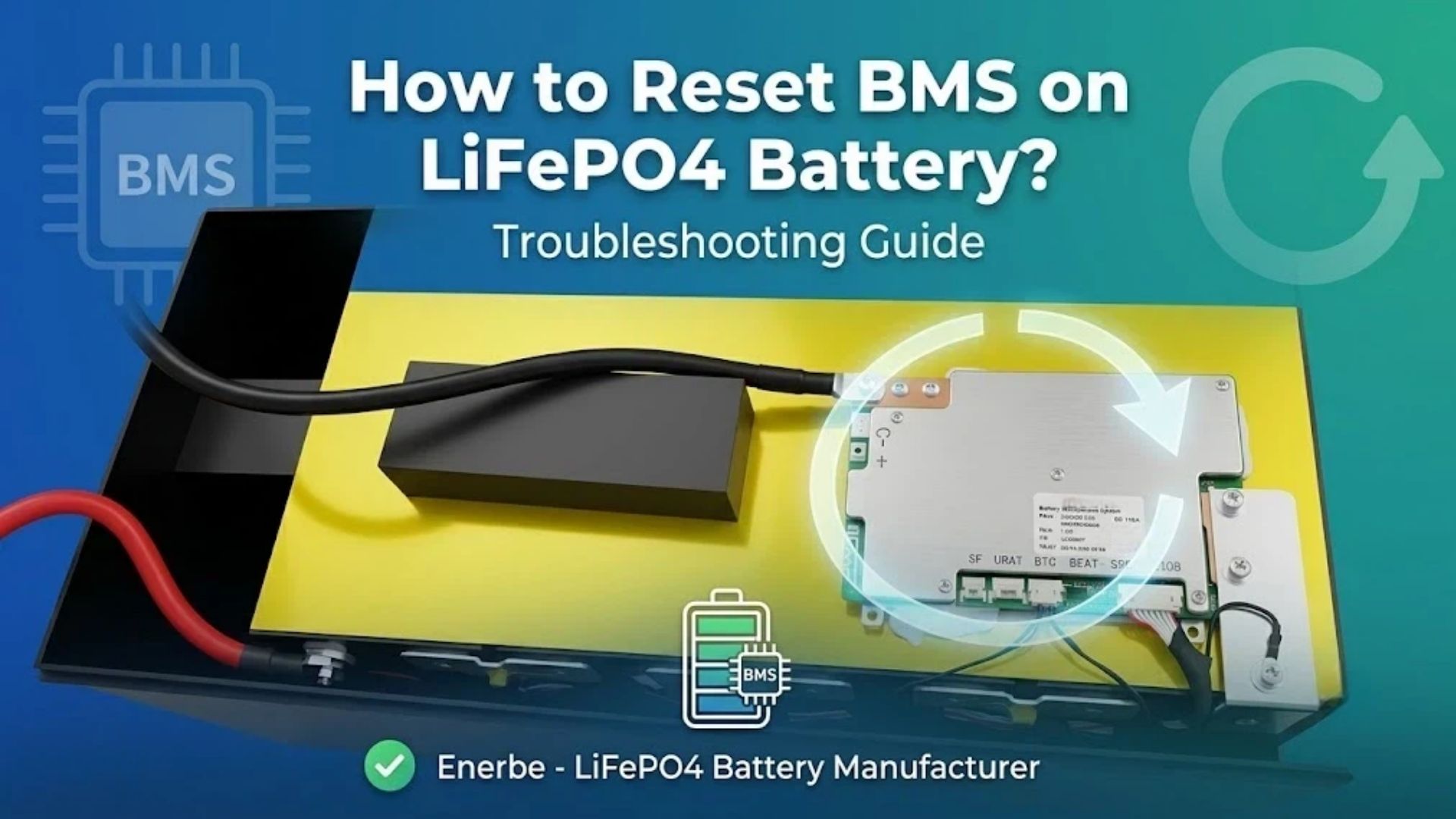
How to Reset BMS on LiFePO4 Battery — BMS troubleshooting, reset procedures, common BMS issues
-
BESS Certification & Conformity Assessment Guide — UL 1973, IEC 62619, UN38.3, EU 2023/1542 compliance
-
B2B Sourcing Guide for LiFePO4 Batteries — complete overview across all applications (solar, golf cart, marine, RV, more)
Recommended 48V LiFePO4 Battery Products
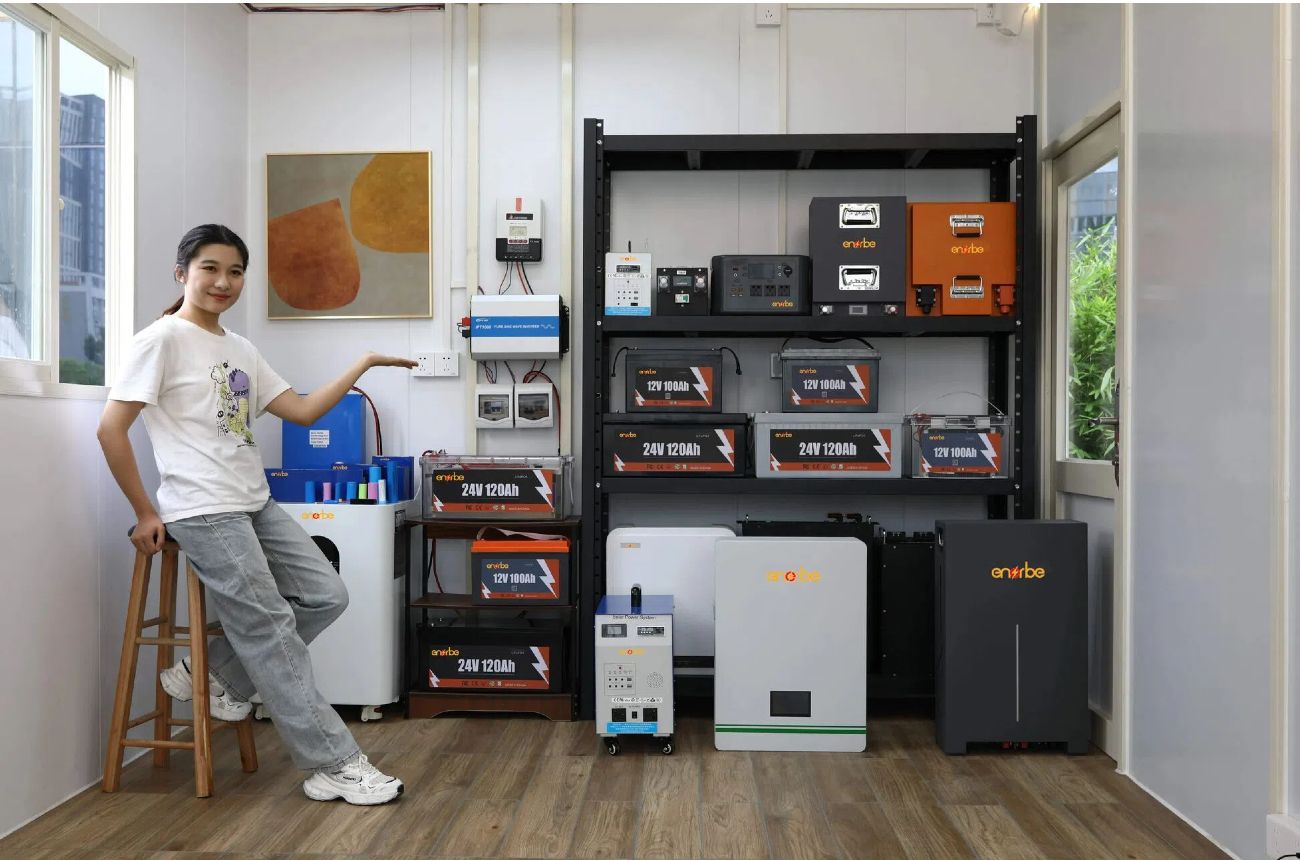
Enerbe offers a complete range of 48V LiFePO4 solar batteries for residential and commercial projects:


For wholesale pricing, custom configurations, or technical support, contact our team. View the full product lineup on our 48V LiFePO4 battery product page.
Get In Touch
Ready to source 48V LiFePO4 solar batteries for your project? Contact Enerbe today.
📄 Request Safety Certifications & Datasheet
Contact Us →📞 Speak with Our Engineering Team
Get In Touch →🔗 Browse 48V LiFePO4 Battery Products
View Products →Dongguan A&S Power Technology Co., Limited.
Building 1, No. 2, Keji 9th Road,
Songshan Lake, Dongguan, Guangdong, China
📞 +86 137 1383 1631
✉ info@aspowerbattery.com
Stay Charged. Stay Safe.



Solar Battery Storage Guide: LiFePO4 Systems for B2B Buyers
What Is a Battery Energy Storage System (BESS)? Complete Guide
Related Article


Get In Touch
Have questions about custom lithium batteries, energy storage solutions, or lead-to-lithium conversion? Our team is ready to help. Send us a message and we’ll respond within 24 hours.

Building 1, No. 2, Keji 9th Road, Songshan Lake, Dongguan, Guangdong, China
Office Address

info@aspowerbattery.com
Email Us

+86 137 1383 1631
Call Us

Sun - Fri (08AM - 10PM)
Office Open
