
12V 100Ah LiFePO4 Battery: Complete Deep Cycle Buying Guide for RV, Solar & Marine
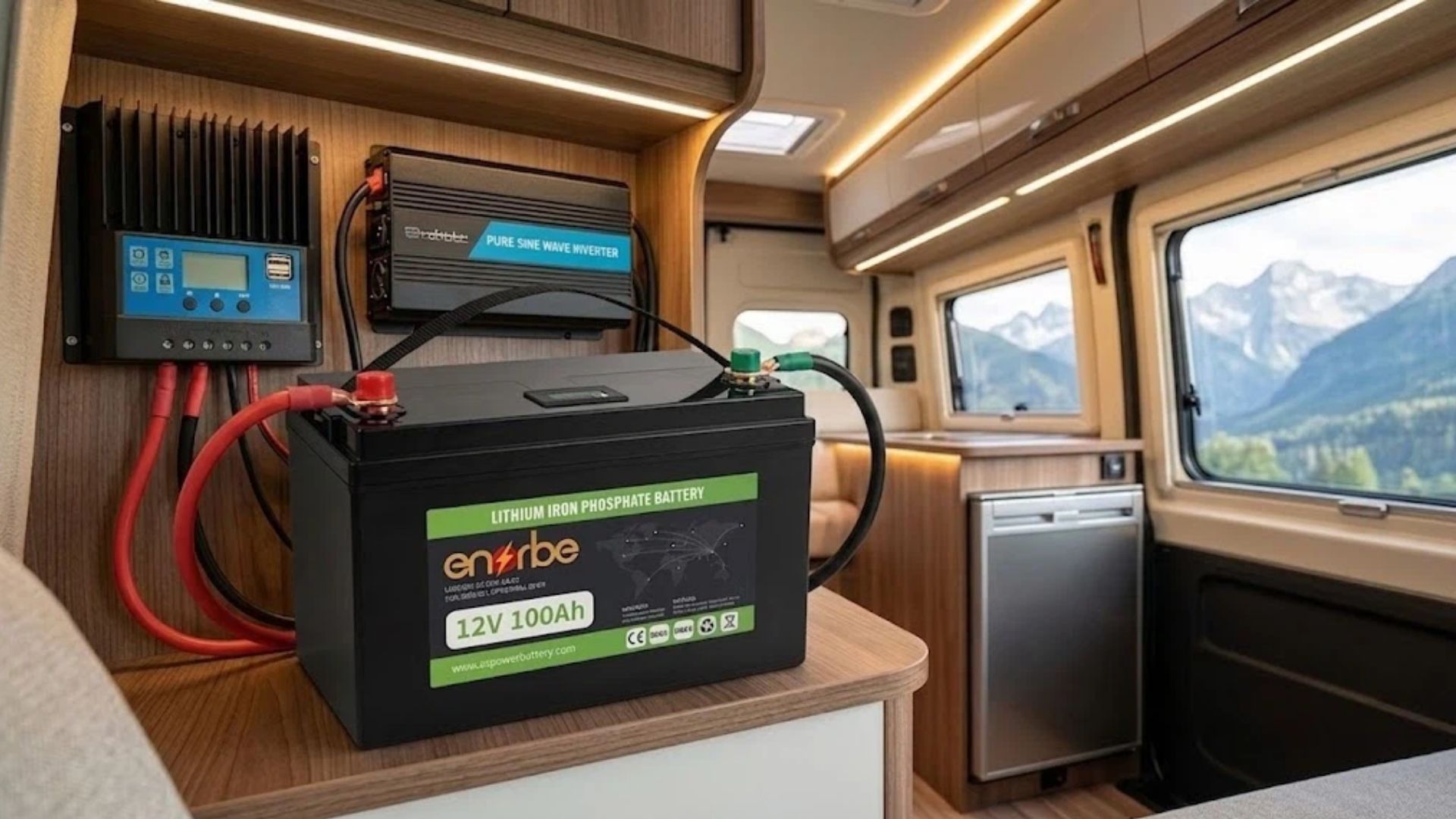
Table of Contents
- Introduction: Why 12V 100Ah Is the Universal Deep Cycle Size
- What Does 12V 100Ah Mean? (1280Wh Explained)
- 12V 100Ah LiFePO4 Specs Explained
- 12V 100Ah Runtime: How Long Will It Last? (By Device)
- LiFePO4 vs Lead-Acid 100Ah: The Full Comparison
- Key Applications: RV, Solar, Marine & Off-Grid
- Charging Guide: Charger Size, Charge Time & Solar Charging
- Series & Parallel: How to Build 24V/48V/200Ah Systems
- Buying Guide: What to Look For + Red Flags
- Market Overview: LiTime & Other Brands
- B2B Sourcing: Advice for Dealers & Distributors
- Frequently Asked Questions
- Summary
Introduction: Why 12V 100Ah Is the Universal Deep Cycle Size
Walk into any RV, marine, or off-grid supply store, and you'll see the same battery size on every shelf: 12V 100Ah. It's the universal deep cycle battery format — the "one size fits most" of the battery world. Whether you're building a camper van electrical system, installing solar on a cabin, powering a trolling motor, or setting up backup power for your home, chances are the 12V 100Ah format is where you start.
But not all 12V 100Ah batteries are created equal. The old standard — lead-acid — is heavy (30+ kg), slow to charge, limited to 50% usable capacity, and needs replacing every 3-5 years. The new standard — LiFePO4 (Lithium Iron Phosphate) — weighs 10-13 kg, charges in 2-5 hours, delivers 80-100% usable capacity, and lasts 8-12 years. As prices have come down, LiFePO4 has become the default choice for anyone building a new system or replacing an old lead-acid bank.
This guide covers everything you need to know about 12V 100Ah LiFePO4 batteries: what the specs actually mean, how long the battery will last with different loads, how it compares to lead-acid, which applications it's best for, how to charge it (including solar), how to connect multiple batteries in series or parallel, what to look for when buying, and advice for B2B buyers sourcing in volume. We use real specifications from the Enerbe 12V 100Ah LiFePO4 deep cycle battery throughout this guide for concrete, real-world numbers.
For a broader introduction to LiFePO4 battery chemistry, see our What Is a LiFePO4 Battery? guide. For charging best practices, see our LiFePO4 Charging Guide. For a smaller-format deep cycle battery popular with anglers, see our 12V 54Ah LiFePO4 Battery Guide.
What Does 12V 100Ah Mean? (1280Wh Explained)
Let's start with the basics, because "12V 100Ah" looks simple but there's more to it than most people realize.
Voltage: 12V (Actually 12.8V for LiFePO4)
The "12V" is the nominal voltage — the standard voltage that all 12V equipment is designed for. But a LiFePO4 battery doesn't actually sit at exactly 12V. A 12V LiFePO4 battery consists of 4 cells in series (4S), and each LiFePO4 cell has a nominal voltage of 3.2V. So 4 × 3.2V = 12.8V nominal. A fully charged 12V LiFePO4 battery measures 13.2V-13.6V at rest, and the charging voltage is typically 14.4V-14.6V. This is all compatible with standard 12V equipment — the slightly higher voltage is actually beneficial because it means more voltage is available under load before dropping below the equipment's minimum threshold.
Capacity: 100Ah (Amp-Hours)
The "100Ah" means the battery can theoretically deliver 100 amps for 1 hour, or 50 amps for 2 hours, or 10 amps for 10 hours, before reaching the low-voltage cut-off. In practice, the actual capacity depends on the discharge rate — higher discharge rates reduce effective capacity slightly (this is called the Peukert effect, though it's much less pronounced with LiFePO4 than with lead-acid). A quality 12V 100Ah LiFePO4 battery should deliver at least 98Ah when discharged at 0.2C (20A) down to 10V.
Total Energy: 1280Wh (1.28 kWh)
This is the number that actually matters for comparing batteries and sizing systems. Total energy is calculated as:
12.8V × 100Ah = 1,280 Wh = 1.28 kWh
Watt-hours (Wh) is the universal unit of energy — it's what your electric bill uses, what solar panels are rated in, and what lets you compare batteries of different voltages and capacities. A 12V 100Ah battery stores 1,280Wh of energy. To put that in perspective: that's enough to power a 60W light bulb for 21 hours, a 100W mini-fridge for 12 hours, or a 1,000W microwave for about 1 hour (accounting for inverter losses).
Key point: A 12V 100Ah lead-acid battery also says "12V 100Ah" on the label, but you can only safely use 50% of its capacity (about 640Wh) without damaging it. A 12V 100Ah LiFePO4 battery lets you use 80-100% (1,024-1,280Wh) safely. So a LiFePO4 battery with the same Ah rating delivers roughly twice the usable energy. This is the single most important difference when comparing the two chemistries.
12V 100Ah LiFePO4 Specs Explained
Here are the real specifications for the Enerbe 12V 100Ah LiFePO4 deep cycle battery, with a plain-English explanation of what each spec means for you:
| Parameter | Specification | What It Means |
|---|---|---|
| Nominal Voltage | 12.8V | 4 LiFePO4 cells in series (4S × 3.2V). Compatible with all standard 12V equipment. |
| Rated Capacity | 100Ah | 100 amps for 1 hour, or 10 amps for 10 hours. Minimum 98Ah at 0.2C discharge. |
| Total Energy | 1,280 Wh (1.28 kWh) | 12.8V × 100Ah. The actual usable energy for sizing your system. |
| Recommended Charge Current | 5A – 50A | Use a 10A-30A charger for best balance of speed and longevity. 50A = fast charge (~2 hrs). |
| Maximum Charge Current | 50A | Never charge faster than 50A. 0.5C charge rate is safe for LiFePO4. |
| Continuous Discharge Current | 100A | Can deliver 100A continuously = 1,280W continuous. Enough for inverters up to ~1,000W AC. |
| Peak Discharge Current | 200A (10 seconds) | Handles surge loads (motor startup, inverter surge) up to 2,560W for 10 seconds. |
| Low Voltage Disconnect | 10V | BMS cuts output at 10V to protect cells from over-discharge. Reconnects after charging. |
| Recommended Charge Voltage | 14.6 ± 0.2V | Set your charger/controller to 14.4V-14.8V. Float voltage: 13.5V-13.8V. |
| Charge Temperature | 0°C to 45°C (32°F to 113°F) | Don't charge below freezing — risk of lithium plating. BMS may include low-temp charge cutoff. |
| Discharge Temperature | -20°C to 60°C (-4°F to 140°F) | Safe to discharge in very cold and hot conditions. Performance slightly reduced at extremes. |
| Storage Temperature | -10°C to 50°C (14°F to 122°F) | Store at 50-70% charge in a cool, dry place for longest life. |
| Dimensions (L × D × H) | 260 × 168 × 211 mm (10.2 × 6.6 × 8.3 in) | Fits standard Group 24 / Group 27 battery trays. Verify against your compartment. |
| Weight | 10.6 kg (23.4 lbs) | ~60% lighter than a comparable lead-acid battery (~30 kg / 66 lbs). |
| Terminal Type | M8 | 8mm threaded inserts. Use M8 bolts and ring terminals. Common for deep cycle batteries. |
| Cycle Life | >3,000 (100% DoD) / >5,000 (80% DoD) | 3,000+ full discharges, or 5,000+ at 80% discharge. = 8-12+ years of typical use. |
| Certifications | CE, UN38.3, RoHS | UN38.3 = safe for air/sea shipping. CE = EU compliance. RoHS = no hazardous substances. |
12V 100Ah Runtime: How Long Will It Last? (By Device)
The most common question people ask is: "How long will a 12V 100Ah battery last?" The answer depends entirely on what you're powering. Here's a practical runtime table based on the Enerbe 12V 100Ah LiFePO4 battery (1,280Wh usable, 80-100% DoD), accounting for ~10% inverter loss for AC devices:
| Device / Load | Power Draw | Runtime (12V 100Ah LiFePO4) | Runtime (12V 100Ah Lead-Acid) |
|---|---|---|---|
| LED lights (4-6 bulbs) | 20-40W | 28-55 hours | 14-27 hours |
| Phone/laptop charging | 50-100W | 11-23 hours | 5-11 hours |
| 12V mini fridge / cooler | 40-80W (avg, cycling) | 14-28 hours | 7-14 hours |
| TV (32-40") + streaming | 50-80W | 14-23 hours | 7-11 hours |
| Water pump (RV) | 60-100W (intermittent) | Days (intermittent use) | 1-2 days |
| CPAP / medical device | 30-60W | 19-38 hours | 9-19 hours |
| Microwave (700-1000W) | 800-1200W | 0.8-1.3 hours | 0.4-0.6 hours |
| Space heater / electric heater | 1,000-1,500W | 0.7-1.1 hours | 0.3-0.5 hours |
| Window AC unit (5000 BTU) | 400-600W (avg, cycling) | 1.9-2.9 hours | 0.9-1.4 hours |
| Trolling motor (55 lb, speed 2-3) | 15-30A (180-360W) | 3-6 hours | 1.5-3 hours |
| Full RV system (fridge + lights + pump + devices) | 80-150W (avg) | 7-14 hours (~1 day) | 3-7 hours (~half day) |
How to read this table: These are estimates based on average power draw. Your actual runtime depends on the exact device, settings, temperature, battery age, and wiring efficiency. For intermittent-use devices (fridges, pumps, trolling motors), the "average" power draw is much lower than the rated maximum because they cycle on and off. For a full RV system, a single 12V 100Ah battery typically covers about 1 day of moderate use — most full-time RVers use 2-4 batteries (200-400Ah) for 2-4 days of autonomy.
Quick sizing rule of thumb: Add up the wattage of all your devices × hours used per day = total Wh/day. Divide by 1,280 (Wh per 12V 100Ah LiFePO4 battery) = number of batteries needed. Round up and add 20-30% margin for inefficiency and cloudy days. Example: 1,500Wh/day ÷ 1,280Wh = 1.2 → get 2 batteries (200Ah) for comfortable 1-day autonomy, or 4 batteries (400Ah) for 2-3 days.
LiFePO4 vs Lead-Acid 100Ah: The Full Comparison
If you're trying to decide between LiFePO4 and lead-acid for your 12V 100Ah battery bank, here's the complete side-by-side comparison using real numbers:

| Metric | 12V 100Ah LiFePO4 (Enerbe) | 12V 100Ah Lead-Acid (Group 27/31) | Winner |
|---|---|---|---|
| Usable Capacity | 80-100% = 1,024-1,280Wh | 50% max = ~640Wh | LiFePO4: ~2x usable energy |
| Weight | 10.6 kg (23.4 lbs) | 28-32 kg (62-70 lbs) | LiFePO4: 60-65% lighter |
| Cycle Life (80% DoD) | >5,000 cycles | 300-800 cycles | LiFePO4: 6-17x more cycles |
| Calendar Life | 8-12 years | 3-5 years | LiFePO4: 2-3x longer |
| Max Charge Rate | 50A (0.5C) → ~2 hrs full charge | 10-20A (0.1-0.2C) → 5-10 hrs | LiFePO4: 2-5x faster charging |
| Continuous Discharge | 100A (1,280W) | 50-100A (varies by type) | Comparable |
| Maintenance | None (sealed, no watering) | Monthly watering (flooded); occasional equalization | LiFePO4: zero maintenance |
| Self-Discharge Rate | 1-3% per month | 5-10% per month | LiFePO4: holds charge 3-5x longer |
| Safety | Thermally stable, no thermal runaway, no acid, no gas | Corrosive acid, hydrogen gas emission, risk of explosion if overcharged | LiFePO4: safer chemistry |
| Upfront Price (retail) | $350-$700 | $150-$300 | Lead-acid: cheaper upfront |
| Cost per Year (10 yr) | $35-$70/year (1 battery) | $50-$100/year (2-3 batteries + maintenance) | LiFePO4: lower long-term cost |
The bottom line: LiFePO4 costs 2-3x more upfront, but it delivers twice the usable energy, lasts 2-3 times longer, charges 2-5x faster, weighs 60% less, requires zero maintenance, and is safer. Over a 10-year period, the total cost of ownership is actually lower for LiFePO4 — and you avoid the hassle of replacing dead lead-acid batteries every 3-4 years. For anyone building a new system or replacing an aging lead-acid bank, LiFePO4 is the clear choice in 2026.
Key Applications: RV, Solar, Marine & Off-Grid
The 12V 100Ah format is versatile enough to cover most deep cycle use cases. Here's where it shines — and where you might need something bigger:

1. RV & Camper Van House Batteries
This is the #1 application for 12V 100Ah LiFePO4 batteries. A single battery powers a basic camper van setup (LED lights, water pump, phone/laptop charging, small 12V fridge) for about 1 day. Most RVers install 2-4 batteries (200-400Ah) for 2-4 days of autonomy. The 10.6 kg weight per battery is a huge advantage in an RV — replacing 2 lead-acid batteries (60 kg total) with 2 LiFePO4 batteries (21 kg) saves 39 kg of payload, which translates to better fuel efficiency and more cargo capacity. The 100A continuous discharge rating supports inverters up to ~1,000W, enough for a microwave, TV, or small appliance.
2. Off-Grid Solar Systems
For cabins, sheds, tiny homes, and remote sites, 12V 100Ah batteries are the building block of small off-grid solar systems. A typical setup: 200W-400W of solar panels → MPPT charge controller → 1-4 × 12V 100Ah batteries → inverter → AC loads. The fast charging capability of LiFePO4 (up to 50A) means the battery can absorb a full day's solar charge efficiently, and the 1-3% monthly self-discharge means the system holds charge through cloudy periods. For systems larger than 2-3 kWh, most installers move to 24V or 48V architectures (using multiple 12V batteries in series) to reduce current and cable size.
3. Marine & Trolling Motors
For freshwater and inshore saltwater fishing boats, a 12V 100Ah battery powers a 12V trolling motor (30-55 lb thrust) for 3-6 hours of typical mixed-speed use, plus fish finders, GPS, and VHF radio for the full day. The zero-maintenance and no-spill properties of LiFePO4 are major advantages on a boat — no acid to leak if the boat heels, no hydrogen gas in an enclosed bilge, and no terminal corrosion. For larger trolling motors (24V or 36V systems), use 2 or 3 batteries in series. For serious offshore fishing, consider 2 batteries in parallel (200Ah) for all-day trolling.
4. Backup & Emergency Power
A 12V 100Ah LiFePO4 battery + 1,000W inverter provides portable backup power for essential circuits during power outages: LED lighting (20+ hours), fridge/freezer (8-12 hours), CPAP/medical devices (19-38 hours), internet router and modem (20+ hours), and device charging. Unlike a gas generator, a battery backup is silent, emission-free, safe for indoor use, and requires no fuel storage. For whole-home backup, you'd need a larger system (48V battery bank + 5,000W+ inverter), but a 12V 100Ah unit is perfect for essential-load backup or portable power for camping and tailgating.
5. Mobility & Material Handling
Many mobility scooters, power wheelchairs, and small material handling equipment (pallet jacks, walkie stackers, lift gates) use 12V deep cycle batteries. A 12V 100Ah LiFePO4 battery provides all-day range for mobility devices, charges faster (2-3 hours vs 8-10 for lead-acid), and lasts 2-3 times longer before replacement. The weight savings (10.6 kg vs 30 kg) is particularly important for mobility devices where every kilogram affects range and portability.
When 12V 100Ah Isn't Enough
You may need a larger or different configuration if: you need to power high-wattage devices (air conditioners, electric heaters, well pumps) for extended periods — consider 24V or 48V systems with more capacity; you need more than 2-3 days of autonomy without recharging — add more batteries in parallel; your system exceeds 3,000W — move to 24V or 48V to reduce current and cable losses; you have a golf cart or forklift — these typically use 36V, 48V, or 72V systems (multiple 6V or 12V batteries in series).
Charging Guide: Charger Size, Charge Time & Solar Charging
Charging is where LiFePO4 really shines compared to lead-acid — it accepts charge much faster and doesn't require the multi-stage absorption/equalization that lead-acid needs. Here's how to charge a 12V 100Ah LiFePO4 battery correctly:
Charge Voltage: 14.6 ± 0.2V
The Enerbe 12V 100Ah battery recommends a charging voltage of 14.6 ± 0.2V (14.4V-14.8V). This is the bulk/constant-current charging voltage. Once the battery reaches full charge, the charger should switch to a float/maintenance voltage of 13.5V-13.8V. Many LiFePO4 batteries don't actually need float charging (they hold their voltage well), but a low float voltage doesn't hurt. Never use a lead-acid charger that outputs more than 15V — this can trigger the BMS overcharge protection or, in extreme cases, damage the cells.
Charger Size & Charge Time
| Charger Size | Charge Time (0→100%) | Best For |
|---|---|---|
| 5A | ~20 hours | Trickle/maintenance charging, small solar systems |
| 10A | ~10-12 hours | Overnight charging, basic solar systems |
| 20A | ~5-6 hours | Recommended sweet spot — balance of speed & longevity |
| 30A | ~3.5-4 hours | Fast charging for RV/marine, DC-DC chargers |
| 40A-50A | ~2-3 hours | Maximum charge rate (50A max). Fastest, more heat |
For most applications, a 20A LiFePO4-compatible charger is the best choice — it charges a depleted battery in 5-6 hours, which is fast enough for most overnight or between-use charging, and it's gentle on the cells for maximum cycle life. If you need faster charging (e.g., between fishing sessions on a tournament day), a 30A-40A charger gets you to 80% in 2-3 hours. The 50A maximum should only be used when you genuinely need the fastest possible charge — it generates more heat and may marginally reduce long-term cycle life.
Charging Methods
-
AC charger / plug-in charger: Standard wall-plug charger with LiFePO4 mode. Most common for garages, workshops, and home backup.
-
DC-DC charger (vehicle charging): Charges from your vehicle's alternator while driving. Essential for RVs and camper vans. Look for a DC-DC charger with LiFePO4 profile (e.g., Victron Orion-Tr, Renogy DC-DC, CTEK D250SE).
-
Solar charging: Solar panels → MPPT charge controller (with LiFePO4 profile) → battery. See the solar charging section below.
-
Onboard marine charger: Multi-bank charger installed on the boat, charges from shore power. Look for lithium-compatible models (Minn Kota, ProMariner, NOCO Genius).
Solar Charging for 12V 100Ah
Charging a 12V 100Ah LiFePO4 battery with solar is straightforward:
-
Solar panel size: 100W-400W is typical. A 200W panel produces ~10-12A at 12V in full sun, charging a depleted battery in 8-10 hours. A 400W array charges in 4-5 hours.
-
Charge controller: Use an MPPT (Maximum Power Point Tracking) controller with a LiFePO4 charging profile — 20-30% more efficient than PWM. Size the controller for your panel array's maximum current (e.g., 400W array needs a 30A+ controller).
-
Voltage settings: Bulk charge = 14.4V-14.6V; float = 13.5V-13.8V; low voltage reconnect = 11.0V-12.0V.
-
Charging time in real conditions: With 200W of solar and 5-6 peak sun hours (typical summer day in most temperate climates), you can add 80-100Ah per day — enough to fully recharge a depleted 100Ah battery in one sunny day. In winter or cloudy weather, expect 2-3 days for a full charge.
-
Rule of thumb: Size your solar array to charge the battery in 1 day = ~200W-400W per 100Ah battery. Add more panels if you have high daily consumption or limited sun.
Series & Parallel: How to Build 24V/48V/200Ah Systems
One 12V 100Ah battery is great for small systems, but many applications need more voltage or more capacity. Here's how to connect multiple batteries correctly:
Parallel: More Capacity (Same Voltage)
Parallel connection = positive to positive, negative to negative. Voltage stays 12V, capacity adds up.
-
2 × 12V 100Ah in parallel = 12V 200Ah (2,560Wh)
-
3 × 12V 100Ah in parallel = 12V 300Ah (3,840Wh)
-
4 × 12V 100Ah in parallel = 12V 400Ah (5,120Wh)
Parallel is the most common configuration for RV and marine systems where you want more runtime at 12V. Use a busbar or battery combiner for clean connections, and make sure all cables are the same length for even current distribution.
Series: More Voltage (Same Capacity)
Series connection = positive of battery 1 to negative of battery 2. Voltage multiplies, capacity stays 100Ah.
-
2 × 12V 100Ah in series = 24V 100Ah (2,560Wh) — for 24V trolling motors, inverters, RV systems
-
4 × 12V 100Ah in series = 48V 100Ah (5,120Wh) — for golf carts, solar inverters, larger off-grid systems
Series is used when your equipment requires a higher voltage (24V trolling motors, 48V golf carts, 48V solar inverters). Higher voltage means lower current for the same power, which means thinner cables and less energy loss — important for systems over 2-3 kW.
Series-Parallel: More Voltage AND More Capacity
Combine series and parallel for systems that need both higher voltage and more capacity:
-
4 batteries in 2S2P = 24V 200Ah (5,120Wh)
-
8 batteries in 4S2P = 48V 200Ah (10,240Wh / 10.24 kWh)
-
8 batteries in 2S4P = 24V 400Ah (10,240Wh / 10.24 kWh)
Critical Rules for Series/Parallel Connections
-
Same chemistry, voltage, capacity, brand, and age: Never mix LiFePO4 with lead-acid, or 100Ah with 50Ah, or different brands. Mismatched batteries charge/discharge unevenly, causing premature failure and safety risks.
-
Equalize state of charge before connecting: All batteries should be within 0.1V of each other before connecting in parallel or series. Charge them all to full, or discharge them all to the same level, then connect.
-
Use appropriately sized cables and fuses: A 12V 200Ah system can deliver 200A+ — use 2AWG or 4AWG cables and a fuse/breaker rated for the maximum current. For 24V/48V systems, you can use smaller cables due to lower current.
-
Each battery has its own BMS: The Enerbe 12V 100Ah battery has a built-in BMS. In series configurations, each battery's BMS protects its own cells. For high-power 48V systems, consider adding a system-level BMS or battery monitor for additional protection and state-of-charge tracking.
-
Charge at the correct voltage for the system: 24V system = 28.8V-29.2V charging (2 × 14.4V-14.6V). 48V system = 57.6V-58.4V charging (4 × 14.4V-14.6V). Make sure your charger/inverter supports the correct voltage and has a LiFePO4 profile.
-
Use a battery monitor: For systems with 2+ batteries, a battery monitor (e.g., Victron BMV-712, Renogy 500A) tracks state of charge, current, and voltage — essential for managing a larger battery bank.
Buying Guide: What to Look For + Red Flags
With so many 12V 100Ah LiFePO4 batteries on the market — ranging from $200 to $1,000+ — it can be hard to know what's actually quality and what's marketing hype. Here's what to evaluate:
1. Cell Grade & Manufacturer
This is the #1 factor in battery quality and longevity. A-grade cells from reputable manufacturers (CATL, EVE, BYD, Lishen, Coslight, REPT) have tight capacity tolerances (±2%), low internal resistance, and full cycle life. B-grade cells are rejects from EV/ESS production with minor defects — they may have 5-15% less capacity, higher internal resistance, and 30-50% shorter cycle life. C-grade or recycled cells are even worse and can be a safety risk. Always ask: Who manufactures the cells? What grade? Can I see the cell test report and grade certificate? If a supplier can't or won't answer, walk away.
2. Actual Capacity (Don't Trust the Label)
Some suppliers label a 90Ah or 95Ah battery as "100Ah" because it sounds better. A true 100Ah battery should deliver at least 98Ah when discharged at 0.2C (20A) down to 10V. Verify with: a battery capacity tester (discharge test), asking for independent third-party test data, or ordering a sample and testing it yourself. If a battery costs significantly less than competitors (e.g., $200 vs $400 for 100Ah), it's almost certainly using B-grade cells or overstating capacity.
3. BMS Quality & Current Rating
The BMS (Battery Management System) is the brain of the battery — it protects the cells from damage and determines how much current you can draw. Look for:
-
Overcharge, over-discharge, over-current, and short circuit protection (minimum)
-
Temperature protection (low-temp charge cutoff is important for cold climates)
-
Cell balancing (passive is fine for 4S, active is better but more expensive)
-
Continuous discharge current rating: At least 50A for basic use, 80-100A for inverters and trolling motors. The Enerbe 12V 100Ah has 100A continuous / 200A peak — robust for most applications.
-
Reputable BMS IC (TI, Analog Devices, or well-known Chinese BMS IC manufacturers like JBD, Daly, Overkill Solar)
4. Cycle Life
Look for ≥3,000 cycles at 80% DoD (depth of discharge). The Enerbe 12V 100Ah is rated for >3,000 cycles at 100% DoD and >5,000 cycles at 80% DoD — this is excellent. Be skeptical of batteries claiming 10,000+ cycles — that's almost always measured at very shallow discharge (10-20% DoD) and doesn't reflect real-world deep cycle use. Also check whether the cycle life is rated at 80% DoD (standard) or 100% DoD (more demanding).
5. Certifications
-
UN38.3: Required for shipping lithium batteries by air or sea. Without it, the battery can't be legally shipped internationally.
-
CE: Required for sale in the European Union.
-
RoHS: Restriction of Hazardous Substances — required for EU and many other markets.
-
UL 1973 / IEC 62619: Safety standards for stationary energy storage batteries. Not always required, but a good indicator of rigorous safety testing and quality. More common on premium batteries.
-
IP65/IP67: Waterproof rating — important for marine and outdoor use. IP65 = dust-tight + water jet protection; IP67 = dust-tight + temporary immersion.
6. Physical Specs & Compatibility
-
Dimensions: Verify the battery fits your battery tray/box. The Enerbe 12V 100Ah is 260 × 168 × 211 mm (10.2 × 6.6 × 8.3 in) — fits most Group 24/27 trays. Some "100Ah" batteries are larger (Group 31 size) and may not fit.
-
Weight: 10-13 kg is typical for quality 100Ah LiFePO4. If a battery is significantly lighter (e.g., 7 kg), it may have fewer/smaller cells and lower actual capacity.
-
Terminal type: M8 (8mm) is the most common for deep cycle batteries (Enerbe uses M8). Some use M6, 5/16", or threaded posts. Make sure the terminal type matches your cables and inverter.
-
Built-in Bluetooth/monitoring: Some premium batteries include built-in Bluetooth for monitoring state of charge, voltage, current, and temperature via a phone app. Nice to have, but adds cost. You can also add an external battery monitor.
7. Warranty & Customer Support
A 3-5 year warranty is the minimum for a quality 12V 100Ah LiFePO4 battery. Premium brands offer 5-10 years. Read the fine print:
-
Is it a full replacement warranty or pro-rated?
-
Does it cover shipping for replacements?
-
Do you need to register the battery to activate the warranty?
-
What's the warranty claim process and turnaround time?
-
Is there local support/warehouse in your country, or do you have to ship back to China?
Red flags to avoid:
- Price significantly below market average ($200 or less for 100Ah) — usually B-grade cells or fake capacity
- No cell manufacturer disclosure or "generic cells" / "our own cells" without details
- No capacity test data available
- No UN38.3 certification (can't ship legally)
- Warranty less than 2 years
- Unrealistic cycle life claims (10,000+ cycles at 80% DoD)
- BMS continuous discharge below 50A (may not support inverters)
- No customer support contact or only a generic email/WhatsApp
- Fake reviews or no independent reviews available
Market Overview: LiTime & Other Brands
If you've shopped for a 12V 100Ah LiFePO4 battery, you've almost certainly come across LiTime (formerly known as Ampere Time). They are one of the most recognized direct-to-consumer brands in this category, particularly among RV owners, van lifers, and off-grid enthusiasts in North America and Europe.
LiTime: What They're Known For
-
Competitive pricing: LiTime built their reputation on offering quality LiFePO4 batteries at prices significantly below traditional marine/RV battery brands.
-
Strong warranty: They typically offer 5-10 year warranties on their batteries, which is above average for the market.
-
Active customer support: US-based support team, active on forums and social media, responsive to warranty claims.
-
Wide product range: They offer 12V, 24V, and 48V batteries from 50Ah to 400Ah+, plus accessories like chargers, inverters, and battery boxes.
-
Built-in Bluetooth: Many of their models include Bluetooth monitoring via a phone app.
Other Notable Brands
The 12V 100Ah LiFePO4 market has grown rapidly, and there are many brands offering comparable products:
-
Battle Born Batteries: Premium US brand, known for quality and customer support, but higher prices (~$800-$1,000 for 100Ah). Popular with full-time RVers.
-
Renogy: Popular solar and battery brand, good value, wide distribution on Amazon and their website. Offer 12V 100Ah with built-in Bluetooth options.
-
Weize / ExpertPower / Mighty Max: Budget-friendly options, often on Amazon. Quality varies — check reviews and cell grade carefully.
-
Victron Energy: Premium European brand, known for excellent build quality and integration with their inverter/charger ecosystem. Higher price point.
-
Enerbe: Manufacturer-direct brand offering A-grade CATL/EVE cells, full certifications (CE, UN38.3, RoHS), 100A continuous / 200A peak BMS, >3,000 cycles at 100% DoD, and competitive wholesale pricing for B2B buyers. The Enerbe 12V 100Ah LiFePO4 battery weighs 10.6 kg, measures 260 × 168 × 211 mm, and uses M8 terminals.
How to Choose Between Brands
Don't choose based on brand name alone — compare the actual specifications and value:
-
Cell grade: All reputable brands should use A-grade cells. Ask for the cell manufacturer name.
-
Actual capacity: Verify with test data or independent reviews.
-
BMS current rating: Make sure it supports your maximum load (inverters, trolling motors).
-
Cycle life rating: Compare at the same DoD (80% is standard).
-
Certifications: UN38.3 is essential for shipping; UL/IEC are bonus.
-
Warranty terms: Full replacement vs pro-rated, shipping coverage, local support.
-
Price per Ah and per cycle: Calculate $/Ah and $/1000 cycles to compare true value. A $500 battery with 5,000 cycles = $0.10/cycle; a $300 battery with 2,000 cycles = $0.15/cycle — the more expensive battery is actually cheaper per cycle.
-
For B2B buyers: Wholesale pricing, MOQ, private label options, and consistent supply matter more than retail brand recognition. Sourcing direct from a manufacturer like Enerbe can save 40-60% vs. retail brands.
B2B Sourcing: Advice for Dealers & Distributors
If you're a battery distributor, RV/marine dealer, solar installer, or retailer looking to add 12V 100Ah LiFePO4 batteries to your product lineup, the sourcing strategy is different from a retail buyer. Here's what you need to know:
1. Sourcing Options
-
Retail brand distribution (LiTime, Renogy, etc.): Buy from established brands at distributor pricing. Pros: brand recognition, marketing support, established warranty. Cons: higher cost, lower margins, less control over specs/pricing, may have territorial restrictions.
-
Private label / OEM: Work with a manufacturer to produce batteries under your own brand. Pros: higher margins, brand building, control over specs and pricing. Cons: MOQ requirements (typically 50-200 pieces), you handle warranty and support, need to invest in marketing and testing.
-
Direct manufacturer / white label: Buy directly from a Chinese manufacturer at the lowest cost, with their branding or no branding. Pros: lowest cost, highest margins, flexible specifications. Cons: no brand recognition, you handle all support and warranty, need to verify quality independently, language and time zone barriers.
For most dealers and small distributors, a mixed strategy works well: carry a known retail brand for customers who want brand assurance, and offer a private label or direct-manufacturer option for price-sensitive customers and higher-margin sales.
2. Sample Testing Is Non-Negotiable
Before placing any volume order, order 3-5 samples from each supplier and test them thoroughly:
-
Capacity test: Discharge at 0.2C (20A) to 10V and measure actual Ah. Should be ≥98Ah for a 100Ah battery.
-
High-current discharge: Discharge at 50A-100A for 5-10 minutes, monitor voltage and temperature. Voltage should stay above 11V, battery should not overheat.
-
Charge test: Charge at 20A-50A with a LiFePO4 charger, verify it reaches full charge (13.2V+ resting) without BMS errors or overheating.
-
Cycle test (if time permits): Run 20-50 charge/discharge cycles, check for capacity fade. A-grade cells should show less than 2% fade after 50 cycles.
-
Real-world test: Install the battery in an actual RV, boat, or solar system and use it for 1-2 weeks. Check runtime, charging behavior, and any issues.
-
Teardown (optional but recommended): Carefully open one sample to inspect the cells (verify brand and grade), BMS board quality, and build construction. This is the best way to verify a supplier's claims.
3. Pricing & MOQ
-
Typical wholesale pricing for A-grade 12V 100Ah LiFePO4 batteries: $150-$300/unit depending on volume, specs, and incoterms (EXW, FOB, CIF, DDP).
-
MOQ: 50-200 pieces for private label; 10-50 pieces for white label / standard models. Some manufacturers offer lower MOQs (10-50) for first orders to build a relationship.
-
Get quotes at multiple volumes: 10, 50, 100, 500, 1000 pieces. Unit price drops significantly at higher volumes.
-
Factor in shipping: Sea freight (4-6 weeks, cheaper) vs. air freight (5-10 days, more expensive). For lithium batteries, verify the supplier handles UN38.3 documentation and dangerous goods shipping.
-
Customization costs: Logo printing, custom packaging, custom specs (different BMS, terminals, case) may have one-time tooling fees or per-unit surcharges.
4. Quality Control & Consistency
The biggest risk in B2B sourcing is quality inconsistency — the samples are great, but the mass production has issues. Mitigate this by:
-
Pre-shipment inspection: Hire a third-party inspection company (SGS, Bureau Veritas, TÜV, Intertek) to inspect the batch before shipping. They check packaging, labeling, dimensions, weight, and can perform sample capacity testing. Cost: $200-$500 per inspection.
-
Batch traceability: Ask the supplier for batch numbers and cell lot numbers. If there's a problem, you can trace it to a specific production batch.
-
Quality agreement: For ongoing orders, establish a quality agreement with the supplier that specifies acceptable defect rates (target <1-2%), return/replacement policies, and corrective action procedures.
-
Start with a small first order: Even after sample testing, start with 50-100 pieces for the first mass order to verify consistency before scaling to 500+.
5. Warranty & After-Sales
-
Negotiate warranty terms upfront: 2-3 years minimum for A-grade batteries, 5 years for premium.
-
Clarify the warranty claim process: Do you ship defective units back to China, or does the supplier send replacements in advance? Who pays shipping?
-
Ask for spare BMS boards and parts for in-warranty repairs — this is much faster and cheaper than shipping whole batteries back.
-
For high-volume clients, negotiate a warranty reserve or credit for expected defective units (e.g., 2% of order value credited for warranty claims).
6. Marketing & Sales Support
Ask your supplier for:
-
High-resolution product images (white background + lifestyle shots)
-
Spec sheets and datasheets (PDF, editable if possible)
-
Product descriptions and marketing copy
-
Comparison charts (LiFePO4 vs lead-acid, brand vs brand)
-
Retail packaging design (if private label)
-
Sales training materials for your staff
-
Warranty registration system or template
Enerbe B2B offering for 12V 100Ah LiFePO4: A-grade CATL/EVE cells, 100A continuous / 200A peak BMS, >3,000 cycles at 100% DoD, CE/UN38.3/RoHS certified, 10.6 kg, M8 terminals, 260×168×211mm. Wholesale pricing from $150-$220/unit depending on volume. Private label OEM with MOQ as low as 50 pieces. Complete marketing materials (images, spec sheets, copy). 2-3 year warranty (extendable). Spare BMS boards available. Dedicated B2B account manager. For a quote, sample request, or custom spec discussion, contact our B2B team.
Frequently Asked Questions
Q1: What does 12V 100Ah mean?
12V 100Ah means the battery has a nominal voltage of 12 volts and a capacity of 100 amp-hours. For a LiFePO4 (Lithium Iron Phosphate) battery, the actual nominal voltage is 12.8V (4 cells in series × 3.2V per cell). The total energy storage is calculated as: 12.8V × 100Ah = 1,280 watt-hours (Wh), or 1.28 kilowatt-hours (kWh). In practical terms, a 12V 100Ah battery can deliver 100 amps for 1 hour, 50 amps for 2 hours, or 10 amps for 10 hours, before reaching the low-voltage disconnect (typically 10V for a 12V LiFePO4 battery). This makes it one of the most versatile and widely used deep cycle battery sizes for RVs, solar systems, marine applications, and off-grid power.
Q2: How long will a 12V 100Ah battery last?
How long a 12V 100Ah battery lasts depends on the load (how many amps or watts your devices draw) and the battery chemistry. For a LiFePO4 battery with 1,280Wh of usable energy (80-100% depth of discharge is safe): a 100W load (like a small fridge or LED lighting) lasts about 10-12 hours; a 500W load (like a microwave or power tool) lasts about 2-2.5 hours; a 1,000W load (like an air conditioner or electric heater) lasts about 1-1.3 hours. For a lead-acid battery of the same 100Ah rating, you can only safely use 50% of the capacity (about 640Wh), so runtime is roughly half. In terms of lifespan (years/cycles), a quality 12V 100Ah LiFePO4 battery lasts 3,000-5,000+ charge cycles (8-12 years), while a lead-acid deep cycle battery typically lasts 300-800 cycles (3-5 years). The Enerbe 12V 100Ah LiFePO4 battery is rated for >3,000 cycles at 100% DoD and >5,000 cycles at 80% DoD.
Q3: How much does a 12V 100Ah LiFePO4 battery weigh?
A typical 12V 100Ah LiFePO4 battery weighs approximately 10-13 kg (22-29 lbs), depending on the case material, BMS, and build quality. The Enerbe 12V 100Ah LiFePO4 deep cycle battery weighs 10.6 kg (23.4 lbs) with dimensions of 260 × 168 × 211 mm. By comparison, a comparable 12V 100Ah Group 27 or Group 31 lead-acid deep cycle battery typically weighs 28-32 kg (62-70 lbs). That's a weight savings of roughly 17-21 kg (38-46 lbs), or about 60-65% lighter. For RV owners, this weight savings is significant — it improves fuel efficiency, increases payload capacity, and makes the battery much easier to lift and install. Many people can move a 10.6 kg LiFePO4 battery with one hand, while a 30 kg lead-acid battery requires two people or a battery carrier.
Q4: What size charger do I need for a 12V 100Ah LiFePO4 battery?
For a 12V 100Ah LiFePO4 battery, the recommended charger size depends on how fast you want to charge. The Enerbe 12V 100Ah battery has a recommended charge current of 5A-50A and a maximum charge current of 50A. Here are common options: (1) 10A charger — full charge in about 10-12 hours, good for overnight charging or solar systems. (2) 20A charger — full charge in about 5-6 hours, a good balance of speed and battery longevity. (3) 30A-50A charger — full charge in 2-3.5 hours, fastest charging but generates more heat and may slightly reduce long-term cycle life. For most RV, marine, and off-grid applications, a 20A-30A LiFePO4-compatible charger or DC-DC charger is the sweet spot. Always use a charger with a LiFePO4/lithium mode that outputs 14.4V-14.6V (the Enerbe battery recommends 14.6 ± 0.2V). Standard lead-acid chargers may use desulfation mode or incorrect float voltages that can damage LiFePO4 cells. For solar charging, use an MPPT charge controller rated for at least the current your solar array produces, with a LiFePO4 charging profile.
Q5: Can I connect two 12V 100Ah batteries in parallel or series?
Yes, 12V 100Ah LiFePO4 batteries can be connected in parallel or series, but there are important rules to follow. Parallel connection (positive to positive, negative to negative) keeps the voltage at 12V but doubles the capacity: two 12V 100Ah batteries in parallel = 12V 200Ah (2,560Wh). This is common for RV and solar systems where you need more runtime. Series connection (positive of one to negative of the other) doubles the voltage but keeps capacity the same: two 12V 100Ah batteries in series = 24V 100Ah (2,560Wh). This is used for 24V systems, trolling motors, or inverters that require 24V input. You can also combine series and parallel (e.g., four batteries in 2S2P = 24V 200Ah). Important rules: (1) Only connect batteries of the same chemistry, voltage, capacity, and ideally the same brand and age. (2) Make sure all batteries are at the same state of charge before connecting (within 0.1V of each other). (3) Use appropriately sized cables and fuses for the total current. (4) Each battery has its own BMS — for series configurations, consider adding a system-level BMS or battery monitor. (5) Charge at the correct voltage for the system (24V = 28.8V-29.2V, 48V = 57.6V-58.4V).
Q6: Is LiTime a good brand for 12V 100Ah batteries, and are there alternatives?
LiTime (formerly known as Ampere Time) is one of the most recognized direct-to-consumer brands in the 12V 100Ah LiFePO4 battery category, particularly among RV owners, van lifers, and off-grid enthusiasts in North America. They are known for competitive pricing, strong warranty coverage (typically 5-10 years), active US-based customer support, and a wide product range. Their 12V 100Ah model is one of their best-selling products. However, LiTime is not the only option — there are many other manufacturers offering 12V 100Ah LiFePO4 batteries with comparable or better specifications, often at lower wholesale prices for B2B buyers. Other notable brands include Battle Born Batteries (premium US, higher price), Renogy (good value, wide distribution), Victron Energy (premium European, excellent integration), and Enerbe (manufacturer-direct, A-grade CATL/EVE cells, competitive wholesale pricing). When comparing brands, evaluate: cell grade (A-grade is essential), actual capacity (verify with testing), BMS quality and current rating, cycle life claims, certifications (UN38.3, CE, RoHS, UL/IEC), warranty terms, customer support, and price per cycle. Always request test reports and order samples before committing to a volume order, regardless of brand.
Q7: How many watts can a 12V 100Ah battery run?
A 12V 100Ah LiFePO4 battery stores 1,280 watt-hours (Wh) of energy (12.8V × 100Ah). The maximum power it can deliver at any moment depends on the discharge current rating. The Enerbe 12V 100Ah battery supports 100A continuous discharge and 200A peak (for 10 seconds). At 12.8V, that means: continuous power = 12.8V × 100A = 1,280 watts continuous; peak power = 12.8V × 200A = 2,560 watts peak (for 10 seconds). However, when you use an inverter to convert 12V DC to 120V/240V AC, you lose about 10-15% in conversion efficiency. So the practical AC output is roughly 1,000-1,100W continuous and 2,000-2,200W peak. In terms of runtime: a 1,000W load (like a microwave or small space heater) runs for about 1-1.2 hours; a 500W load (like a TV + laptop + lights) runs for about 2-2.5 hours; a 100W load (like a fridge compressor cycling on/off) runs for about 10-12 hours. For a lead-acid 100Ah battery, you can only use 50% of the capacity safely, so all these runtimes are roughly cut in half.
Q8: What can a 12V 100Ah battery power?
A 12V 100Ah LiFePO4 battery (1,280Wh) can power a wide range of devices and systems. Common applications include: (1) RV/camper house battery — powers LED lights (10-20W), water pump (50-100W), phone/laptop chargers (50-100W), small fridge (50-100W average), and TV (50-100W) for 1-2 days. (2) Off-grid solar system — stores solar energy for nighttime use, powers lights, small appliances, and electronics. (3) Marine/trolling motor — powers a 12V trolling motor for 3-6 hours depending on thrust and speed, plus fish finders and GPS. (4) Backup/emergency power — keeps essential circuits (lights, fridge, medical equipment, internet router) running during power outages. (5) Mobility scooters/wheelchairs — provides all-day range for mobility devices. (6) Golf carts — some 12V golf carts use multiple 12V batteries. (7) Material handling — pallet jacks, lift gates, and small industrial equipment. (8) Camping/overlanding — powers camp lights, portable fridges, fans, and device charging. The key limitation is high-power devices like air conditioners (1,000-2,000W) or electric heaters (1,500W) — these will drain a single 12V 100Ah battery quickly (30-60 minutes). For those applications, you need multiple batteries in parallel or a higher-voltage system (24V or 48V).
Q9: How do I charge a 12V 100Ah LiFePO4 battery with solar panels?
To charge a 12V 100Ah LiFePO4 battery with solar, you need: (1) Solar panels — a 100W-400W solar array is typical for a 100Ah battery. A 200W panel in full sun produces about 10-12A at 12V, charging a depleted battery in 8-10 hours. A 400W array charges in 4-5 hours. (2) Charge controller — use an MPPT (Maximum Power Point Tracking) charge controller with a LiFePO4 charging profile. MPPT is 20-30% more efficient than PWM. The controller should be rated for at least the current your panels produce (e.g., a 400W array needs a 30A+ controller). Set the charge voltage to 14.4V-14.6V (the Enerbe 12V 100Ah recommends 14.6 ± 0.2V) and the float voltage to 13.5V-13.8V. (3) Wiring — use appropriately sized cables (10AWG or 8AWG for 20-30A) to minimize voltage loss. (4) Optional: a battery monitor to track state of charge. Typical charging time: with a 200W solar array in full sun (5-6 peak sun hours), you can add about 80-100Ah per day — enough to fully charge a depleted 100Ah battery in one good sunny day. In cloudy weather or winter, it may take 2-3 days. For off-grid systems, it's common to size the solar array to charge the battery in 1 day (300W-400W for a 100Ah battery) and add more batteries in parallel for longer autonomy.
Q10: What is the difference between 12V 100Ah LiFePO4 and lead-acid?
The main differences between a 12V 100Ah LiFePO4 battery and a 12V 100Ah lead-acid battery are: (1) Usable capacity — LiFePO4 can safely discharge to 80-100% (100-128Ah equivalent usable), while lead-acid should only discharge to 50% (50Ah usable). So a 100Ah LiFePO4 delivers roughly twice the usable energy. (2) Weight — LiFePO4 weighs ~10.6 kg (23 lbs), lead-acid weighs ~28-32 kg (62-70 lbs). LiFePO4 is 60-65% lighter. (3) Cycle life — LiFePO4 lasts 3,000-5,000+ cycles, lead-acid lasts 300-800 cycles. LiFePO4 lasts 5-10x longer. (4) Calendar life — LiFePO4 lasts 8-12 years, lead-acid lasts 3-5 years. (5) Charging speed — LiFePO4 accepts 0.5C charging (50A for 100Ah) safely, charging in 2 hours; lead-acid typically charges at 0.1-0.2C (10-20A), taking 5-10 hours. (6) Maintenance — LiFePO4 is zero maintenance (sealed, no watering); flooded lead-acid needs monthly watering. (7) Storage — LiFePO4 self-discharges 1-3% per month and can sit 6-12 months without charging; lead-acid self-discharges 5-10% per month and sulfates if left discharged. (8) Price — LiFePO4 costs 2-3x more upfront, but the cost per cycle and cost per year is lower due to much longer life. (9) Safety — LiFePO4 is thermally stable and won't thermal runaway; lead-acid contains corrosive acid and emits hydrogen gas during charging.
Q11: How many 12V 100Ah batteries do I need for my RV or solar system?
The number of 12V 100Ah batteries you need depends on your daily energy consumption (in watt-hours) and how many days of autonomy you want. Here's a simple method: (1) Calculate your daily energy use — add up the wattage of all devices × hours used per day. Example: LED lights (20W × 4h = 80Wh) + water pump (80W × 0.5h = 40Wh) + fridge (60W average × 24h = 1,440Wh) + phone/laptop charging (100W × 2h = 200Wh) = ~1,760Wh per day. (2) Each 12V 100Ah LiFePO4 battery provides 1,280Wh of usable energy. (3) Divide daily use by battery capacity: 1,760Wh ÷ 1,280Wh = 1.4 batteries. Round up to 2 batteries (12V 200Ah = 2,560Wh) for 1.5 days of autonomy, or 4 batteries (12V 400Ah = 5,120Wh) for 3 days of autonomy. General guidelines: small camper van with basic loads (lights, phone charging, small fridge) — 1-2 batteries (100-200Ah); full-time RV with fridge, TV, microwave, and moderate appliance use — 2-4 batteries (200-400Ah); off-grid cabin or full-time off-grid with all appliances — 4-8+ batteries (400-800Ah+). Remember that LiFePO4 allows 80-100% depth of discharge, so you get more usable capacity per battery compared to lead-acid (where you'd need twice the Ah rating for the same usable energy). Also size your solar array to recharge the batteries in 1 day — roughly 200W-400W of solar per 100Ah battery.
Q12: What should I look for when buying a 12V 100Ah LiFePO4 battery?
When buying a 12V 100Ah LiFePO4 battery, evaluate these key factors: (1) Cell grade — insist on A-grade cells from reputable manufacturers (CATL, EVE, BYD, Lishen). B-grade or recycled cells have lower capacity, shorter life, and safety risks. Ask for the cell manufacturer name and grade certificate. (2) Actual capacity — verify with a discharge test or ask for independent test data. A true 100Ah battery should deliver ≥98Ah at 0.2C discharge (20A) to 10V. Some suppliers overstate capacity. (3) BMS quality — look for overcharge, over-discharge, over-current, short circuit, and temperature protection; cell balancing is important. Check the continuous discharge current rating (at least 50A, preferably 80-100A for inverters). The Enerbe 12V 100Ah has a 100A continuous / 200A peak BMS. (4) Cycle life — look for ≥3,000 cycles at 80% DoD. Be skeptical of 10,000+ cycle claims (usually measured at very shallow discharge). (5) Certifications — UN38.3 is required for shipping; CE and RoHS for EU; UL 1973 or IEC 62619 are good indicators for stationary storage. (6) Physical specs — verify dimensions fit your battery tray/box, weight is acceptable, and terminal type matches your cables (M8 is common, as on the Enerbe 12V 100Ah). (7) Warranty — 3-5 years minimum for quality batteries; some premium brands offer 10 years. Read the fine print (pro-rated vs full replacement, shipping coverage). (8) Price — for retail, $350-$700 is typical for a quality 12V 100Ah LiFePO4. Prices significantly below $250 may indicate B-grade cells or fake capacity. For B2B/wholesale, expect $150-$300/unit depending on volume. (9) Customer support — check return policy, warranty claim process, and availability of spare parts. Always order samples first and test capacity, cycle life, and real-world performance before volume purchases.
Summary
The 12V 100Ah LiFePO4 battery is the universal workhorse of deep cycle power — the format that fits more applications than any other. Here's what you need to remember:
-
12V 100Ah = 1,280Wh of usable energy: 12.8V × 100Ah = 1.28 kWh. That's enough to power a small fridge for 12 hours, a full RV system for 1 day, or a trolling motor for 3-6 hours. And unlike lead-acid, you can safely use 80-100% of that capacity.
-
LiFePO4 beats lead-acid on every metric: Twice the usable capacity, 2-3x the lifespan (8-12 years vs 3-5), 60% lighter (10.6 kg vs 30 kg), 2-5x faster charging, zero maintenance, safer chemistry, and lower total cost of ownership despite higher upfront price.
-
Real specs matter: The Enerbe 12V 100Ah LiFePO4 battery delivers 100A continuous / 200A peak discharge, >3,000 cycles at 100% DoD (>5,000 at 80% DoD), charges at up to 50A, weighs 10.6 kg, measures 260×168×211mm, uses M8 terminals, and has CE/UN38.3/RoHS certification. These are the numbers to compare against any other brand.
-
Charging is simple but specific: Use a LiFePO4-compatible charger at 14.4V-14.6V. A 20A charger is the sweet spot (5-6 hour full charge). For solar, use an MPPT controller with a LiFePO4 profile and 200W-400W of panels per 100Ah battery. Never use a lead-acid charger with desulfation mode or voltage above 15V.
-
Scale with series/parallel: Parallel for more capacity (12V 200Ah, 400Ah), series for more voltage (24V, 48V), or both for large systems. Always use matching batteries, equalize state of charge first, use proper cables and fuses, and charge at the correct system voltage.
-
Buy quality, not just low price: A-grade cells, verified capacity, robust BMS (100A+), 3,000+ cycle rating, UN38.3 certification, and a solid warranty are non-negotiable. If a deal seems too good to be true (sub-$250 for 100Ah), it probably uses B-grade cells or overstated capacity. LiTime is a well-known retail brand, but manufacturer-direct options like Enerbe offer comparable quality at lower wholesale prices for B2B buyers.
-
For B2B buyers: test before you scale: Order samples, run capacity and cycle tests, do pre-shipment inspections on volume orders, negotiate warranty terms and spare parts, and start with a small first batch to verify consistency. Private label OEM can deliver 40-60% savings vs. retail brands with the right manufacturer.
Whether you're building a camper van electrical system, installing solar on a cabin, upgrading your trolling motor battery, or sourcing inventory for your store, the 12V 100Ah LiFePO4 battery is the foundation of modern deep cycle power. The Enerbe 12V 100Ah LiFePO4 deep cycle battery combines A-grade CATL/EVE cells, a robust 100A/200A BMS, >3,000 cycle life, and full certification at competitive wholesale pricing. For retail purchases, volume quotes, sample requests, custom specifications, or private label OEM discussion, contact our B2B team.
Get In Touch
Ready to source LiFePO4 batteries for your project? Contact Enerbe today.
📄 Request a Technical Datasheet
Contact Us →📞 Speak with Our Engineering Team
Get In Touch →🔗 Browse Our Custom Battery Solutions
View Products →Dongguan A&S Power Technology Co., Limited.
Building 1, No. 2, Keji 9th Road,
Songshan Lake, Dongguan, Guangdong, China
📞 +86 137 1383 1631
✉ info@aspowerbattery.com
Stay Charged. Stay Connected.



24V 100Ah LiFePO4 Battery: Complete Buying Guide for Installers
24V 150Ah Lithium Battery – Complete B2B Sourcing Guide
Related Article


Get In Touch
Have questions about custom lithium batteries, energy storage solutions, or lead-to-lithium conversion? Our team is ready to help. Send us a message and we’ll respond within 24 hours.

Building 1, No. 2, Keji 9th Road, Songshan Lake, Dongguan, Guangdong, China
Office Address

info@aspowerbattery.com
Email Us

+86 137 1383 1631
Call Us

Sun - Fri (08AM - 10PM)
Office Open
