
What Is BESS? Battery Energy Storage System Explained (2026)
Table of Contents
- What Is BESS? A Battery Energy Storage System Explained
- Core Components of a BESS
- How Does a BESS Work?
- Key Technical Parameters Explained
- BESS Applications: Residential, C&I & Utility
- LiFePO4 vs NMC vs Lead-Acid for BESS
- BESS vs Other Energy Storage Technologies
- Essential Certifications for BESS
- Common Misconceptions About BESS
- Frequently Asked Questions
- Related Resources
What Is BESS? Battery Energy Storage System Explained (2026)
Last updated: October 2026 | Written by the Enerbe Engineering Team
What Is BESS? A Battery Energy Storage System Explained
Quick Answer: BESS stands for Battery Energy Storage System—a rechargeable system that stores electrical energy in batteries and releases it on demand. A BESS energy storage system has four core components: (1) battery pack—typically LiFePO4 for commercial/industrial applications, storing energy as DC; (2) BMS (Battery Management System)—the "brain" that monitors cell voltage, temperature and current, balances cells, and ensures safe operation; (3) PCS (Power Conversion System) or inverter—converts DC to AC for loads or the grid, and back again for charging; (4) EMS (Energy Management System)—software that decides when to charge and discharge based on prices, solar generation and grid signals. BESS is used for peak shaving, solar self-consumption, backup power, grid stabilization and renewable-energy firming. For B2B buyers, LiFePO4 is the preferred chemistry for its safety (thermal-runaway threshold >500°C), long cycle life (5,000+ cycles) and cobalt-free ESG profile.
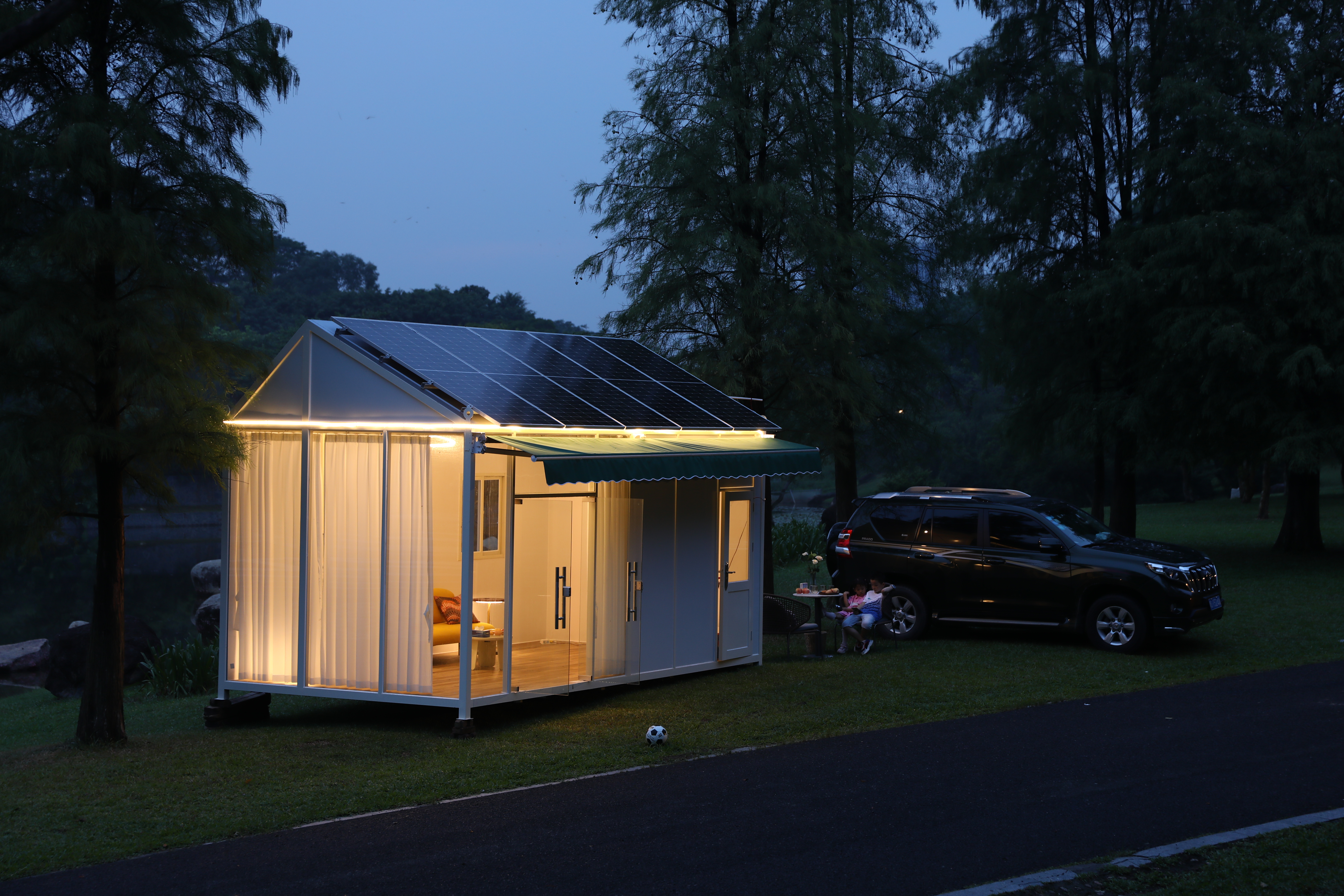
A battery energy storage system (BESS) captures electrical energy produced at one time—typically from the grid during off-peak hours or from solar panels during the day—and stores it for use later, when electricity is more expensive, the grid is down, or demand exceeds supply.
In simple terms, a BESS is like a large, smart rechargeable battery for your home, business, or even an entire neighborhood. But it is far more than just a stack of batteries—it is an integrated BESS system with intelligent management that decides when to charge, when to discharge, and how to operate safely and efficiently.
For B2B buyers—system integrators, EPC contractors, project developers and distributors—understanding what a BESS is, how it works and which parameters matter is essential for informed procurement. This guide covers everything you need to know, from core components to technical specifications, applications and certifications.
For a detailed guide on how to source and procure BESS, see our BESS Sourcing & Procurement Guide. For an introduction to LiFePO4 battery chemistry, see our What Is a LiFePO4 Battery? Complete Guide.
Core Components of a BESS
A complete battery energy storage system consists of four core components that work together. Understanding each component is essential for evaluating BESS products and suppliers.
1. Battery Pack (The Muscle)
The battery pack is the energy storage medium—the component that actually holds the electrical energy. It consists of multiple battery cells connected in series and parallel to achieve the desired voltage and capacity.
For commercial and industrial BESS applications, LiFePO4 (Lithium Iron Phosphate) has become the dominant chemistry due to its superior safety, long cycle life and ESG compliance. Other chemistries include NMC (Lithium Nickel Manganese Cobalt Oxide) and lead-acid, but these are less common for stationary storage due to safety concerns or shorter lifespans.
Key battery pack specifications:
-
Nominal voltage: 48V for standard C&I systems, 150-1500V for utility-scale high-voltage systems
-
Capacity: Measured in Ah (Amp-hours) or kWh (kilowatt-hours). A 48V 100Ah battery = 4.8kWh
-
Cycle life: 5,000+ cycles at 80% DoD for quality LiFePO4 (10+ years of daily cycling)
-
Continuous discharge rate: Typically 0.5C (standard) to 1C+ (high-power applications)
2. Battery Management System (BMS) — The Brain
The BMS is the "brain" of the battery system. It is an electronic system that monitors and controls the battery to ensure safe, reliable and efficient operation. Without a BMS, a lithium battery pack is unsafe and will degrade rapidly.
Critical BMS functions:
-
Cell voltage monitoring: Continuously measures each cell's voltage to prevent over-charging and over-discharging
-
Temperature monitoring: Monitors cell and pack temperature to prevent overheating
-
Current monitoring: Measures charge/discharge current to prevent over-current and short circuits
-
State of Charge (SoC) calculation: Estimates remaining energy (like a fuel gauge)
-
State of Health (SoH) calculation: Estimates battery degradation over time
-
Cell balancing: Equalizes voltage across all cells (passive or active) to maximize usable capacity and lifespan
-
Communication: Communicates with the inverter/PCS via CAN bus or RS485
-
Protection: Disconnects the battery in case of faults (over-voltage, under-voltage, over-current, over-temperature, short circuit)
B2B Buying Tip: The BMS is the most critical component for battery safety and longevity. Always verify that the BMS supports per-cell monitoring (not just pack-level), the communication protocol required by your target inverter (Victron, SMA, Sungrow, GoodWe, Growatt, Deye, etc.), and that it has comprehensive protection features. For more on BMS, see our How to Reset BMS on LiFePO4 Battery Guide.
3. Power Conversion System (PCS) / Inverter — The Translator
The PCS (also called a bi-directional inverter or converter) converts power between DC and AC. Batteries store and release DC power, but most loads and the grid use AC. The PCS translates between the two.
Key PCS functions:
-
DC to AC (discharge): Converts battery DC power to AC for loads or export to the grid
-
AC to DC (charge): Converts grid or solar AC power to DC to charge the battery
-
Grid synchronization: For grid-tied systems, synchronizes voltage and frequency with the grid
-
Voltage and frequency regulation: Provides stable AC output regardless of load variations
Key PCS parameters:
-
Rated power (kW): Must match your load requirements and battery discharge capability
-
Efficiency: Look for 95%+ peak efficiency (lower efficiency = more energy lost as heat)
-
Surge capacity: For motor starting or temporary overloads (typically 2x rated power for 5-10 seconds)
-
Waveform quality: THD (Total Harmonic Distortion) <3% for sensitive loads
-
Grid compliance: For grid-tied systems: IEEE 1547 (US), VDE-AR-N 4110 (Germany), G99 (UK)
4. Energy Management System (EMS) — The Strategist
The EMS is the software layer that controls when the battery charges and discharges. It is the strategic decision-maker that optimizes operation based on user-defined goals, electricity prices, solar generation and grid signals.
Common EMS strategies:
| Strategy | How It Works | Best For |
|---|---|---|
| Time-of-Use (TOU) Arbitrage | Charge during low-rate periods (night), discharge during high-rate periods (evening peak) | Markets with time-based electricity pricing |
| Solar Self-Consumption | Store excess solar during the day, use it in the evening | Homes and businesses with solar panels |
| Backup Power | Reserve battery capacity for emergencies during grid outages | Areas with unreliable grids or frequent storms |
| Demand Charge Management (Peak Shaving) | Discharge during peak demand to reduce maximum demand and lower demand charges | C&I customers with demand-based pricing (saves 15-40%) |
| Demand Response | Respond to grid signals to reduce consumption or discharge during grid stress (earns revenue) | Utility demand response programs |
How Does a BESS Work?
A BESS operates in a continuous cycle of charging, storing and discharging. Here is the step-by-step process:
-
Charging phase: The PCS converts AC power (from the grid or solar) to DC, which is stored in the battery pack. The BMS monitors each cell's voltage and temperature, ensuring safe charging and performing cell balancing.
-
Storage phase: The battery holds the stored energy. The BMS continues to monitor cells and may perform periodic balancing. LiFePO4 batteries have very low self-discharge (1-3% per month), so energy is retained efficiently.
-
Discharging phase: When energy is needed (peak pricing, grid outage or high demand), the battery releases DC power. The PCS converts it to AC for loads or export. The BMS monitors discharge current and prevents over-discharging.
-
Management phase: The EMS continuously optimizes the cycle based on its strategy (TOU arbitrage, solar self-consumption, peak shaving, backup), real-time prices, solar data and grid conditions.
The entire process is automated—once the EMS is configured, the BESS operates without manual intervention. The BMS ensures safety at all times, and the EMS ensures economic optimization.
Key Technical Parameters Explained
When evaluating BESS products, these are the parameters to understand and verify. Never accept vague specifications like "long life" or "high efficiency"—demand specific numbers.
| Parameter | What It Means | Typical Value (Quality LiFePO4) |
|---|---|---|
| Nominal Voltage | Rated voltage; set by cells in series (4 cells = 12.8V, 8 = 25.6V, 16 = 51.2V) | 12.8V, 25.6V, 51.2V (C&I); 150-1500V (utility) |
| Capacity (Ah / kWh) | Energy the battery can store. Ah × Voltage = kWh. Verify usable capacity at a stated DoD. | 50Ah-400Ah per module; 5kWh-100kWh+ per system |
| Depth of Discharge (DoD) | Percentage of capacity that can be used safely. Higher DoD = more usable energy. | 80-90% (LiFePO4); 50% max (lead-acid) |
| Cycle Life | Charge-discharge cycles before capacity drops to a threshold (usually 70-80%). Check the DoD it is rated at. | 5,000-6,000+ cycles at 80% DoD (10-15 years) |
| Round-Trip Efficiency | Energy recovered vs energy stored (AC-AC, including inverter losses). | 90-95% (AC-AC including inverter) |
| C-Rate | Charge/discharge rate relative to capacity. 1C = full charge/discharge in 1 hour; 0.5C = 2 hours. | 0.5C continuous (standard); 1C+ (high-power) |
| Operating Temperature | Safe temperature range; charge and discharge ranges may differ. | Charge: 0-55°C; Discharge: -20-60°C |
| IP Rating | Ingress protection against dust and water. IP65 = dust-tight + water jets. | IP65 (outdoor); IP20/IP30 (indoor) |
BESS Applications: Residential, C&I & Utility
Battery energy storage systems serve a wide range of applications across residential, commercial, industrial and utility-scale sectors. Understanding the application helps determine the right system size, chemistry and features.
Residential (5-20kWh)
Residential BESS serves homeowners seeking energy independence, backup power or solar self-consumption. Typical systems are 5-20kWh, wall-mounted or stackable, paired with a hybrid inverter.
-
Solar + storage: Maximize self-consumption of rooftop solar (typically 70-90% with storage vs 30-50% without)
-
Backup power: Protect against grid outages in regions with unreliable grids or frequent storms
-
TOU arbitrage: Shift consumption to off-peak periods to reduce bills
Commercial & Industrial (30kWh-10MWh+)
C&I energy storage serves factories, office buildings, retail centers, hotels, data centers and agricultural operations—the largest and fastest-growing BESS segment.
-
Peak shaving: Reduce demand charges (saves 15-40% where demand-based pricing applies)
-
Solar self-consumption: Maximize ROI on existing commercial solar
-
Backup power: Protect critical equipment (data centers, manufacturing lines, refrigeration)
-
EV charging support: Support charging infrastructure without costly grid upgrades
-
Power quality: Voltage regulation, frequency support and harmonic mitigation
Utility-Scale (>10MWh)
Utility-scale BESS serves grid operators, utilities and independent power producers (IPPs). Systems are typically containerized or rack-mounted, from 10MWh to gigawatt-hour scale.
-
Frequency regulation: Fast-response grid stabilization (sub-second) to hold frequency at 50/60Hz
-
Renewable firming: Smooth intermittent solar and wind to make them dispatchable
-
Transmission deferral: Delay costly transmission upgrades by siting storage at grid congestion points
-
Energy arbitrage: Buy low, sell high on wholesale markets
-
Capacity markets: Provide reliable capacity to meet grid requirements and earn capacity payments
LiFePO4 vs NMC vs Lead-Acid for BESS
Not all battery chemistries are equal for stationary storage. Here is how the three main chemistries compare:
| Parameter | LiFePO4 (LFP) | NMC | Lead-Acid |
|---|---|---|---|
| Thermal Runaway Threshold | >500°C (very safe) | ~200°C (higher risk) | N/A (no thermal runaway, but off-gassing) |
| Cycle Life (80% DoD) | 5,000-6,000+ cycles | 2,000-3,000 cycles | 300-500 cycles |
| Usable DoD | 80-90% | 80-90% | 50% max |
| Energy Density | 120-180 Wh/kg | 200-300 Wh/kg | 30-50 Wh/kg |
| Cobalt Content | None (ESG-friendly) | Yes (ethical concerns) | None |
| Maintenance | Zero | Zero | Monthly watering & cleaning |
| Upfront Cost ($/kWh) | Medium ($300-500) | High ($400-600) | Low ($100-200) |
| Total Cost of Ownership (10yr) | Lowest | Medium | Highest (frequent replacement) |
| Best For | Stationary BESS (most applications) | Mobile/weight-constrained | Short-term backup, budget projects |
Bottom line: For 90% of stationary BESS applications, LiFePO4 is the optimal choice. It offers the best balance of safety, cycle life, ESG compliance and total cost of ownership. NMC makes sense only for mobile or weight-constrained applications. Lead-acid is rarely cost-effective over the project lifecycle despite its lower upfront cost.
BESS vs Other Energy Storage Technologies
Batteries are not the only energy storage technology. Here is how BESS compares to other options:
| Technology | Duration | Key Advantage | Key Limitation |
|---|---|---|---|
| LiFePO4 BESS | 1-4 hours | Safe, long life, fast response, modular, widely available | Higher upfront cost than lead-acid |
| Flow Batteries (Vanadium) | 4-12+ hours | Long duration, unlimited cycle life, non-flammable electrolyte | Low energy density, high cost, complex maintenance, large footprint |
| Pumped Hydro | 6-24+ hours | Very low cost/kWh, long lifespan (50+ years), proven | Needs specific geography, long construction (5-10 years), environmental impact |
| Compressed Air (CAES) | 4-24 hours | Large scale, low cost/kWh, long life | Requires underground caverns, lower efficiency (40-60%), geographic constraints |
| Flywheel | Seconds-minutes | Very fast response, unlimited cycles, high power | Very low energy capacity, high self-discharge, expensive for energy storage |
For most B2B applications (1-4 hour duration, C&I to utility-scale), LiFePO4 BESS is the most practical and cost-effective choice. Flow batteries and pumped hydro make sense only for very long-duration (4+ hour) utility applications where footprint and geography are not constraints.
Essential Certifications for BESS
Depending on your target market, BESS products must hold specific certifications. Procuring uncertified equipment can result in denied permits, insurance refusals, regulatory shutdowns and safety hazards.
| Market | Required Certification | What It Covers |
|---|---|---|
| North America | UL 1973 (battery safety), UL 9540 (system safety), UL 9540A (fire propagation test data) | Battery and system safety, fire safety, permitting |
| Europe | CE Mark (LVD, EMC, RoHS), IEC 62619 (battery safety), IEC 62477 (PCS safety) | EU market access, battery and power-conversion safety |
| Australia | CEC Listed (Clean Energy Council approved battery list) | Required for rebates and grid connection approvals |
| China | GB 38031-2025 (mandatory battery safety), CQC Certification | Mandatory for batteries made in or imported into China |
| International Shipping | UN38.3 (transport safety), MSDS/SDS (safety data sheet) | Mandatory for all lithium battery shipments—no exceptions |
For a detailed guide on BESS certifications and conformity assessment, see our BESS Certification & Conformity Assessment Guide.
Common Misconceptions About BESS
| Misconception | Reality |
|---|---|
| "BESS is just a big battery" | A BESS is an integrated system with four core components (battery, BMS, PCS, EMS). The battery is only one part. A quality BMS and EMS are essential for safety, efficiency and economic optimization. |
| "All lithium batteries are the same" | LiFePO4 and NMC are fundamentally different chemistries with different safety profiles, cycle lives and costs. Grade A vs Grade B/C cells also differ. Always verify cell grade and chemistry. |
| "BESS is too expensive" | While upfront cost is higher than lead-acid, LiFePO4 BESS has the lowest total cost of ownership over 10-20 years due to 10x longer cycle life, zero maintenance and higher usable capacity. Many C&I systems achieve payback in 3-7 years. |
| "BESS is only for off-grid" | The majority of installations are grid-tied, used for peak shaving, TOU arbitrage, solar self-consumption and demand response. Grid-tied systems can also provide backup with the right inverter configuration. |
| "BESS requires a lot of maintenance" | LiFePO4 BESS requires zero routine maintenance (no watering, cleaning or equalization). The BMS handles balancing and protection. Only periodic visual inspections and firmware updates are recommended. |
| "A battery bank and a BESS are the same thing" | A battery bank is just the cells connected together. A BESS adds BMS, PCS/inverter, EMS, enclosure, thermal management and protection. A battery bank alone is not a complete energy storage system. |
Frequently Asked Questions
What is BESS?
BESS stands for Battery Energy Storage System—a rechargeable system that stores electrical energy in batteries and releases it on demand. It is made up of four core components: (1) battery pack—typically LiFePO4 for commercial/industrial applications, storing energy as DC; (2) BMS (Battery Management System), which monitors cell voltage, temperature and current, balances cells and ensures safety; (3) PCS (Power Conversion System) or inverter, which converts DC to AC for loads or the grid and vice versa for charging; (4) EMS (Energy Management System), the software that controls when to charge and discharge. BESS is used for peak shaving, solar self-consumption, backup power, grid stabilization and renewable-energy firming.
What does BESS stand for?
BESS stands for Battery Energy Storage System. It is sometimes also called a battery storage system, energy storage system (ESS) or battery bank (though "battery bank" technically refers only to the cells, not the complete system). The term BESS is most common in commercial, industrial and utility-scale contexts, while "home battery" or "solar battery" is more common in residential settings.
What are the main types of BESS?
BESS can be grouped in three ways. By chemistry: LiFePO4 (the mainstream choice for stationary storage), NMC (mainly mobile/weight-constrained), lead-acid (legacy, low-cost but short-lived) and flow batteries (very long-duration utility use). By scale: residential (5-20kWh), commercial & industrial (30kWh-10MWh+) and utility-scale (above 10MWh). By form factor and connection: wall-mounted or stackable units for homes; rack-mounted cabinets for C&I; containerized blocks for utility-scale; and grid-tied, off-grid (standalone) or hybrid systems depending on whether they connect to the grid, operate independently, or pair directly with solar.
How does a battery energy storage system work?
A BESS runs a continuous cycle: (1) Charging—the PCS converts AC power (grid or solar) to DC stored in the battery while the BMS monitors and balances cells. (2) Storage—the battery holds energy; LiFePO4 has very low self-discharge (1-3%/month). (3) Discharging—when energy is needed, the battery releases DC and the PCS converts it to AC for loads or the grid; the BMS prevents over-discharge. (4) Management—the EMS optimizes the cycle based on strategy (TOU, solar self-consumption, peak shaving, backup), real-time prices, solar data and grid conditions. The whole process is automated once the EMS is configured.
What is the difference between a battery bank and a BESS?
A battery bank is simply a collection of cells connected in series and parallel to reach a desired voltage and capacity; it stores energy but has no management, conversion or control systems. A BESS is the complete integrated system that adds the BMS, PCS/inverter, EMS, enclosure, thermal management and protection. A battery bank is one component of a BESS and cannot power AC loads or connect to the grid on its own.
What battery chemistry is best for BESS?
For 90% of stationary BESS applications, LiFePO4 (Lithium Iron Phosphate) is the best chemistry: thermal-runaway threshold >500°C (very safe), 5,000-6,000+ cycles at 80% DoD (10-15 years), 80-90% usable DoD, zero maintenance, cobalt-free and the lowest total cost of ownership over 10-20 years. NMC has higher energy density but lower safety (~200°C thermal runaway), contains cobalt and lasts 2,000-3,000 cycles—best only for mobile use. Lead-acid is cheap upfront but lasts only 300-500 cycles, needs maintenance and allows just 50% DoD, so it is rarely cost-effective over the project lifecycle.
Does a battery system have energy?
Yes. A battery stores electrical energy in the form of chemical energy. When charging, electrical energy is converted to chemical energy and stored; when discharging, it is converted back to electrical energy (DC), which the PCS/inverter then converts to AC. Stored energy is measured in kilowatt-hours (kWh)—for example, a 48V 100Ah battery stores 4.8kWh (48V × 100Ah = 4,800Wh). Usable energy depends on depth of discharge; LiFePO4 can safely use 80-90% of nominal capacity.
What are the main applications of BESS?
BESS serves three main segments: (1) Residential (5-20kWh)—solar self-consumption, backup and TOU arbitrage for homeowners; (2) Commercial & Industrial (30kWh-10MWh+)—peak shaving (15-40% demand-charge savings), solar self-consumption, backup, EV charging support and power quality; (3) Utility-scale (>10MWh)—frequency regulation, renewable firming, transmission deferral, energy arbitrage and capacity markets. The fastest-growing segment is C&I.
What certifications does a BESS need?
Certifications vary by market: North America requires UL 1973 (battery safety), UL 9540 (system safety) and UL 9540A (fire propagation test data, especially for >20kWh indoor installations). Europe requires CE Mark (LVD, EMC, RoHS), IEC 62619 (battery safety) and IEC 62477 (PCS safety). Australia requires CEC Listing; China requires GB 38031-2025 and CQC. For international shipping, UN38.3 and MSDS/SDS are mandatory for all lithium battery shipments with no exceptions. Always verify certificates are current, model-specific and verifiable against the issuing body's online database.
Related Resources
-
BESS Sourcing & Procurement Guide — how to source and procure battery energy storage systems for B2B buyers
-
BESS Certification & Conformity Assessment Guide — UL 1973, UL 9540, UL 9540A, IEC 62619, EU 2023/1542, GB 38031-2025
-
How to Choose a Reliable BESS Supplier — reliable vs risky supplier comparison and evaluation framework
-
BESS Supplier Selection: 7 Key Criteria — capability verification, due diligence, factory audit, new supplier qualification
-
What Is a LiFePO4 Battery? Complete Guide — chemistry, voltage, capacity and BMS basics
-
LiFePO4 Battery Safety Guide — thermal runaway risk, fire safety and safe handling
-
How to Reset BMS on LiFePO4 Battery — BMS troubleshooting and reset procedures
-
B2B Sourcing Guide for LiFePO4 Batteries — complete overview across all applications
Get In Touch
Sourcing a battery energy storage system (BESS)? Contact Enerbe for specs, pricing and certifications.
📄 Request BESS Certifications & Datasheet
Contact Us →📞 Speak with Our Engineering Team
Get In Touch →🔗 Browse Certified BESS & LiFePO4 Products
View Products →Dongguan A&S Power Technology Co., Limited.
Building 1, No. 2, Keji 9th Road,
Songshan Lake, Dongguan, Guangdong, China
📞 +86 137 1383 1631
✉ info@aspowerbattery.com
Stay Charged. Stay Safe.



GB 38031-2025 Battery Safety Standard: Key Changes, Thermal Propagation "No-Fire, No-Explosion" Rule & BESS Compliance (2026)
Lithium Battery Not Charging? 7 LiFePO4 Causes & Fixes (2026)
Related Article


Get In Touch
Have questions about custom lithium batteries, energy storage solutions, or lead-to-lithium conversion? Our team is ready to help. Send us a message and we’ll respond within 24 hours.

Building 1, No. 2, Keji 9th Road, Songshan Lake, Dongguan, Guangdong, China
Office Address

info@aspowerbattery.com
Email Us

+86 137 1383 1631
Call Us

Sun - Fri (08AM - 10PM)
Office Open
