
Drone Battery Buying Guide: High-Rate LiPo UAV Packs, Specs, Flight Time & Applications
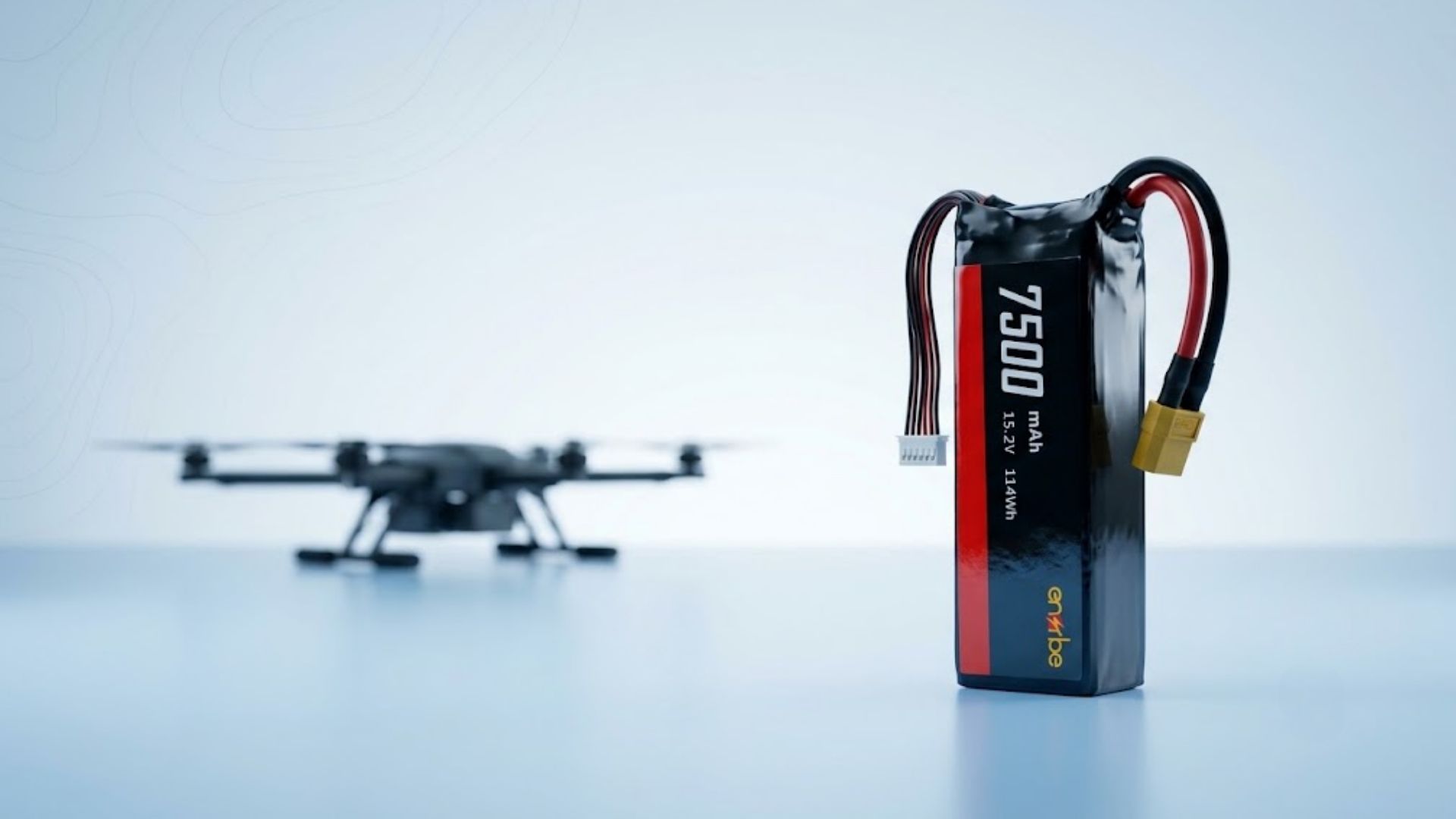
Table of Contents
- Introduction: What a Drone Battery Is and Why It Decides Flight Performance
- Types of Drone Batteries: LiPo, LiHV, High-Rate Li-ion and LFP Compared
- Drone Battery Key Specs Explained: Voltage, S-Count, Capacity, Energy and C-Rating
- How Long Does a Drone Battery Last? Flight Time vs Cycle Life
- Drone Batteries by Application: Delivery, Agriculture, Security, Mapping, Inspection & Rescue
- Charging a Drone Battery: Balance Charging, Profiles and Best Practices
- Drone Battery Safety, Storage and Transport (UN38.3, CE, RoHS)
- B2B Buyer's Checklist: Specs, Certifications and OEM Customization
- Frequently Asked Questions
- Related Resources
- Summary
Drone Battery Buying Guide: High-Rate LiPo UAV Packs, Specs, Flight Time & Applications
Last updated: November 02, 2026 | Written by the Enerbe Engineering Team
Introduction: What a Drone Battery Is and Why It Decides Flight Performance
Quick Answer: A drone battery (also called a UAV battery or drone battery pack) is the high-rate power source that drives the motors, flight controller, payload and onboard electronics of an unmanned aircraft. Commercial and industrial drones run almost exclusively on high-rate lithium polymer (LiPo) and high-voltage LiPo (LiHV) packs, because these cells can deliver the large, sudden current needed for take-off, hover, maneuvering and heavy payloads while staying light. This guide explains the types of drone batteries, how to read voltage, S-count, capacity, energy and C-rating, how long a drone battery lasts per flight and in cycles, which pack suits delivery, agriculture, security, mapping, inspection and rescue UAVs, how to charge and care for them, transport safety, and how B2B buyers specify an OEM custom drone battery.
A drone does not fail in the air because of a weak motor or a weak frame alone; in most commercial UAV programs, the drone battery sets the real limits on flight time, payload, climb rate, wind penetration and mission safety. A pack that cannot supply the peak current the motors demand sags under load, loses altitude early, overheats or cuts off mid-mission. Conversely, an oversized pack carries unnecessary weight that itself shortens endurance. Choosing the right UAV battery is therefore an engineering trade between energy (Wh), weight, discharge capability (C-rating and internal resistance), voltage matching, thermal limits and lifetime.
This buying guide is written for B2B buyers, system integrators, fleet operators and OEM program managers selecting lithium drone batteries for industrial platforms, rather than pilots choosing a spare consumer pack. It focuses on the high-rate LiPo and LiHV cells used in logistics, crop spraying, public safety, aerial mapping, infrastructure inspection and search-and-rescue UAVs. Consumer packs and brand-specific smart batteries are only mentioned for context; for our stocked high-rate drone cells and packs, browse the drone battery product line.
For the underlying lithium-ion chemistry used in stationary storage, see our LiFePO4 battery complete guide; this page focuses on the high-current power system of a moving aircraft.
Types of Drone Batteries: LiPo, LiHV, High-Rate Li-ion and LFP Compared
When buyers ask what kinds of drone batteries exist, the practical answer starts with chemistry and form factor. Most UAV packs are built from soft-pack high-rate lithium polymer cells; a smaller number of platforms use high-rate cylindrical or prismatic lithium-ion cells, while LiFePO4 is essentially never chosen for a flight pack that must deliver burst current and stay light. The table below compares the four chemistry families against the demands of drone flight.
| Chemistry | Nominal / Charge Voltage | Rate Capability & Weight | Typical Drone Use |
|---|---|---|---|
| Standard LiPo (lithium polymer, soft pack) | 3.7V nominal; charge to 4.20V/cell | Very high discharge rate, low weight, flexible thin-pack form factor | FPV drone battery, sport and small industrial platforms; mature, widely supported by chargers |
| LiHV (high-voltage lithium polymer) | 3.8V or 3.85V nominal; charge to 4.30 / 4.35 / 4.40V/cell | More energy per gram than standard LiPo at the same weight; high-rate soft pack | Long-endurance industrial UAVs, mapping, delivery and agriculture platforms |
| High-rate cylindrical / prismatic Li-ion (high-power NMC-based) | ~3.6–3.7V nominal; charge to 4.20V | Strong current capability, rigid cell shape, generally heavier than soft packs for equal energy | Some heavy-lift and hybrid platforms; selected where mechanical cell robustness matters |
| LiFePO4 (LFP) | 3.2V nominal; charge to 3.60–3.65V | High safety and long cycle life, but lower energy density and lower continuous discharge rate | Ground stationary storage, backup power; not normally used as a high-current flight pack for agile UAVs |
Why industrial drones choose high-rate LiPo / LiHV: flight packs must deliver a high burst current at take-off and climb, stay light to leave useful payload capacity, and be built into thin, custom-shaped packs that fit the airframe. Soft-pack high-rate LiPo satisfies all three. LiHV raises the charge voltage and energy density to extend endurance, which matters most on long missions where every gram counts. LFP's safety and cycle-life advantages favor stationary ground systems; for those applications see our LiFePO4 chemistry guide.
Smart batteries vs raw high-rate packs
Consumer drones ship as branded smart battery packs: a case, built-in BMS or fuel gauge, communication with the flight controller, charge level display and a dedicated charger. Industrial OEM programs more often specify a high-rate cell or pack defined by the integrator: selected S-count, capacity, C-rate, connector, protection and reporting over CAN or another flight-controller protocol. The engineering trade-offs in this guide apply to both, but custom OEM packs let the buyer match the energy, weight and mounting dimensions exactly to the airframe.
Drone Battery Key Specs Explained: Voltage, S-Count, Capacity, Energy and C-Rating
Reading a drone battery datasheet correctly prevents two common procurement mistakes: matching a pack the ESC and motors cannot accept (voltage), and buying a pack that cannot supply the mission current (C-rating). The five core specs below define a UAV battery.
1. Nominal voltage and S-count (series cells)
Cells are wired in series to raise voltage; the series count is written S (1S, 2S, 3S, 4S, 6S, 12S, 14S and so on). Pack nominal voltage equals cell nominal voltage multiplied by S-count. The pack voltage must match the motor, ESC and flight-controller rating exactly—an over-voltage pack can destroy the ESC and motors; an under-voltage pack cannot deliver the expected power.
| Configuration | Standard LiPo (3.7V cell) | LiHV (3.85V cell) | Common platform range |
|---|---|---|---|
| 3S | 11.1V | 11.55V | Small FPV and micro UAVs |
| 4S | 14.8V | 15.4V | Mid-size FPV and inspection drones |
| 6S | 22.2V | 23.1V | Common industrial mapping, inspection and light delivery UAVs |
| 12S | 44.4V | 46.2V | Heavy delivery, agriculture and long-endurance platforms |
Parallel groups (written P, such as 6S2P) raise capacity and available current without changing pack voltage. Our stocked cells cover 3.7V, 3.8V and 3.85V high-voltage ratings; see the drone battery range for nominal voltage and Wh by model.
2. Capacity (Ah) and energy (Wh)
Capacity in ampere-hours (Ah) describes how much charge the pack holds; energy in watt-hours (Wh) is the quantity that actually estimates endurance, and it combines capacity and voltage:
Energy (Wh) = Capacity (Ah) x Pack Nominal Voltage (V)
For example, a 3.85V 20Ah high-voltage LiPo cell stores about 77.0 Wh at 20 Ah minimum capacity. Across the range, a 3.7V 22Ah cell holds about 81.4 Wh, a 3.7V 41Ah cell about 151.7 Wh, and a 3.7V 80Ah cell about 296 Wh; higher Wh generally means longer flight, but also more pack weight, which must be traded against payload and current draw.
3. C-rating: continuous, burst and pulse discharge
The C-rating converts capacity into allowed discharge current. Continuous current (A) = C-rate x Capacity (Ah). The C number must be read in three parts because a pack rated only by a single marketing figure can mislead:
-
Continuous C-rate: the current the pack can sustain continuously through the mission. A 10C, 20Ah cell supplies 200A continuously.
-
Burst C-rate (short window): the higher current allowed for a defined short period, such as 15C for up to 30 seconds during take-off or a climb.
-
Pulse C-rate: a very short peak such as 25C for under one second at high state of charge, used for hard maneuvers.
Low internal resistance (AC impedance) matters alongside C-rating: lower resistance means less voltage sag and heat build-up under load. Our 3.85V 20Ah HV cell, for example, lists internal resistance at or below 1.5 mΩ, a standard charge current of 10A (0.5C), maximum fast charge of 40A (2.0C), maximum continuous discharge of 200A (10C; 15C for up to 30s) and a 25C pulse under one second. Logistics and crop-spraying UAVs that hold heavy payloads need this level of sustained capability; a low-rate consumer pack would sag and overheat under the same current.
4. Charge voltage, cut-off voltage and temperature windows
Standard LiPo cells charge to 4.20V; HV cells charge to 4.30V, 4.35V or 4.40V depending on the cell, and discharge down to a cut-off around 3.0V per cell. Operating temperature ranges protect the chemistry: the 20Ah HV cell charges from 0°C to +45°C, discharges from -40°C to +55°C, and should not be stored below -20°C for more than about a month. Always size the pack, connector and cables for the peak current the motors draw at full payload and worst-case wind.
| Stocked Cell Example | Nominal / Energy | Position in the Range |
|---|---|---|
| 3.8V 8Ah | 61.6 Wh | Light inspection, short endurance platforms |
| 3.85V 16Ah HV | High-voltage thin soft cell | Balanced weight and endurance for industrial UAVs |
| 3.85V 20Ah HV | 77.0 Wh, 10C continuous | Mapping, delivery and surveillance platforms |
| 3.7V 22Ah | 81.4 Wh | Agriculture and heavy-lift industrial UAVs |
| 3.7V 41Ah | 151.7 Wh | Long-endurance delivery and mapping missions |
| 3.7V 80Ah | 296 Wh | High-capacity long-flight industrial platforms |
How Long Does a Drone Battery Last? Flight Time vs Cycle Life
When buyers search "how long does a drone battery last", two different meanings are usually mixed together: flight time per charge and cycle life over the pack's service life. They are governed by different factors and should be planned separately.
Flight time per charge
Per-flight endurance depends on the energy available versus the current the aircraft draws. A practical estimate is:
Flight time (minutes) ≈ Capacity (Ah) x Usable Energy Fraction ÷ Average Current (A) x 60
The average current rises with payload, aggressive throttle, wind and low temperature, so a high-capacity pack does not always give the proportional endurance gain a buyer expects: extra cells add weight, the motors burn more current to lift that weight, and some energy is reserved for a safe return and margin. Typical industrial LiPo packs deliver roughly 15–40 minutes per flight on one charge; large-capacity long-endurance platforms, efficient airframes and light payloads sit toward the upper range, while heavy crop-spraying and full-payload delivery missions sit toward the lower range.
| Factor | Effect on flight time | How to manage it |
|---|---|---|
| Pack energy (Wh) | More Wh raises available flight energy | Increase capacity within the weight budget, not beyond it |
| Pack weight | Heavier packs raise lift current and offset added Wh | Choose high-energy LiHV and thin soft-pack construction |
| Payload and drag | Spray tanks, cargo, sensors and fairings raise average current | Size continuous C-rate and Wh for worst-case payload |
| Temperature and wind | Cold reduces available capacity; headwind raises throttle | Pre-warm packs in cold weather and reserve a safe return margin |
| Pack health (cycle count, voltage sag) | Aged packs hold less capacity and sag more under load | Track per-pack flights and capacity; retire at the agreed threshold |
Cycle life over the pack's service life
Cycle life measures how many charge–discharge cycles the pack survives before capacity fades to a stated threshold. High-rate LiPo drone batteries generally have a shorter cycle life than stationary LiFePO4 packs because they are built for high current and light weight, not decades of slow cycling. Under standard 0.5C cycling at 25°C, our high-voltage cells retain at least 80% capacity after about 300 cycles and at least 65% after about 500 cycles. The actual service life in a commercial fleet depends heavily on charge rate, depth of discharge, storage SOC, temperature, heat management and whether the pack was ever overcharged, shorted or mechanically damaged.
⚠️ Planning note for fleet operators
Fleet budgets should assume spare packs are a working capital item, not a one-time purchase. Track cycle count, voltage balance, internal resistance and capacity fade per serial number, and rotate packs so no single pack carries the heaviest mission profile every day. Good storage and balance charging (covered below) are the largest levers for reaching the rated cycle life.
For general long-term battery storage practice that also applies between flights, see our battery storage and maintenance guide; for charger principles common to lithium packs, see the lithium battery charging guide.
Drone Batteries by Application: Delivery, Agriculture, Security, Mapping, Inspection & Rescue
Industrial UAV missions differ sharply in current profile, endurance target, weight budget and environment. The right drone battery is selected for the mission profile first, and for generic capacity second. The five commercial segments below cover the main high-rate LiPo and LiHV applications supplied to OEM and fleet customers.
Aerial photography, surveying and mapping UAVs

Mapping, photogrammetry, LiDAR and aerial photography platforms carry stabilized cameras and survey sensors over long, relatively steady flight paths. They prioritize stable voltage under hover, moderate continuous current, predictable endurance per flight and consistent voltage balance. High-voltage LiHV packs are a natural fit because extra energy per gram extends the survey strip; the 3.85V 20Ah HV drone cell is representative of this class.
Logistics and package delivery UAVs

Delivery drones carry a cargo load on climb and cruise, which raises sustained current and demands a pack with a strong continuous C-rate, low internal resistance and enough Wh for the round trip plus return margin. Heavy-lift and long-range delivery programs often move to higher S-count packs (6S, 12S or above), multi-parallel configurations and custom enclosure form factors that match the cargo airframe. Battery weight directly cuts payload capacity, so pack energy density and balance are specified together with the cargo rating.
Police, security and surveillance UAVs

Security and public-safety drones loiter for surveillance, then climb or reposition quickly when a situation changes. The pack must hold a stable voltage during long hover while still supplying burst current for sudden maneuvering; rapid swap packs keep patrols continuous. Reliability, consistent balance, clear state-of-charge reporting and proven certification documentation matter more here than maximum theoretical energy density.
Infrastructure inspection and search-and-rescue UAVs

Power-line, wind-turbine, pipeline and bridge inspection drones fly close to structures in variable wind, and search-and-rescue drones may operate in cold, remote or wet conditions. Wide-temperature discharge capability, vibration-resistant pack construction, reliable connectors and predictable voltage sag at low temperature are the key selection criteria. Inspection platforms typically combine moderate capacity with a dependable continuous discharge rating rather than seeking maximum Wh.
Agricultural crop-spraying UAVs

Crop-spraying drones fly loaded with tank weight and pump payload, pull high continuous current in low-altitude loops, and complete many short missions per day with fast battery swaps. These platforms need high continuous C-rate, thermal tolerance under repeated high-current cycles, robust connectors and packs built for a high daily cycle cadence. The large-capacity cells in our range, such as the 3.7V 22Ah cell (81.4 Wh) and 3.7V 80Ah pack (296 Wh), address the energy and current needs of agriculture and heavy-lift missions.
| Application | Primary battery requirements | Typical focus |
|---|---|---|
| Delivery / logistics | High continuous C-rate, sufficient round-trip Wh, low sag, higher S-count options | Payload-to-energy balance |
| Agriculture spraying | High sustained current, thermal durability, fast swap, daily cycling | Rate and cycle cadence |
| Security / surveillance | Stable hover voltage, burst capability, reliable reporting, certified construction | Reliability and mission continuity |
| Mapping / aerial photography | High energy per gram, steady cruise voltage, consistent balance | Endurance and voltage stability |
| Inspection / search rescue | Wide temperature range, vibration robustness, dependable connectors | Environment and durability |
Charging a Drone Battery: Balance Charging, Profiles and Best Practices
Correct charging protects both flight safety and cycle life. A drone battery that is charged with the wrong chemistry profile, an unbalanced multi-cell pack, or excessive current degrades faster, sags earlier and carries higher thermal risk. The charging rules below apply to high-rate LiPo and LiHV UAV packs.
Use a dedicated balance charger with the correct profile
Select the charger profile for the actual chemistry: standard LiPo (charge 4.20V/cell) or the specific LiHV target (4.30V, 4.35V or 4.40V/cell as the cell datasheet specifies), and set the exact S-count. Every charge should be a balance charge: the charger monitors and equalizes each cell in series so voltage spread stays within a few millivolts. A multi-cell pack left unbalanced will develop a weak cell that limits the whole pack.
Charge current and temperature
Routine charging at roughly 0.5C preserves cycle life; fast charging up to the cell's stated maximum (for the 20Ah HV cell, up to 2.0C / 40A) should be used only when operationally necessary and under supervision. Charge between 0°C and +45°C; do not charge a cold pack straight from sub-zero storage. Never charge a pack that is hot from a recent flight—let it cool to the charger's allowed range first. The general lithium charging principles, current limits and temperature protection discussed in our lithium battery charging guide transfer to drone packs, except that the chemistry-specific voltage and charge profile must match the LiPo or LiHV cell.
Pre-flight and post-flight charging routine
-
Before charging: inspect the pack, connectors, leads and casing for swelling, scuffing, cracks, heat marks or corrosion; reject and quarantine any damaged pack.
-
During charging: charge on a non-flammable surface in a supervised area, keep the pack away from flammables, and do not leave a high-rate charger unattended.
-
After charging: confirm cell voltages are balanced and the pack reaches the target full voltage without warning; record cycle count and pack condition in the fleet log.
-
Between missions: return packs to storage SOC rather than holding them fully charged for days; fully charged high-rate packs age faster while waiting on the shelf.
⚠️ Do not mix chemistry profiles
A LiHV pack charged to a standard LiPo cut-off leaves energy on the table; a standard LiPo pack charged to a LiHV voltage is overcharged and unsafe. Confirm the exact charge voltage on the cell datasheet before setting the charger, and keep charger profiles labeled by pack type in the charging station.
Drone Battery Safety, Storage and Transport (UN38.3, CE, RoHS)
High-rate LiPo and LiHV packs store concentrated energy and discharge it quickly; disciplined handling, storage and transport are required across commercial UAV operations. This section summarizes the operational rules; stationary storage fire engineering and certification detail sits in our related safety and shipping guides.
Handling and in-service safety
-
Protect the pack mechanically: avoid drops, punctures, compression, crushed connectors and contact with sharp debris; soft-pack cells can fail after physical damage even if they still hold a charge.
-
Keep wiring protected: use the correct discharge connector, secure the leads, use fusing or protection where the pack design includes it, and prevent exposed terminals from shorting against metal or each other.
-
Monitor temperature: watch for abnormal heat during flight or charge; a pack running hot under normal load signals an over-specified current problem, internal resistance rise or a weak cell.
-
Quarantine faults immediately: swelling, venting, unusual smell, visible damage, persistent voltage imbalance or overheating means the pack is removed from service; it must not be charged, discharged or returned to flight.
Storage between flights and long-term idle
Store drone batteries at storage voltage, roughly 50–60% SOC, in a cool, dry, ventilated place around 25°C; long-term storage should stay between 0°C and 35°C, and packs should not remain below -20°C for more than about a month. Keep packs in a fire-resistant bag or box, isolated from heat sources and flammables, and top up to storage level every few months during long idle periods. The same principles covered in our battery storage and maintenance guide apply, adjusted for LiPo/LiHV storage voltage.
Shipping and certification
Lithium drone batteries are classified as dangerous goods for air and ground freight. Commercial supply should include UN38.3 transport testing, MSDS, and applicable CE and RoHS conformity documentation; packs are shipped at the regulated state of charge, with protected terminals and approved packaging. For the transport classification, SOC limits, labeling and packaging rules, see our battery shipping and certifications guide. Our stocked high-rate drone cells are supplied with CE and RoHS documentation; UN38.3 and shipment files for specific OEM packs are available on request.
🚨 Emergency handling
If a pack swells, smokes, vents or catches fire, stop charging and flight immediately, evacuate personnel, keep observers at a safe distance, and use the lithium-battery response procedure approved for your facility. Do not attempt to service or recharge a damaged pack; isolate it in a fire-resistant container and follow certified disposal or recycling channels. Never put a damaged lithium pack in general waste.
B2B Buyer's Checklist: Specs, Certifications and OEM Customization
For integrators, fleet operators and OEM teams, selecting a drone battery supplier is more than choosing a capacity and C-rating. The checklist below consolidates the engineering and procurement questions that should be settled before a volume order.
1. Electrical and mechanical specification match
-
Voltage and S-count match the motor, ESC and flight controller rating; confirm pack nominal voltage, full-charge voltage and cut-off voltage with the datasheet.
-
Capacity and Wh sized for target flight time at average current, after adding the pack's own weight to the mission weight model.
-
Continuous, burst and pulse C-rating cover the worst-case current at full payload; internal resistance stated and tested, not implied by the C number.
-
Connectors, cables, mounting form factor, dimensions and weight fit the airframe; discharge connector type and pinout specified for the integration.
2. Documentation, testing and certification
-
Cell and pack datasheet with voltage, capacity, Wh, C-rating, internal resistance, temperature windows, cycle life and dimensions.
-
UN38.3 transport test summary, MSDS, CE and RoHS documentation; additional target-market certificates confirmed before volume production.
-
Sample discharge curves at planned current and temperature, balance behavior and internal-resistance measurements; batch traceability on serial numbers.
3. OEM customization and supply capability
For custom drone packs, define the required S-count and parallel configuration, capacity and Wh, continuous and burst current, protection and monitoring (with CAN or other reporting as needed), connector type, enclosure or pack shape, labeling and the certification target. A capable battery partner should propose the cell selection, build prototype packs for flight testing, and support revisions based on measured endurance and temperature data. Our engineering team supplies tailored high-rate LiPo and LiHV packs for delivery, agriculture, security, mapping, inspection and rescue programs; for supplier due diligence beyond the battery itself, our battery supplier selection guide covers quality systems, documentation and long-term manufacturing stability.
Ready to size a pack? Share the motor and ESC continuous/peak current, target flight time, payload and weight budget, mounting dimensions, operating temperature range and required certifications. We will match a high-rate LiPo or LiHV cell or custom pack configuration, and provide datasheet samples and certification documentation for evaluation. Browse the stocked line in the drone battery product list, or ask our engineering team through the contact page.
Frequently Asked Questions
These answers cover the questions most often raised by UAV integrators and B2B buyers choosing drone batteries. Product-specific capacity, C-rating and certification details for a planned platform can be requested through the contact page.
How long does a drone battery last?
A drone battery's life has two measures: flight time per charge and cycle life. Per flight, an industrial LiPo pack typically gives 15-40 minutes depending on capacity, payload, motor current, wind and temperature; high-capacity packs for long-endurance missions can run longer. In cycles, a quality high-rate LiPo drone battery typically holds above 80% capacity after roughly 300 cycles and around 65% after 500 cycles under standard 0.5C cycling at 25°C. Follow the charger profile, storage SOC and temperature limits in this guide to reach that range; track cycle count and capacity fade per pack in a fleet log.
What voltage drone battery do I need (6S, 12S, 3.7V, 3.8V, 3.85V)?
Match the pack voltage to the motor, ESC and flight controller rating of the airframe. Cells are wired in series (S-count): a standard LiPo cell is 3.7V nominal (6S = 22.2V), a high-voltage LiHV cell is 3.8V or 3.85V nominal (6S HV = 22.8-23.1V). FPV and small industrial drones commonly use 3S, 4S or 6S; long-endurance delivery, agriculture and mapping platforms often use 6S, 12S or higher. Never build a pack above what the ESC and motors are rated for, and confirm the charge voltage (4.20V standard, 4.30-4.40V HV) with the cell maker before selecting the charger profile.
What does the C-rating on a drone battery mean?
The C-rating expresses continuous discharge current as a multiple of capacity. A 10C, 20Ah pack can deliver 20 x 10 = 200A continuously; the same pack may allow a short 15C or pulse 25C burst for take-off and hard maneuvers. Logistics, crop-spraying and heavy-lift UAVs draw high sustained current, so they need a high continuous C-rating and low internal resistance; a low-C pack overheats, sags and shortens life under load. Always compare continuous C, burst C and internal resistance, not the C number alone.
How do I choose the right drone battery capacity for my UAV?
Start from the estimated average current draw of the airframe and payload, then set capacity for the target flight time: flight time (minutes) approx. capacity(Ah) x usable energy fraction / average current(A) x 60. Heavier capacity adds weight, which itself raises current and reduces endurance, so the optimum balances Wh, pack weight and motor efficiency. Work up from the motor/ESC current spec and the airframe's allowed payload, and ask the cell supplier for a discharge curve at your planned current and temperature.
What is the difference between LiPo and LiHV drone batteries?
LiPo (lithium polymer) cells are 3.7V nominal and charged to 4.20V per cell; LiHV (high-voltage LiPo) cells are 3.8V or 3.85V nominal and charged to 4.30V, 4.35V or 4.40V per cell. LiHV stores more energy per gram for the same weight, which suits industrial and long-endurance UAVs, but only when the ESC, charger and protection circuit are rated for the higher voltage. Standard LiPo remains the common FPV drone battery choice on lighter sport platforms. Confirm the chemistry and charge voltage on every pack before charging.
How should I charge and balance a drone battery?
Use a dedicated LiPo/LiHV balance charger set to the correct chemistry, cell count and charge voltage. Balance charge every cycle to keep cell voltages within a few millivolts, use roughly 0.5C charge current for routine charging (up to the cell's stated maximum fast-charge current), charge at 0-45°C, and never leave the charger unattended during high-rate charging. Inspect connectors, leads and the pack before each charge cycle, let a hot pack cool before charging, and keep a fleet log of cycles and cell balance.
How should drone batteries be stored to extend cycle life?
Store drone batteries at storage voltage (roughly 50-60% SOC), not fully charged or fully flat. Keep them in a cool, dry, ventilated area around 25°C; long-term storage should stay between 0°C and 35°C, and packs should not sit below -20°C for more than about a month. Store in a fire-resistant bag or box, away from heat and flammables, and top up to storage level every few months if resting for long periods. General long-term battery practice is covered in our storage and maintenance guide.
Are high-rate LiPo drone batteries safe for commercial UAVs?
Yes when sourced from a certified supplier with quality cells, proper pack construction, protection circuits, and CE, RoHS and UN38.3 documentation. High-rate LiPo handles the heavy current of commercial flight but still needs correct charging, balance monitoring, thermal checks and safe storage and transport. Damaged, swollen or dented packs must be removed from service immediately. For ground stationary storage, LiFePO4 remains the safer chemistry; for the high-current power system of a moving UAV, high-rate LiPo/LiHV is the established choice.
Can you supply custom drone batteries for OEM and industrial UAV programs?
Yes. Enerbe supplies custom high-rate LiPo and LiHV drone packs to OEMs, system integrators and industrial operators: tailored S-count, capacity, Wh, continuous and burst C-rate, discharge connector, protection and monitoring, enclosure form factor and labeling for delivery, agriculture, security, mapping, inspection and rescue UAV programs. Share the motor/ESC current, target flight time, weight budget, mounting dimensions and certification requirements, and the engineering team will propose a cell and pack configuration. Request a quotation through the contact page.
Related Resources
-
High-Rate Drone Battery Product Line — stocked 3.7V, 3.8V and 3.85V LiPo and LiHV cells and packs for industrial UAV platforms
-
What Is a LiFePO4 Battery? Complete Guide — stationary-storage chemistry, voltage, capacity and BMS background for cross-chemistry comparison
-
How to Charge Lithium Batteries — charge current, voltage matching and temperature protection principles common to lithium packs
-
Battery Storage & Maintenance Guide — long-term storage SOC, temperature windows and inspection routine
-
Battery Shipping & Certifications Guide — UN38.3, dangerous-goods SOC limits, labels and packaging for lithium battery transport
-
How to Choose a Reliable Battery Supplier — quality systems, documentation and manufacturing due diligence for B2B procurement
Summary
-
Industrial drones run on high-rate LiPo and LiHV packs: these soft-pack cells deliver the burst and sustained current, low weight and custom shape that agile UAV flight requires; LiFePO4 remains the chemistry for stationary ground storage rather than high-current flight packs.
-
Match voltage to the airframe: select the correct S-count and chemistry nominal/charge voltage for the motor, ESC and flight controller; standard LiPo is 3.7V / 4.20V, LiHV is 3.8V or 3.85V with a higher charge cut-off.
-
Read capacity, Wh and C-rating together: Wh estimates endurance; continuous, burst and pulse C-rating plus internal resistance determine whether the pack survives the mission current; extra capacity adds weight that offsets some endurance gain.
-
Plan two kinds of life: 15-40 minutes per flight for most industrial packs, and roughly 300 cycles to 80% capacity (about 500 to 65%) under standard cycling; charge profile, storage SOC and temperature decide whether the pack reaches that range.
-
Size the pack to the mission: delivery prioritizes sustained current and round-trip Wh, agriculture prioritizes rate and daily cycle cadence, security prioritizes stable hover and reliability, mapping prioritizes energy density, and inspection prioritizes wide-temperature durability and robustness.
-
Charge safely and transport compliantly: balance charge with the correct chemistry profile, store at about 50-60% SOC in a cool ventilated place, and require UN38.3, CE, RoHS and MSDS documentation for commercial supply and shipment.
-
OEM programs are specified around the airframe: define S-count, capacity, Wh, C-rate, connector, protection, reporting, form factor and certifications, then have the supplier build samples validated against measured flight data.
For B2B buyers, the right drone battery is the one sized to the real mission current and weight budget, backed by certified cells, clear documentation and a supplier able to support custom packs over the program life. Enerbe supplies high-rate LiPo and LiHV drone cells and packs for commercial and industrial UAVs, with OEM configuration, datasheets and certification support available on request. For wholesale pricing, a custom pack specification or documentation, contact our engineering team.
Get In Touch
Need a high-rate LiPo or LiHV drone pack, a custom OEM configuration, or datasheet and certification documentation? Contact Enerbe today.
📄 Request Datasheet & Certification Documents
Contact Us →📞 Speak with Our Engineering Team
Get In Touch →🔗 Browse Drone Battery Products
View Drone Battery Line →Dongguan A&S Power Technology Co., Limited.
Building 1, No. 2, Keji 9th Road,
Songshan Lake, Dongguan, Guangdong, China
📞 +86 137 1383 1631
✉ info@aspowerbattery.com
Power Every Flight.



How to Charge LiFePO4 Batteries: Correct 12V/24V/48V Voltage, Charger & CC/CV Guide
LiFePO4 Battery Safety: Fire Risk, BMS Protection, Storage, Precautions & Installation Guide
Related Article


Get In Touch
Have questions about custom lithium batteries, energy storage solutions, or lead-to-lithium conversion? Our team is ready to help. Send us a message and we’ll respond within 24 hours.

Building 1, No. 2, Keji 9th Road, Songshan Lake, Dongguan, Guangdong, China
Office Address

info@aspowerbattery.com
Email Us

+86 137 1383 1631
Call Us

Sun - Fri (08AM - 10PM)
Office Open
